Putting the Corona Virus in My Next Book

Many have asked writers whether or not they were going to do it–include the virus in their next work of fiction. My answer at first was no, and I started writing my next Rocky Bluff P.D. mystery to be right after Christmas. But as I was writing, I realized at some point in this series I’d have to mention the virus–after all it is affecting all of us.

Another thing I considered is the fact that the virus and what it has caused may be with us for a long, long time.  It is far too big a happening to be ignored and everyone is being affected by it in many ways.

I began thinking about my ongoing characters and how they would feel about what was going on, the new rules and the restrictions. Like in the real world, because they all have different personalities, they all have different reactions. And, oh, my goodness, there is a wealth of  varied beliefs and feelings in my own family as well as on Facebook to pique my imagination as to what each of my characters might be thinking.

When I started doing that, I realized what great fun I might have. Will my police officers be good about wearing their masks when working? How do they feel about it? Who are willingly staying home? Who are resisting in a mild way, and are they a few who are completely rebellious?

Intertwining all this will whatever crimes are happening in Rocky Bluff will not only be fun to write, but a challenge as well. Do I know my characters well enough to know how they will react in certain situations complicated by the virus? I certainly hope so.

At least this is distracting me enough not to be too sad about missing all the in-person events I’d planned to go to before they were cancelled. My hope is that everything will change enough for us to see a more normal 2021, but I’m not making any bets.

Share you thoughts about all this, won’t you?

Marilyn who writes the Rocky Bluff P.D. series as F. M. Meredith



It’s Awkward

Once a month I appear on this blog, so I have about four weeks to think of what I want to say. Most of the time I have no problem coming up with an opinion on anything, but shaking loose an idea I want to explore and spend time with that will benefit other writers, even if it’s short, is harder.

My first idea usually gets shelved. This month I considered writing about Beta readers because two experiences from my earlier years came to mind. A friend who wasn’t someone I considered a book person asked about what I was working on. He asked to read it when it was ready. When I had a pretty good draft (perhaps fourth or fifth), I gave it to him. He gave me lots of notes and conversation, and a year later I reworked the story. He again asked about it, so I showed it to him. This time he didn’t like it at all even though it was essentially the same book. He took exception to things he liked the first time around and passed over things that excited him before. Okay. I don’t know what this means except that he changed in the interval, and first impressions are more useful than second impressions. I shelved that blog.

Than I moved on to the idea of reviewing. This is tricky for a writer reviewing in her genre, so after reviewing numerous titles in the 1980s and 1990s for all sorts of journals–The Drood Review of Mystery, Mystery Scene, and Publishers Weekly among them, and later Audible–I gave it up for the simple reason that it became too awkward. After attending a few conferences, including Malice Domestic and Bouchercon, as well as Crime Bake later, I knew too many writers whose books I loved as a reader but could see flaws in as a reviewer. Awkward for sure. End of that topic.

The pandemic is still with us but I’ve already posted about it twice and I’m sick of it. You may be too. I don’t know anyone who isn’t. How is it affecting my work? Hard to say, though I expect we’ll all discover in a year or two that we were in a fog for almost a year and we’ll look back on these months with their fears and restrictions and wonder why we did the things we did. It will be, yes, awkward. Enough of that topic.

And then we come to words. I love words. Nothing new there. I also love my dictionary (Webster’s New World Dictionary of the American Language, second college edition, printed on lovely onion skin paper), which comes with etymologies. The “Guide to the Dictionary” is a six-page explanation of the construction of the entry, all those little bits we lump together as the definition. My favorite line in this guide is “In no case is the first spelling considered ‘more correct’ or the one necessarily to be preferred.” There are also several pages on language, including English, and more on Americanisms. I’m enjoying myself but I’m not sure another reader would be. Time for another topic.

Editing is always a reliable subject because, Lordy knows, we writers do enough of it and we’re always looking for ways to be more efficient. I’d love to be able to write and construct a story well enough not to have to all but rewrite the damn thing during the editing process. I think of the standard advice, When in doubt, throw it out. The trouble with that advice is that it calls to mind a note on an article I sent to a publisher. It “didn’t fit” their journal so they sent it back, but in the notes a reader and editor left was the comment, “This is an excellent sentence.” I found the passage and read it. It read like all my other sentences. What was so special about this one? After turning to it every year or so, I still don’t know. It just looks like all the other passages in that article (still unpublished), so I seem to have not only no advice on editing but also no sense of what to edit. End of topic.

So here I sit at 7:30 on Saturday morning without a topic for my blog post. You’ll just have to tolerate my ineptness today, and I hope to do better next month. Yes, I know, it’s awkward.

Amber Foxx’s Goodbye Post: On Reading Diverse Mysteries

I realized this month that it’s time to move on, so I say goodbye with my final installment on this blog. I hope you enjoy it, and that it helps you discover some new authors.

*****

 I caught myself in a reading rut. I’m not the first person to have this experience, and others have addressed it already. Nonetheless,  here’s my take on the problem as a mystery reader.

What made me notice it was a book in which all the characters were white. I suppose such towns exist, but I’ve lived most of my adult life in majority-minority places. This book woke me up to the fact that almost all the authors I’d read recently were white. Most of them write a broader range of characters, but still, I want to hear from other voices. So, how did I end up buying books this way? What was I thinking?

Actually, I wasn’t thinking. Just clicking. We often get reading recommendations through algorithms. Goodreads or an online bookstore will send reminders that a favorite author has a new book, or suggest that “If you liked X, you’ll love Y.” Authors advertise on the book pages of what they perceive to be similar books. Other ads target fans of what are referred to as “comparison authors.”  It’s a system that promotes sameness, not diversity. For that, I had to exit the net of recommendations and start searching.

I liked this article from Writer’s Digest, in which writers of color discuss their experience. I agree with those who say there is an audience for their work, but publishers may not realize it.

This site is a great shopping resource: I Found This Great Book: A Home for Readers of Diverse Books. Its creator says he loves to browse bookstore and library shelves and discover new authors because of a cool cover, and he set up the directory—quite successfully, in my opinion—to give you that feeling. He gives a lot of space to indies, which I appreciated, since I love indie fiction. I wish more of those indies published wide, not exclusively on Amazon, but I still found new mysteries to read on my Nook.

Another site I used for discovery is Crime Writers of Color.

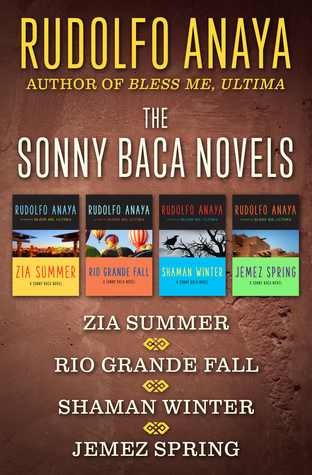
As a New Mexican, I have to recommend the Sonny Baca  books by the late Rudolfo Anaya. Most people know his classic coming of age in New Mexico story, Bless Me, Ultima, but he also wrote a series about a private investigator. These crime novels blend in much of the mysticism and cultural depth found in his better-known works.

I plan to read not only diverse American authors, but authors from other countries, other continents. African and Asian and Latin American writers. I can’t go anywhere in person during the coronavirus pandemic, but my reading can take me all over the globe into the worlds of people whose lives are not like mine.

My writing has me at home in New Mexico, of course. Working on the eighth Mae Martin mystery. And I’ll still be blogging. Follow me on https://amberfoxxmysteries.com, where you can also sign up for my newsletter.

Au revoir and Namaste.

Amber

Getting my Journal On

Over the last few months, I have taught two different classes on journaling, one of which has become a weekly group. The idea was that we are living in historic times, and personal journals have always been a valuable part of the historic record down through the ages.

Now, you’d think with Facebook and Twitter, that would count. Um, it doesn’t. Facebook and Twitter are public, and we tend to put our best posts forward, so to speak. There is something about the private nature of a journal that encourages more honesty, perhaps.

Another advantage of a journal is that it really does help keep a grip on all the insanity around us. Just in the past few days I’ve added a prompt to check for what’s currently bugging me and already I’m having trouble thinking of things that are bugging/worrying me.

My personal process began several years ago – I’ve lost track of how many – and is based in my own spiritual practices and a practice developed by St. Ignatius of Loyola (as in the guy who founded the Jesuits) called the Examen of Conscience.

The interesting thing is that as I was growing up and hearing about authors and being a writer and all that, I kept hearing about how important it is to keep a journal. I will admit, I tried, but it never took. Let’s face it, I am the ADD poster child, and sitting still to write something that doesn’t enthrall me, like what I had for breakfast the other day, is not going to happen. Then I heard a Jesuit priest talking about the Examen of Conscience and how it worked. In short, it gave me a series of questions I could check in with every day, or more accurately, every day I thought about it, and write.

The process this particular priest proposed was putting yourself in the Presence of God, checking in on where you’ve sinned the day before, then reflecting on how to do better and, finally, offering up a prayer of gratitude. I added a reflection on what I’ve done well because I’m really good at beating up on myself.

Believe it or not, I really like the idea of checking in to see where I’ve sinned, and actually, it helps work against the beating up on myself. It’s awfully hard to improve yourself if you don’t know where you’re falling down. To use a writing metaphor, you can’t fix your story if all you know is that it doesn’t quite work. If the actual “sin” is digressing all over the place (an example I used in Fascinating Rhythm), then you can go back and pull out all those bits that don’t relate to the full plot. If I know that I was meaner than I should have been to that tech non-support person, then I can take steps to get less pissy the next time I have to call about a problem.

I’m the last person to tell anyone that if they want to be a writer, they must journal. And if I’m honest, my journaling practice has had little to no effect on my writing that I know of. I guess trying to be a better person may help me be a better writer, and I suppose being able to stay on an even keel makes it easier to plot chaos in my made-up worlds.

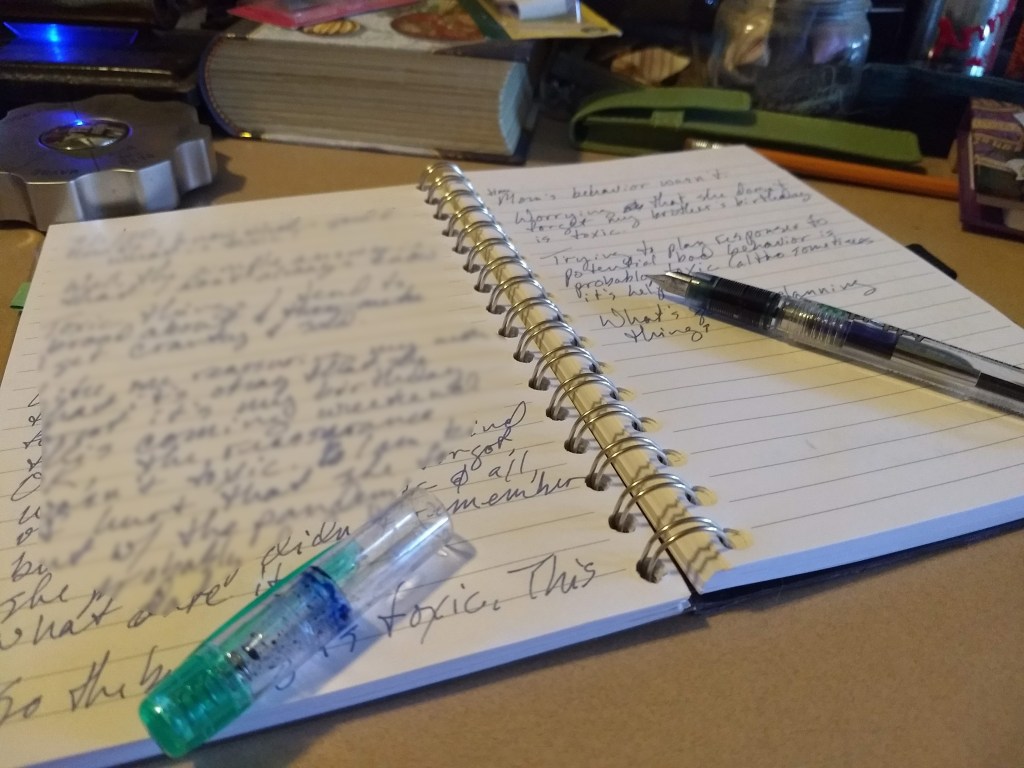
Journaling is one of those things that is intensely personal and unique to each person. For me, it took a centuries-old prayer practice to put pen to paper (and, yes, I do prefer handwriting my journal). For you, it make take something else. I know someone who finds it easiest to dictate her thoughts on her phone as she takes her morning walk. And there is the possibility that journaling may not work for you at all.

But it is kind of interesting to think that someone, a hundred years ago, after I’m dead and gone, will look at my journal pages and exclaim, “Ah-hah! That’s what that was all about!”

I Love Research!

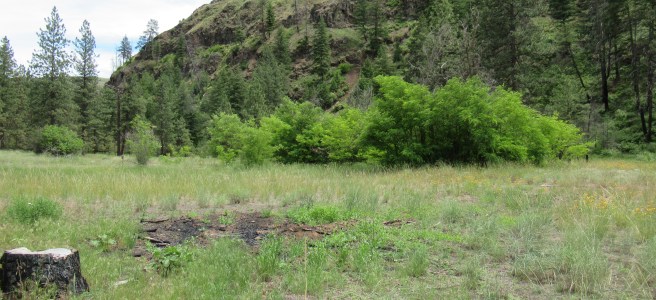
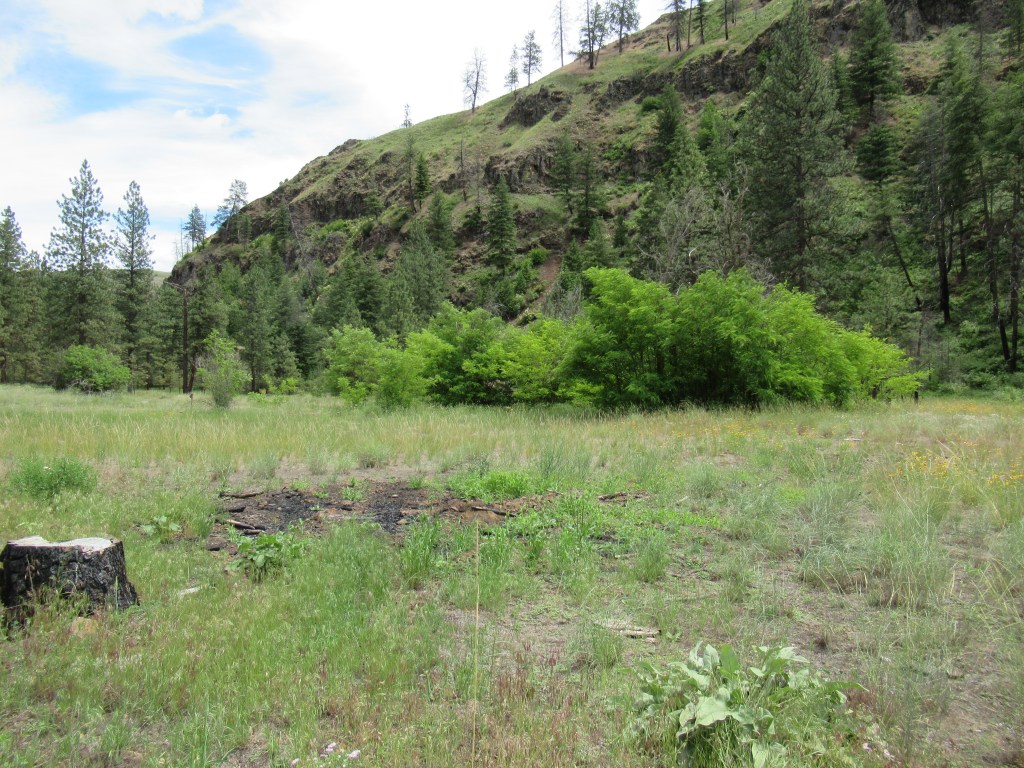
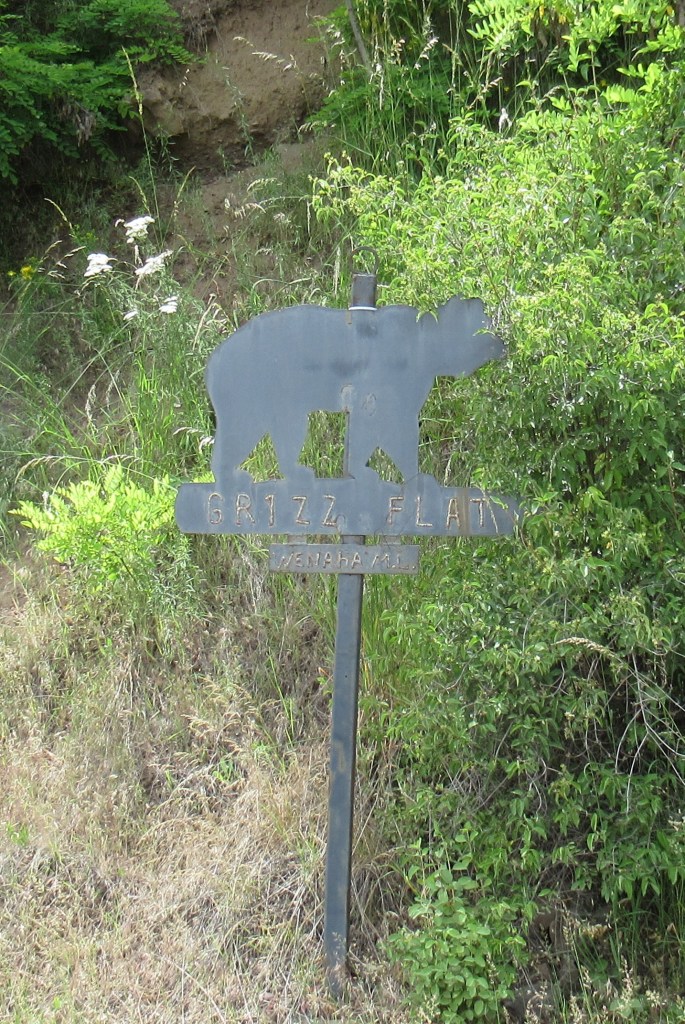
Photo I took of Grizz Flat

No matter what genre I write, there is always research. Did I say I love research? LOL The current work in progress is the 6th Gabriel Hawke novel. You would think setting the book in the county where I grew up and having had a ride-along with the State Trooper of the Fish and Wildlife Division I’d have everything I need to write the book.

I don’t and I’m having fun learning about muzzleloading rifles, rendezvouses, shooting competitions, and the general lifestyle of the people who travel to muzzleloader events.

Did you know that they not only have shooting competitions with the muzzleloading rifles, but they also have knife throwing and long bow competitions? And they all use an alias while at the events.

I contacted the person in charge of the Facebook page for the local (to Wallowa County) Muzzleloading Club to learn about the club, the rendezvous they hold every year, and all I could that would help me enhance my story. They have vendors who sell articles and clothing of the early 1800s the time period they represent while at the events.

I even drove to Grizz Flat where they hold the Rendezvous to get photos, see the area, and figure out how to set up the story.

The premise of the murder happens to be something the State Trooper told me about when I did my ride-along. He stopped on a road, across the river from Grizz Flat and pointed to the camping area. “See that campfire to the left?” I nodded. “A vehicle rolled over the campfire and caught on fire. A man died. They say he was drunk, passed out, and must have bumped the gear shirt. But after investigating, we discovered he’d had an argument with his wife.”

I said, “It couldn’t have rolled, the ground is too flat. And how coincidental would it be for the vehicle, if he’d put it in gear, to stall over the campfire. I say it was homicide.”

The trooper said, “That was what all the investigators said, but the D.A. said it was an accident.”

That is the story I am writing for this Hawke book. The vehicle is found burning over a campfire and the victim is in the vehicle. This time, Hawke will push to make sure the killer is caught and the D.A. prosecutes.

Have I mentioned the theme of my books is justice? 😉