By Sally Carpenter
Some years ago I had the pleasure of meeting Jeffrey Scott, the most prolific writer of TV animation, with over 600 produced scripts to his credit, and all-around nice person.
In his book, “How to Write for Animation,” which has good advice for any writer, he talks about ideas.
“There are an infinitive of ideas,” he writes. “All of us are inherently creative.”
Scott makes a good point that we tend to over think creativity, which is often presented as some mystical, awesome force that only affects a few highly gifted individuals.
Or else we try to analyze creativity as science by probing the workings of the brain or studying the effects of environment or family life to determine the elements that lead to artistry, as if recreating Michelangelo’s studio will produce another Sistine Chapel painting.
Julia Cameron, author of “The Artist’s Way” books, agrees that everyone is born with creativity, only we get “blocked” by criticism, discouragement and rejection. Cameron’s books present exercises that help the reader to “unblock” and let the creativity flow.
While I’m not as prolific of a writer as Scott, from my experience I agree with his observation that the best way to break though a “block” is to write: “Good, bad or indifferent,” he says.
Some writers try to “summon the muse” through complicated rituals before they start working: brew a certain type of coffee, do yoga, take a walk, do writing prompts, meditate, wait until inspiration hits (which could be a very long holding pattern). But sometimes these rituals instead lead to writer’s procrastination, simply postponing time spent writing.
In my day job at a community newspaper, some of my tasks are writing headlines and photo captions. I can’t sit and wait for inspiration to hit. The paper is on deadline and the boss won’t pay for overtime. So I learned how to work quick and dirty, coming up with ideas on the fly.
I’m not sure where I heard this, but the best way to reach the muse is to “show up at the page” (or the keyboard). In other words, start writing. An author can’t edit or polish a story until words are on the page.
When I was a kid, I had tons of story ideas. Unfortunately, at that age I lacked the discipline to write it all down; I just daydreamed. Even though the stories were childish, a writer must start somewhere. A runner can’t finish a marathon unless she first masters those first wobbly steps as an infant.
Cameron suggests that artists begin each day with “morning pages,” three pages of free-form longhand (not typing or texting), just writing whatever comes to mind. The concept is to keep the pen moving even if the words are gibberish, to clear out the mental “junk” that blocks an artist, and to activate the richness of the subconscious. Soon gems will appear among the scribbling.
I recently started writing a short story that I planned to include in the reprint edition of my first book. I wrote some pages, and then had to leave it for other projects. In the meantime, another story idea occurred and I decided to move ahead the second idea.
Did I waste my time with the first story? Of course not. I may use the first idea in a later book. Even if I never finish the story, it’s possible I might not have been open to receiving the second idea had my mind not been “primed” with the first.
For me, a good way to prime the pump is research, no doubt a holdover from grad school. I love to read and learn new things. For my new short story, I got some great ideas by reading a book on the subject.
Writers get ideas from the news, movies, TV, trips, family and friends, and their own experiences. My book “The Sinister Sitcom Caper” was inspired by my work at Paramount Studios.
Scott suggests that one way to general ideas is to pick an object in the room—such as a table, phone, bookcase—and generate stories from it. I see my record albums. I can use a record disc as a Frisbee, float it down a river, use it as a serving tray, hear secret messages if I play it backward, roll it like a hoop, wear it on my head, use it as a shield, hide behind it and peer though the hole—the possibilities are endless.
If you write it, the ideas will come.

 I had a post written, went back in to add a little more, and lost the whole thing! Man, I hate when that happens!

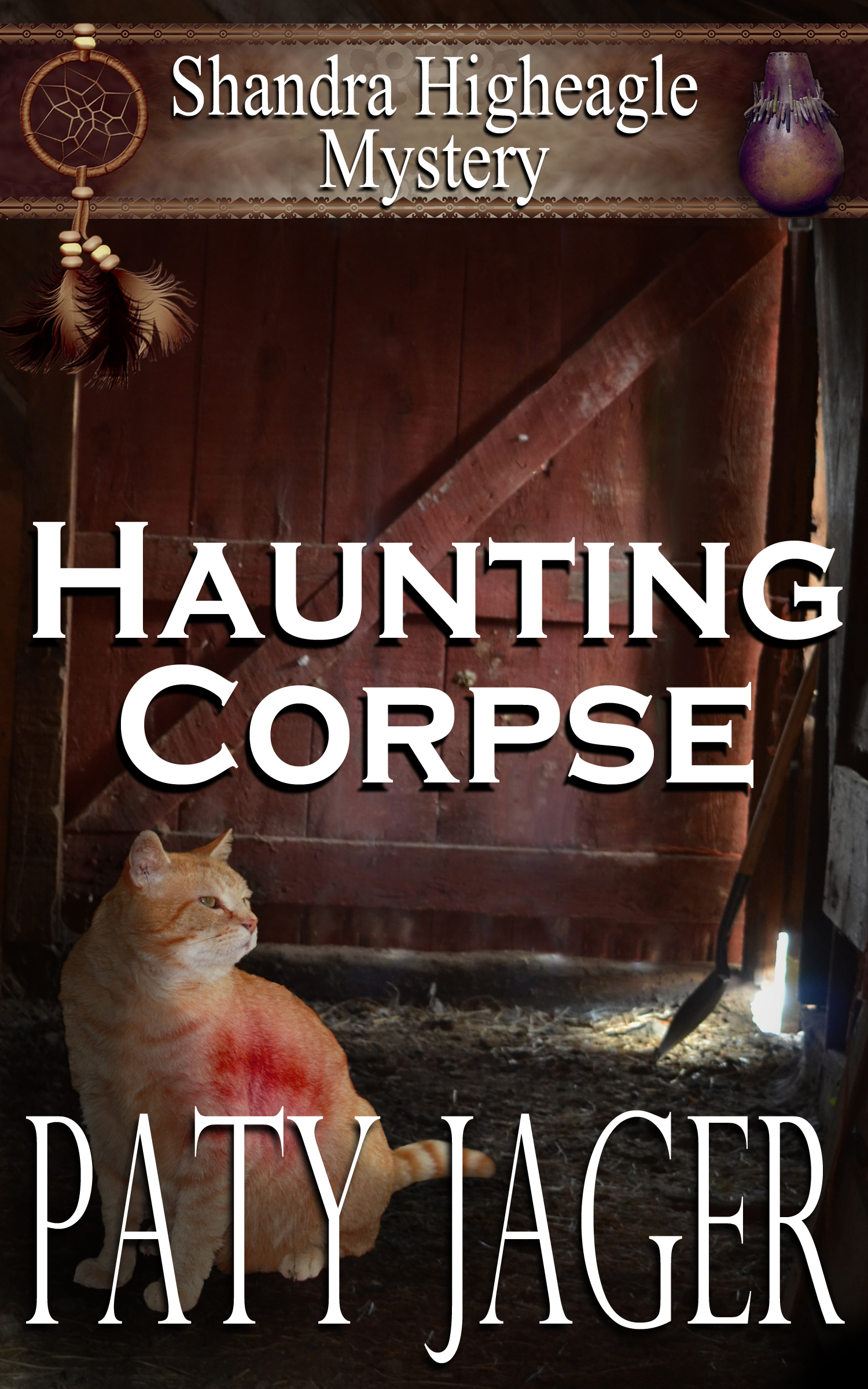 I must have used the correct recipe on Haunting Corpse, book 9 in the Shandra Higheagle Series because it is a finalist in the paranormal category of the Daphne du Maurier contest. I’m honored that my book did so well in such a prestigious contest.

 Ladies of Mystery
You must be logged in to post a comment.