
Killing Off a Series by Paty Jager

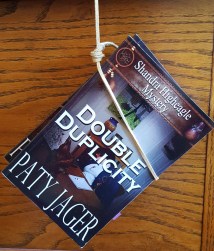
book hangingI’ve been contemplating when to end my Shandra Higheagle Mystery series.

Book eight, Fatal Fall, released recently. Book nine is in the planning stages, and I feel I could get another five or six books out before the story/characters go stale.

However, I’ve already had people asking me when am I ending the series.  My comeback, “Why, are you tired of the characters?”  I’m not tired of writing about Shandra, Sheba, Ryan, Lil, and the cast of characters who live in Huckleberry and Weippe County. I do worry about the people who complain, you can’t kill anymore people off in that small area.

But really, this is fiction. Is it that hard for a reader to suspend belief that so many murders could happen in an area and with the same amateur sleuth being involved?

I have taken Shandra to the reservation a time or two and plan to have another story or two set there. She and Ryan are going to a police conference and an art show in two different books. Kind of like Jessica Fletcher moving to New York or going to book related events out of Cabot Cove. 😉

The other reason I am contemplating the demise of the series, is because I want to introduce the amateur sleuth for the next series in one of the Shandra books before the Higheagle series ends. But I want to wait until the last or next to last book.

And yes, it will be another Native American character. I am still working out the details of him, where he lives, what he does for a living, and how I can connect it to multiple murders without getting into the “too many deaths” in one small area.

How do you gauge when a series has run it’s course?  Have you read a series or two that went on too long? Do you think there is a magic number of when a series should end or is it best to leave it up to the story and characters?

I would love to hear readers and writers thoughts on these questions.

Books 1,2, & 3, Double Duplicity, Tarnished Remains, and Deadly Aim are out in audio book.

Here is the info on Fatal Fall:
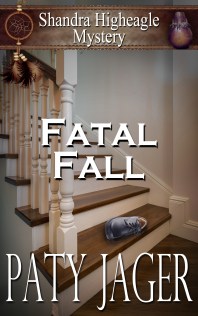
Fatal Fall 5x8Book eight of the Shandra Higheagle Native American Mystery Series
Avarice…Family…Murder

When the doctor is a no-show for her appointment, Shandra Higheagle becomes wrapped up in another murder. The death of the doctor’s elderly aunt has everyone questioning what happened and who’s to blame. Shandra’s dreams soon tell her she’s on the right path, but also suggests her best friend could be in grave danger.

Detective Ryan Greer knows not even an illness will keep Shandra from sneaking around, and he appreciates that. Her insight is invaluable. When she becomes embroiled deeper in the investigation, he stakes out the crime scene and waits for the murder to make a tell-all mistake.

But will he be able to act fast enough to keep Shandra or her friend from being the next victim?

Universal Link – https://www.books2read.com/u/bQZ5d7

SH Mug Art (2)


Mystery of the Muppets

How the Muppets inspired my current work-in-progress.

Last year I checked out the DVDs of “The Muppet Show,” first season, from the library. I hadn’t paid much attention to the show when it first aired, but I had the urge to revisit it. The DVDs have a fun feature that the viewer can turn on to allow little pop-ups of trivia and fun facts about working the Muppets.

As I watched the show, I thought how my series character, Sandy Fairfax, would have made a terrific guest star. He can sing, dance, and act. He’s easy going and has a great sense of humor. He’d fit right into the wacky world of the Muppets.

This year my publisher put out a call for submissions for an anthology of short stories by the various Cozy Cat Press authors. That sounded like just the ticket for another Sandy mystery, this time as a guest start on a kids’ TV show with its own nutty set of possibly murderous puppeteers.

To research the art of puppetry, I drew on my own experience. In the early 1970s my school district built a brand new high school (which has seen been replaced by an even newer facility). This school had a working television studio. The senior TV production class, which I took, produced a program that was aired to the local elementary schools via closed circuit TV (which nowadays would probably be uploaded as streaming video).

At the time “Sesame Street” was still new and all the rage, so our studio had a small puppet stage that we used in our shows. The puppets resembled the basic Muppet form: a foam head with a cloth body and thin, flexible arms.

When operating the puppets, we wore white cloth gloves to product the puppet material from our skin oils and sweat. But in my research on how the Muppets are worked, I didn’t find any indication that the puppeteers wore gloves. My guess is that with the long hours of taping a TV show, the puppets were of and off their hands so often that dealing with gloves all day would be cumbersome.

Like “Sesame Street,” we had rod-arm puppets, so called because a long black plastic rod was attached to one arm. We put one hand inside the puppet’s head to work the mouth and use the other hand to manipulate the arm with the rod. That gave the puppet a more realistic look than to have both arms hang limp.

I believe the school had one or two human hand puppets. These puppets had arms/hands that resembled sleeves and gloves. Puppeteers could put one hand inside a puppet arm and use their fingers to make the puppet pick up objects, write, and make more natural hand movements. Obviously these puppets are more difficult to operate.

Rowlf the dog and the Swedish Chef are human hand puppets. Jim Henson moves the mouth and provides the voice of both moppets and another puppeteer (Frank Oz for the chef) works the hands. This requires tremendous coordination between the two persons and the ability to work closely together.

How do the Muppeteers see what their puppets are doing when they’re standing behind a solid wall or cramped inside a sofa or box? Jim Henson developed a solution to this problem with tiny black-and-white TV monitors placed on the floor behind the stage. The puppeteers keep their eyes on the monitor, not the puppets. Thus they can watch their performance in real time, exactly how the home viewer would see them.

I learned a trick in working a puppet’s mouth. The natural tendency in making a puppet “talk” is to move the four fingers inside the head. But this makes the puppet’s head jerk back and appear to have whiplash. The correct method is to hold the fingers level and move only the thumb. This drops the jaw, the same way humans speak. You’ll see this jaw-only movement in the Muppets, except when Kermit gets agitated, in which case he flails his arms around and his mouth opens all the way, flinging his head back for comic effect.

What I remember most about the TV class is that it led to my first piece of published writing! The company that sold the puppets to the school put out a newsletter with scripts the customers could use. I wrote a short, silly sketch about puppets waiting for the school bus to arrive. My script was published and my “payment” was a free puppet. The school kept the puppet, but I picked it out—a bunny.

In writing my short story I read books about how “The Muppet Show” was made and a well-illustrated bio of Henson. Some of this information I incorporated into my story, although I should make a disclaimer that all of the Muppeteers are fantastic people and would never stoop to do the evil deeds committed by my characters. But my story wouldn’t be as fun if my characters were all as nice as Kermit the frog.