WHAT PERSON?


How do you decide who’s going to tell the story? Often older fiction—works written before the twentieth century—uses the omniscient voice: the narrator tells the events, introduces the characters, recounts dialogue and all the details, but the narrator is not a character in the story. This narrator seems dated now, although it’s certainly still used.

One of the most famous opening lines of a novel is an example of this voice:

“All happy families are alike, but an unhappy family is unhappy after its own               fashion.”                                                                       ANNA KARENIN by Leo Tolstoy.

We are in the hands of a narrator who looks on from outside, telling us the story but not involved.

The most common narrative voice in contemporary fiction is that of limited omniscience. The third-person voice is often associated with a character in the story who can only know the thoughts of some characters and may not know what happened when he or she is not present. Often that narrative voice switches from one character to another, so the reader can be filled in on what the main character has no way of knowing.

Probably the second most commonly used narrative voice is first person singular, usually the point of view of the main character. This works well for the unreliable narrator, someone who wants to keep the reader in the dark.

Second person isn’t used very often, but there are a few. I read BRIGHT LIGHTS, BIG CITY by Jay McInerney, a popular novel in the eighties, and found the second person voice annoying. And of course, the reason was that the character was annoying. I kept wanting to shake him or knock him over the head.

First person plural, the narrative “we”, also isn’t often used. It works for groups of people telling a story. I read THE LADIES AUXILIARY by Tova Mirvis years ago. It’s narrated by a group of Jewish women in a southern city, an unnamed Atlanta. The voice worked well as the group narrated and judged the behavior of the protagonist.

My preference in reading—and in writing—is the third person narrator. My Florida series mysteries are written in third person, the voice of Detective Andi Battaglia, but there are occasional switches to other third person narrators. This is the most comfortable narrative voice for me. It gives me the freedom to tell the story from Andi’s point of view, but to include incidents that Andi wouldn’t have any way of knowing.

My standalone mystery, PSYCHIC DAMAGE, is also written in third person, but in that book, everything is seen from the point of view of Eva Stuart and told in her voice.

I find first person singular useful for writing mysteries in the voice of an unreliable narrator who tells only what the narrator wants the reader to know. This has the effect of giving the reader a possibly distorted or untrue version of the actions.

What about other writers? Do you write in first or third? Or do you experiment with second person? I’ve never tried that myself. I’d like to read your comments.

I’m a Day Late

This is unusual for me, I’m usually early for everything. But I’m not good with WordPress and have as yet not been able to post something ahead of time and have it appear when it’s supposed to.

July has been a busy month for me. My next Deputy Tempe Crabtree mystery is done, been edited, I’ve gone over the proofs and sent them back, and seen the cover. It should be ready next month. Don’t have a date yet.

I attended the Public Safety Writers Association annual conference. It’s always in Las Vegas in July–but most folks never leave the hotel. It’s a small conference and my favorite. The majority of attendees are or were in some sort of law enforcement or public safety field (FBI, police, military, fire ER, dispatcher, etc.) who all write both fiction and non-fiction. A handful of mystery writers come and we sit in on the panels about writing, publishing, and promotion and gather lots of wonderful information about crime, criminals, gun fights, etc. It’s a great way to do research and have fun.

I’ve started writing my next Rocky Bluff P.D. mystery and have a theme and title already. Now the trick is to find the time to work on it.

I’ve given three library presentations and have one more this month.

And my life has been full with family events too.

I’ll try hard to be on time next month and I’ll have information about my new book to share.

Marilyn

Me at the Fresno library–Wm. Saroyan room.


The Body (Not the Dead Body) in Mystery Fiction


 Though body is the central element of all experience, it’s easy to take it for granted until it fails in some way. The flesh and bone and nerve that makes up a human are resilient and yet also shockingly vulnerable. Having spent my academic career in the field of Health and Exercise Science, of course I’ve paid considerable attention this subject, but I also think about it as a reader and as a writer. What place do illness, aging, and injury have in the books we read for entertainment?

It depends on how lightly we want to be entertained. In Henning Mankell’s Kurt Wallander series, Wallander’s poor diet, lack of sleep, and high levels of stress have cumulative effects throughout the series. His struggles to regulate his habits and to cope with his declining health are portrayed with affecting intimacy and realism. Meanwhile, the protagonists in humorous cozies often have junk-food habits and hate to exercise,  yet they remain healthy and attractive and able to escape from danger with adequate agility, experiencing no worse negative consequences than five or ten pounds they would like to lose. The same common health behaviors can be written as tragic flaws or comic flaws, depending where the book fits in the genre spectrum.

Injuries are common in mysteries, from bullet wounds to twisted ankles to head injuries. In recent years, the latter have been handled with more accuracy as we better understand concussions. The person investigating the mystery is now less likely to get knocked on the head and push through with nothing but a lump and a headache. Recovery is slower than it was once thought to be, and new awareness of the cumulative effects of repeated concussions, from depression to dementia and other problems, may keep writers from giving their lead characters too many blows on the head.

The sleep deprivation that protagonists sometimes endure in mysteries ought to make their reaction time slower, their short-term memories less reliable, their emotions harder to control, and their attention span fragmented. Adrenaline will help in an emergency, but not for an entire day. I’ve seen this portrayed realistically in some books and inaccurately in others. Science has shown that no one can actually train herself to function without adequate sleep, though this may be one of the hardest health misconceptions to correct, perhaps because tired people (like drunks) overestimate how well they are doing.  To some extent, we  can learn to handle the stress of fatigue and recognize how it affects us, but we can’t sustain normal cognitive and physical functioning.

Some health conditions and injuries are random—the roll of the genetic dice, the roll of a car off the road—but in fiction, out-of-the-blue disasters can seem contrived. A character’s health challenges can play a role, though, and a great variety of physical conditions have a place in a realistic representation of the world.

In M.L. Eaton’s When the Clocks Stopped, the first book in her Mysterious Marsh series, the lead character Hazel, an attorney, is pregnant and gives birth, and in the next book she’s nursing her baby. These natural aspects of her life add depth to the stories and complexity to her crime-solving efforts. In Anne Hillerman’s latest mystery, Song of the Lion, retired Navajo Police lieutenant Joe Leaphorn lives with the effects of both aging and serious injury and finds meaning, purpose, and dignity within his limitations, helping a former colleague to solve a case. Still the deep, complex character he was when Tony Hillerman introduced him twenty-one books ago, Leaphorn has gone through life changes, and so have readers who have been with the series since the beginning.

I intentionally started the Mae Martin series with my protagonist in her late twenties, so I would have decades of her life to explore, with all the changes those years will bring— emotional, professional and physical—for her and the people close to her.

As a reader, do you notice or think about characters’ health? As a writer, how to do you handle it?

*****

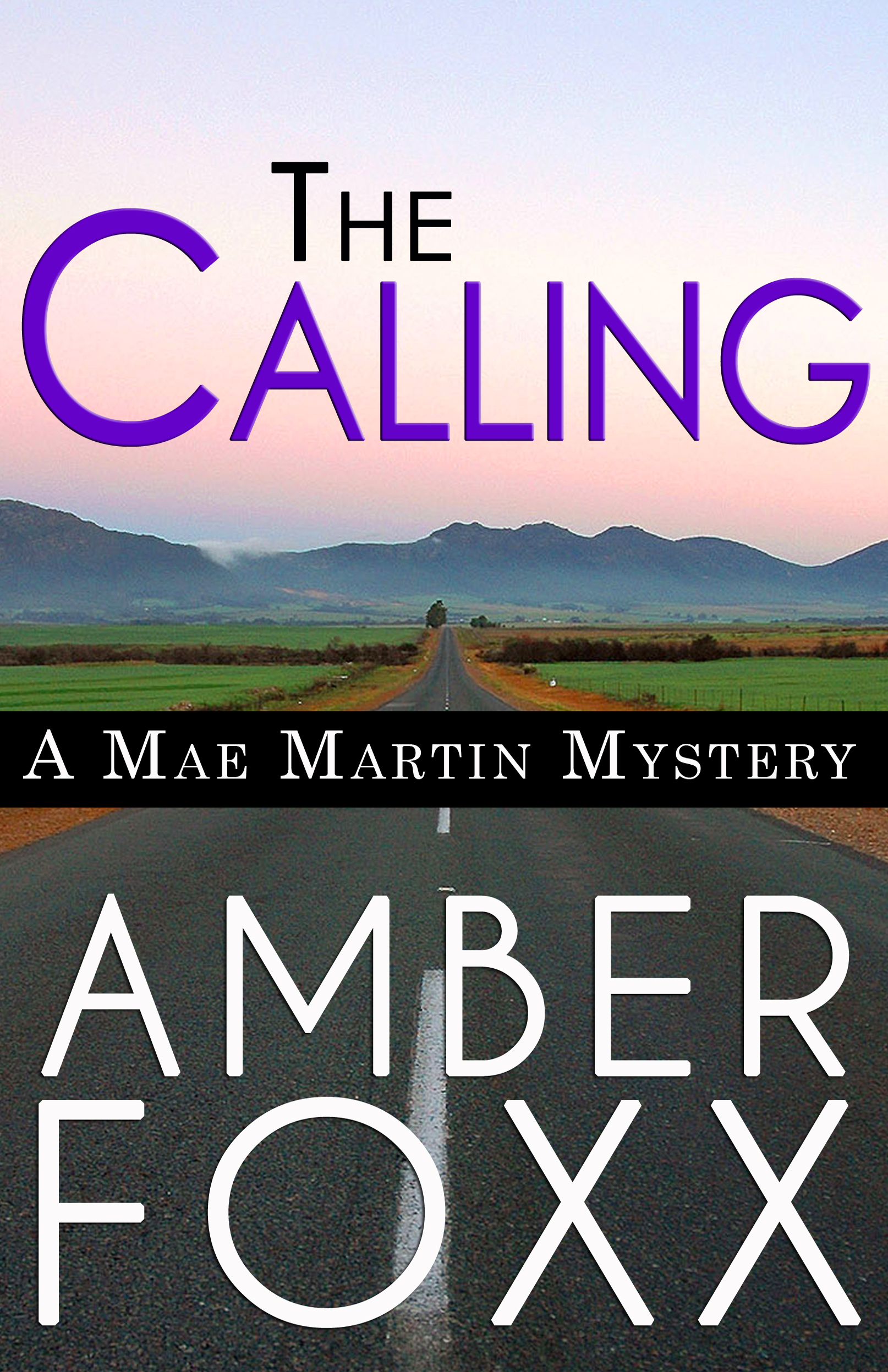
Book one in my series, The Calling, is on sale for 99 cents through this weekend on all e-book retail sites.

The Calling

The first Mae Martin Psychic Mystery

Obeying her mother’s warning, Mae Martin-Ridley has spent years hiding her gift of “the sight.” When concern for a missing hunter compels her to use it again, her peaceful life in a small Southern town begins to fall apart. New friends push her to explore her unusual talents, but as she does, she discovers the shadow side of her visions—access to secrets she could regret uncovering.

Gift or curse? When an extraordinary ability intrudes on an ordinary life, nothing can be the same again.

The Mae Martin Series

No murder, just mystery. Every life hides a secret, and love is the deepest mystery of all.

What Makes a Book Great?

thumb_IMG_1225_1024

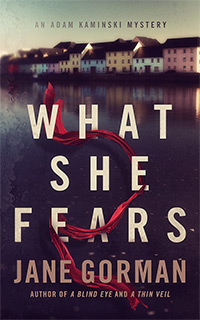
I just finished the seventh book in a seven book mystery series. I picked up the first because I loved the cover. Also because it had a good blurb and some good reviews and it was set in a little town in France that appealed to me, but mostly because it had a beautiful, tantalizing cover.

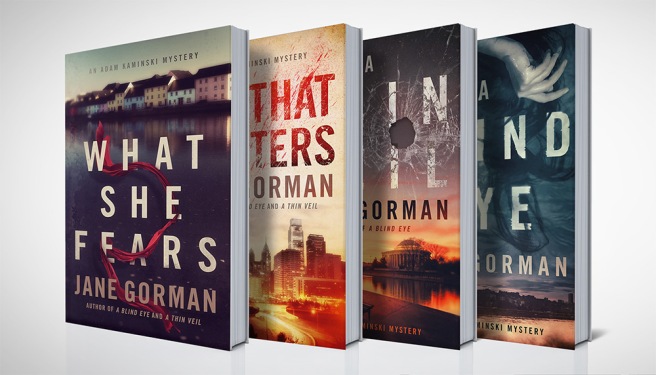
What-She-Fears-Web-Small
I like to think this cover is just as captivating!

I bought the second book as soon as I’d finished the first, and kept going that way straight through book seven. As an author, I have to ask myself, why did I find this series so compelling?

There were several ways in which the writer didn’t follow the “rules” that writers are so often warned about.

She bounced around between points-of-view. For every book you read, there is one— or two or three or more—point-of-view characters. That’s the character through whose eyes you get the story. In a cozy, which this series was, that’s typically the amateur sleuth—the little old lady or librarian or divorcee or pet shop owner or knitting club president who can’t help but get involved and who solves the crime in the end.

Writer are always warned not to bounce around between points-of-view, and if you must have more than one point-of-view character, then change points of view between scenes, not within a scene. That’s how I do it when I write. Each of my stories is told partly from the point of view of Adam Kaminski, the hero, and also partly through the eyes of another important character. And sometimes through the eyes of the killer.

But this series jumped from one person to another to another to another all within the same scene. The writer used a striking combination of the omniscient point of view (when the reader hears all the thoughts of all the characters) and a second person point of view.

cartoon-people-with-colores-speech-bubbles_23-2147529518

It broke the rules and it was wonderful!

Other aspects of these stories could have irritated other readers. There were some editing errors. Not little typos, but pretty major issues such as a character not speaking French in one scene then speaking French in another (I actually thought that was a clue and it proved the character was lying about himself, but it turned out just to be an error!).

So why did I love these books so much?

The characters. The juicy, crazy, emotional, fascinating, sometimes twisted, sometimes bizarre characters that populate the little town in which the stories take place.

Though I should clarify, the town itself was one of those characters. A beautifully crafted and gorgeously described town in the south of France.

Focus groups and marketing studies are clearly important, but not something I can do within my budget. Instead, I base a lot of my decisions about my books on what I like or don’t like. And this series proved a few things I kind of already knew.

I will choose a book by its cover. And I will keep reading a book because of its characters.

What do you look for in the books that keep you reading?

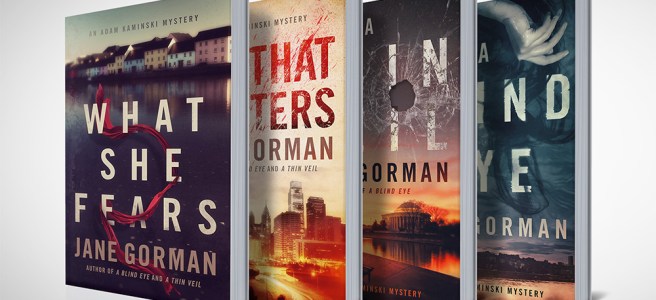
Learn more about the Adam Kaminski mystery series by Jane Gorman at janegorman.com or follow her on Facebook, Twitter and Instagram.

Adam-Kaminski-Mystery-Series

What’s Old Is New Again

by Janis Patterson

I don’t have much time to read, but for various reasons not long ago I agreed to review a few books. Two were okay – nothing to write home about, but at least grammatical and spelt correctly, with not-totally-stupid plots. The third… well, to call it puerile and sophomoric would be flattering it. If I hadn’t promised a review on it I wouldn’t have gotten beyond the third page. How can anyone think such a train wreck of a book is ready to be released is beyond me. Either they are supremely ignorant or totally ignorant.

Once my duty was done, though, I needed to clear my mental palate, and thought that something classic might soothe my outraged sensibilities. So I picked up a Mary Roberts Rinehart (one of my all-time favorites) mystery.

I really only intended to read one, but found out that’s sort of like eating a single peanut or potato chip. I happened across an omnibus of all of her long fiction on Amazon – and free, yet! It was a mixed blessing, though. It did contain books I had never heard of, but as I steadily munched through them I noticed a wildly varied level of editing quality. Some were wonderful; some were obviously edited by a set of drunks to whom English was not a first nor even a second language!

That’s neither here nor there, though; in the face of Rinehart’s genius even the editing errors were nothing more than a mild annoyance – and those of you who know how completely inflexible I am about proper spelling and editing will doubtless find that statement amazing if not downright incredible. But in the case of Rinehart’s genius it really doesn’t matter. No matter how badly they are misspelt they are some of the most fascinating books in the language.

Rinehart wrote in a number of fields, including short pulp fiction (by which she supported her husband and family during a time of need) as well as novel-length romance and mystery. I write romance and mystery myself and know how difficult that can be; she made it seem easy.

Her books will not, however, appeal to everyone. Contemporary to the time they were written – just before and just after World War One – they reflect both the style and the ethos of the era. No conscious, mad scientist style murders, no lascivious young lovers experimenting in athletic sex. Most characters are repressed, if anything, obsessively proper and yearning for respectability. A kiss on the hand becomes as emotionally satisfying as a two-chapter roll in the hay out of a modern romance novel. Solving a murder becomes not only a legal imperative, but a moral one as well. What’s worse is her writing style is equally dated, reflecting the usage of the times, and done – most of the times – in a measured and omniscient voice, now sadly unpopular, but one which I have always liked. She wrote from 1908 to the mid-1950’s (she died in 1958) – at least, those are the most accepted dates.

With all these drawbacks, why is Rinehart so prized and such a delicious read?

Two reasons – characterization and plot. Her plots are convoluted and impeccable and delicious. During her career she was called ‘the American Agatha Christie.’ I personally think in many cases she is the superior. Her characters are spot on. There is no endless repetition of hair or eye color, descriptions of physical flaws or rippling whatevers; to be sure there are descriptions, but minor ones, and usually at the beginning of a book. Her characters are not just compilations of attributes, but living, breathing people. I would know them if I met them on the street. Two of the ones I remember the most are a Belgian spy during the trench warfare of World War One, suave, outrageous and highly courage, and the other a teenaged girl of the pre-war period, who can and does cause chaos without ever trying.

Not only was Rinehart a gifted writer, she was an amazing woman. Married to a doctor, mother of three sons in an era when women were not supposed to be much else, she paid her own way (with a car, no less) to the Front in France during the War, where she not only acted as a war correspondent but drove food and supplies for the soldiers to obscure and remote outposts. She also became a well-known New York literary hostess.

It isn’t often I have such public fangurl moments, but it’s better than when I cry with regret or shake with anger that such a consummate craftsman is lost in the dust of history. Now, if you will excuse me, I am only half-way through THE AFTER HOUSE, and just have to find out how she’s going to work her way out of this tangle!