Guest Blogger – Kathleen Kaska

The Grand Dame of Mystery Writing
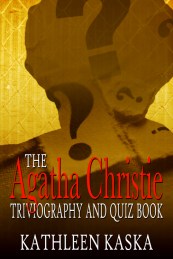
Agatha Christie_mockup02 copyAgatha Christie is regarded as the most popular mystery writer of all times. Since the publication of her first book in 1920, more than one billion copies of her books have been sold worldwide. She wrote her first detective story while working in a dispensary during the First World War. Her sister, Madge, bet Christie that she could not write a mystery in which she gave her readers all the clues to the crime and stump them at the same time. Christie proved Madge wrong, and The Mysterious Affair at Styles was published. Her second book sold twice as many copies as her first, and she found that writing flowed easily for her. In 1926, The Murder of Roger Ackroyd, gained her world acclaim. It is one of the most talked about detective stories ever written. Using a technique that had not been used before, many of her colleagues and readers accused her of breaking the mystery-writing rules. In her defense, she stated that rules are made to be broken and if done well, prove effective. Almost ninety years later, the controversy still remains. She’s gone on record to say that this Hercule Poirot mystery was her masterpiece.

But my two favorite Christie mysteries are two of her lesser-known novels. In these two action-packed stories, The Man in the Brown Suit and They Came to Baghdad, Christie ventured away from Miss Marple and Hercule Poirot and drove into light-hearted adventure. She sent her young heroines, Anne Beddingfeld and Victoria Jones, to mysterious locales, exposes them to harrowing danger, and allowed them to live life on the edge.

“I had a firm conviction that, if I went about looking for adventure, adventure would meet me halfway,” Anne Beddingfeld proclaimed. He archaeologist father has decently died. On her own for the first time in her life, Anne is ready for adventure. But her eighty-seven pound legacy would not last long. After a discouraging job interview, Anne was waiting to catch the train home, which put her in the right place at the right time. A man, startled by something, stumbled and fell off the train platform onto the third rail. Another man claiming to be a doctor, examined the body, declared the man dead, and hurried away, dropping a piece of paper with the words, “17.122 Kilmorden Castle,” written on it. Anne retrieved the paper and tried to catch up with the doctor, but he disappeared into the crowd.

Anne was determined to find the man in the brown suit. He obviously was not a doctor, since he examined the victim’s heart by palpating the right side of his body. After a clever bit of detecting, Anne was aboard a ship to South Africa. In Anne’s life there are no coincidences.

A few days later, she was in her cabin, recovering from seasickness when there came a knock on her door. Or to be more exact, an explosion. Her door flew open and a man tumbled inside.

“Save me,” he says. “They’re after me.” Anne shoved him under her bunk and got rid of the nosy stewardess, who was tracking the apparently drunk passenger. However, alcohol was not the reason for his clumsiness. A knife wound and the loss of blood gave cause for the young man’s unsteadiness. As Anne dressed his wound, they exchanged insults and cold stares, along with a bit of shoving. As he felt, she realized that it was him—the man in the brown suit! But he was gone again, and she was left standing with clenched fists and a racing heart. There was no doubt about it. Anne was in love, and she would find him no matter what.

“To Victoria an agreeable world would be one where tigers lurked in the Strand and dangerous bandits infested Tooting.” Victoria Jones, unemployed secretary, flighty female, habitual liar, is the star of They Came to Baghdad. Fired from her job for poking fun at her employer’s wife, Victoria found herself on her favorite park bench, eating a tomato and lettuce sandwich, and contemplating her future with no income. Before her pondering became too serious, however, she noticed a handsome blue-eyed man sitting next to her, and her plans for finding a new job were forgotten. A quick exchange of life stories, a few laughs, and Edward declared he must leave. “I don’t suppose you’ll ever think of me again,” said Edward. “Oh, Hell—I must fly.” Duty called and Edward was off to Baghdad. Victoria decided to follow the young man. Undaunted by the 3,000-mile distance and the mere three pounds to the name, she conned her way to the Middle East and quickly found herself penniless and alone in a strange hotel.

All of a sudden, there is a knock at Victoria’s door. Could it be Edward? Had word reached him that she was in Baghdad? Without hesitation, she opened the door and found a handsome stranger seeking refuge.

“For God’s sake hid me somewhere—quickly,” he pleaded. Victoria, never one to shrug off adventure, shoved him under the bed cover, propped up the pillows and leisurely leaned back while the hotel manager searched the room. Satisfied that the fugitive was not present, the manager left. Victoria pulled back the covers just in time to hear the dying man’s cryptic message. Now she must found Edward, but where should she begin? After all, she didn’t even know his last name.

Following the adventures of these two young women is almost as exciting as following Indiana Jones into the Temple of Doom. The Man in the Brown Suit and They Came to Baghdad are truly two of Agatha Christie’s most delightful mysteries.


Kathleen Kaska writes the award-winning Sydney Lockhart mysteries set in the 1950s. She also writes the Classic Triviography Mystery Series, which includes ThIMG11_2661e Agatha Christie Triviography and Quiz Book, The Alfred Hitchcock Triviography and Quiz Book, and The Sherlock Holmes Triviography and Quiz Book. The Alfred Hitchcock and the Sherlock Holmes trivia books are finalists for the 2013 EPIC award in nonfiction. Her nonfiction book, The Man Who Saved the Whooping Crane: The Robert Porter Allen Story, (University Press of Florida) was released in 2012. Kathleen has a new mystery series, which will debut later in 2016.

http://www.kathleenkaska.com

http://www.facebook.com/kathleenkaska

https://twitter.com/KKaskaAuthor

 

Signposts on the Way through a Novel: A Review of Super Structure

Amber in tree finalHappy Thanksgiving. I’m grateful for many things, and most recently for finding the right book at the right time. I just finished the first draft of the fifth Mae Martin mystery, and this book on writing is helping me with revisions. My review:

Super Structure is a sequel, following up on the principles in James Scott Bell’s 2004 Plot and Structure. The new book quickly reviews the basic ideas of the earlier one but doesn’t replace it. I strongly recommend reading Plot and Structure first, to fully explore Bell’s LOCK system (Lead, Objective, Confrontation, and Knockout) and then build on it with Super Structure.

He has a chatty, casual style and gives his methods and signposts catchy names so a writer is likely to think of them easily without having the book open at her side. The way he words things seems light, but the value of his ideas isn’t. The Mirror Moment is great example. He analyzed successful books and movies and found that almost exactly at the midpoint of the stories, there’s a moment when the lead literally or figuratively confronts himself in the mirror and either thinks about his life, his integrity, his mortality, his choices and his dangers. It’s often short, but it’s deep. This moment is what Jack Bickham in Scene and Structure calls a “sequel.” Inner work that processes what’s gone before and leads to what’s coming next. The protagonist is facing that a threat, and the mirror moment defines not only the turning point of the story but the nature of the conflict in Act III—an inner battle or a physical one.

This book is so short it’s more like a booklet—117 pages in paperback. It’s cheaper as an e-book, but I like my reference books on paper so I can keep them beside me and flip to the section I need for a reminder why I’m stuck and guidance on how to get unstuck.

In both Plot and Structure and Super Structure—especially the latter—Bell wastes a few pages (20 out of 117) selling the reader on the need for structure, which struck me as preaching to the converted, since I had already bought a book about structure. Even so, I don’t regret investing in this slender volume. I’ve read Plot and Structure twice and was heading into a third reading when fellow writers recommended this new book. It was exactly what the plot doctor ordered: a synopsis of the earlier book to refresh my mind and some additional solid steps I can take to strengthen the tension and pace of my work in progress.

Bell is a bit biased against pantsers and admits it, but he still gives them some good pointers. As a half-plotter half-pantser, I like his brainstorming methods. The “mind map” reminds of one of my favorite big-picture plot tools, the mandala method in Jill Jepson’s Writing as a Spiritual Path. Bell encourages improvisation and free flow in playing with ideas for initial disturbances and possible outcomes of the events partway through a book. As he says when he’s trying to sell to the imaginary anti-structure person, structure doesn’t stop creativity. It gives it form.

What I’m Thankful For, Yes, it is that Time of the Year

Isn’t it a good thing that we can reflect on all the things we’re thankful for?

I’m thankful for my beliefs–my God and my church. And of course I’m thankful for my husband I’ve had all these many years.

I have a wonderful and big family and I’m thankful so many of them will be sitting around our Thanksgiving table–and I’m thankful for all the Thanksgivings in the past. I’m also thankful for my health and ability to still cook and host a big dinner.

I’m thankful for my writing and that I still enjoy doing it. I’m also thankful for those who read my books and let me know that they’ve enjoyed them.

And I’m thankful that I’ve sent my next Rocky Bluff P.D. mystery off to my publisher.

For fun, I’m offering one of my older books, Lingering Spirit, for .99 cents on Kindle from December 7- 11. No, it’s not a mystery, it’s a romance with a touch of the supernatural. It’s actually one of my favorite books as it’s based on something that happened in our family–of course fictionalized, but containing a lot of truth.

Ling Spirit Front Cover

http://www.amazon.com/Lingering-Spirit-Marilyn-Meredith-ebook/dp/B017J2QEOM/ref=sr_1_1?s=digital-text&ie=UTF8&qid=1447170247&sr=1-1&keywords=lingering+spirit+by+marilyn+meredith&pebp=1447170266835&perid=0VDJD62KDMGW88SB2TX0

Blurb:

After her police officer husband is killed in the line of duty, Nicole Ainsworth struggles with the changes forced on her life. Her efforts to focus on her daughters and cope with her grief are kept off-balance by images of Steve, her deceased husband who seems to be trying to communicate with her. Eventually, Nicole finds that Steve isn’t the only one watching over her, and discovers a second chance at happiness.

And I’m thankful for everyone who takes the time to read this blog.

Marilyn

Where Do Writers Get Their Ideas? By Ann McAllister Clark

It’s magical really. Well, at first it may seem that way. Creative thoughts, words and phrases running through a writer’s mind as she is writing. Sometimes it feels the words are like ribbons spilling out of our fingers, pens, pencils or keypads as if someone or something else is actually gathering them up and pushing them out on the page. When that happens I always send up a sincere ‘Thank You’ to the goddess of verbiage and thoughts. Yes, it is magic and when it happens I take a big breath and stay with it as long as I can.

And then I remember all the studying I have done – many college classes and dozens of writing books over the years. I read classics – Russian, English, and mostly American.

Writers get this question all the time – “Where do your ideas come from?” Ideas come right from a compilation of life and the writer’s experiences – encounters and events or things she has witnessed or researched. Writers have a way of filling up their internal and invisible sponge with all that moves before their eyes and ears and all the minutia of life. A writer is voraciously curious and thirsty for interest. A bit of this person, a little of that person, saved notes of conversation and pieces of experience all go into the vault of ideas. So ideas come from just about anywhere and go into the big soup pot of a rich mix. And then at the end of this wash of creativity comes the real work. Revision, revision and then more revision. The work never seems completely right and some writers may revise a dozen times or more.

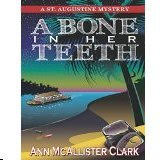
bone in teethI watched much of the George Zimmerman trial in Sanford, Florida. I suspect many writers watch court cases on TV or better yet in their own county courtrooms with thoughts of incorporating what they see into their stories. We have files of interesting newspaper clips and magazine articles to be used at a later date for inspiration or research. I took notes on the attributes of the detectives, lawyers and court proceedings during the trial in Sanford. I used those notes to describe the detectives in A Bone In Her Teeth: A St. Augustine Mystery.

Traveling through the streets of Gettysburg, Washington, DC, and Antitam and walking many battlefields helped me immensely with description in my historical novel, The Chrysalis: An American Family Endures The Civil War.

I just finished reading Justice Sonia Sotomayor’s memoir, My Beloved World. http://www.amazon.com/My-Beloved-World-Sonia-Sotomayor-ebook/dp/B00957T7CQ/ref=sr_1_1?s=books&ie=UTF8&qid=1447440566&sr=1-1&keywords=my+beloved+world

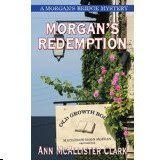
MorganWhen she was a young girl of about eight years old, she faithfully watched the weekly television program, Perry Mason and decided she wanted to be a lawyer! And then she diligently pursued that direction in every single aspect of her educational life all the way to her seat on the United States Supreme Court. I used her early years for inspiration in Morgan’s Redemption

https://en.wikipedia.org/wiki/Sonia_Sotomayor

Where do we get our ideas for writing? Everywhere and anywhere.

Ann’s Books

A Bone In Her Teeth, paperback and kindle

Morgan’s Redemption, kindle edition and paperback

About  Ann McAllister Clark

A graduate with a BA in Education from charming Aquinas College in Grand Rapids, Michigan, Ann McAllister Clark, author of the award-winning novel, A Bone in Her Teeth: A St. Augustine Mystery, and Morgan’s Redemption: 1st in the Morgan’s Bridge series and soon to be released, The Chrysalis: An American Family Endures The Civil War,  is a teacher, journalist, and former used bookstore owner. She now lives and writes in a small cottage in the Nation’s Oldest City, St. Augustine, Florida.

Ann McAllister Clark’s website
Ann McAllister Clark’s blog “Ann’s Cottage Blog
Ann McAllister Clark’s facebook page


EVOKING A TIME AND PLACE

copy

I read a lot of mysteries, naturally, because friends write books and there are always new and exciting mysteries to dive into. But sometimes I take a break from these and read other books: non-mystery novels, biographies, and nonfiction in general. I also belong to a book club, and the choices of the members are often different from the books I read on my own. Since I’ve become a writer, I’ve become much more aware when I’m reading a book of the skill of the author in taking me into a place or time so fully that I feel as if I am actually there.
I recently read a book by Sigrid Nunez called THE LAST OF HER KIND, which takes place in New York at the end of the sixties and into the seventies. This was a book that plunged me back to that time. It was a time of civil unrest: the 1968 Democratic convention in Chicago, riots and takeovers of buildings by university students, the assassinations of Bobby Kennedy and Dr. King, among other events. There is an evocation of an LSD trip by the woman experiencing it that made me remember how assiduously I had avoided trying the drug. The book made me uncomfortable in the same way that I remember being uncomfortable then, as though I had been dropped back almost fifty years and somehow entered a strange planet full of people who were entirely different from those I thought I knew.
Some books bring me such a sense of actually being in the setting among the characters that a return to mundane life is almost painful, returning to earth from a fantasy trip and being forced to pick up my bookmark to mark my place and go back to work or to whatever task faces me. I was like that as a child, always lost in the world of a book, reluctant to face the monotony of long division or algebra.
James Lee Burke’s Louisiana mysteries bring me into the oppressive heat of New Orleans; Tony Hillerman’s description of the Navajo world makes it come alive; I don’t remember the settings of Agatha Christie’s books because I was always too immersed in the puzzle; but Ellis Peters’ medieval tales evoked the monastic setting and the period; and Elizabeth George created a fascinating English world including an entire Oxford college in one of her mysteries.
Recently I visited my friend in Florida where I have set my two mysteries: A REASON TO KILL and SO MANY REASONS TO DIE. We made a trip to Vero Beach, a city north of where my friend lives and where I had never been. It’s quite a well-to-do area, and I immediately began to set some scenes from the book I’m currently working on in that town: more expensive than Burgess Beach where Andi and Greg, my two detectives live and work, with houses set both on the Indian River and on an island facing the Atlantic Ocean. I find myself absorbing details of new places, trying to remember my feelings when I’m there, in an attempt to recreate new settings in my writing.
Do you enjoy new settings in your reading or writing? I’d love to hear about books that evoked memories from you or made you want to travel there.