Scary Books

Over the years I’ve written all sorts of scary books, and since it’s nearly Halloween thought I might tell you about some of them.

Deadly Feast

http://www.amazon.com/gp/product/B00E8K05WQ?keywords=Deadly%20Feast%20by%20Marilyn%20Meredith&qid=1444829960&ref_=sr_1_1&s=digital-text&sr=1-1

This one started out as a Tempe Crabtree mystery, but as Tempe’s character developed in a wholly different way, I had to change the main character.

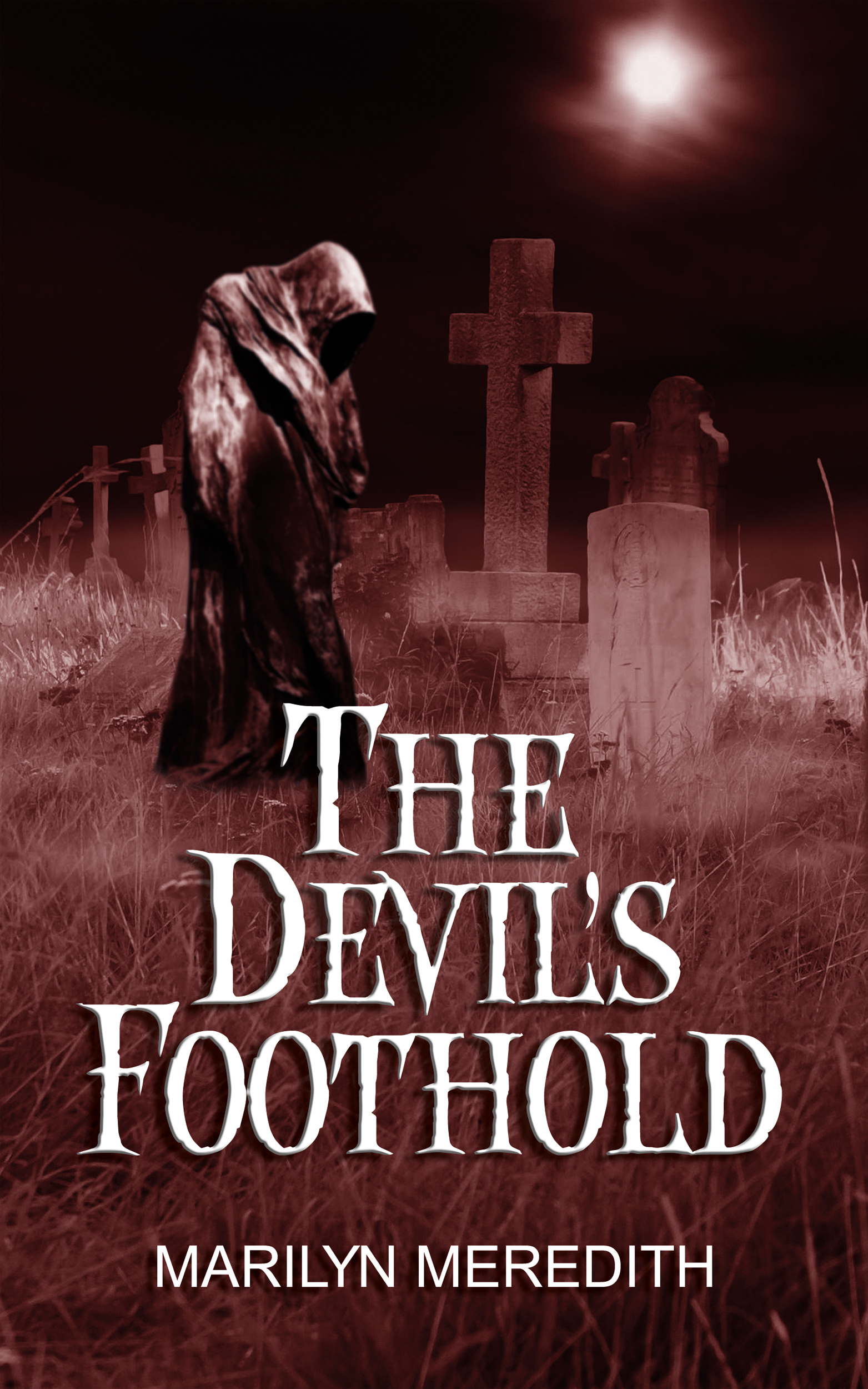
Speaking of Tempe, here’s another I thought would be one of her mysteries, The Devil’s Foothold.

Devils Foothold

http://www.amazon.com/s/ref=nb_sb_noss?url=search-alias%3Ddigital-text&field-keywords=The+Devil%27s+Foothold+by+Marilyn+Meredith

I loved writing it, but it turned out to be more of a Christian horror.

And yes, there’s one more that started out to be a Deputy Tempe Crabtree mystery, Deeds of Darkness.

Deeds of Darkness Kindle

http://www.amazon.com/s/ref=nb_sb_noss?url=search-alias%3Ddigital-text&field-keywords=Deeds+of+Darkness+by+Marilyn+Meredith&rh=n%3A133140011%2Ck%3ADeeds+of+Darkness+by+Marilyn+Meredith

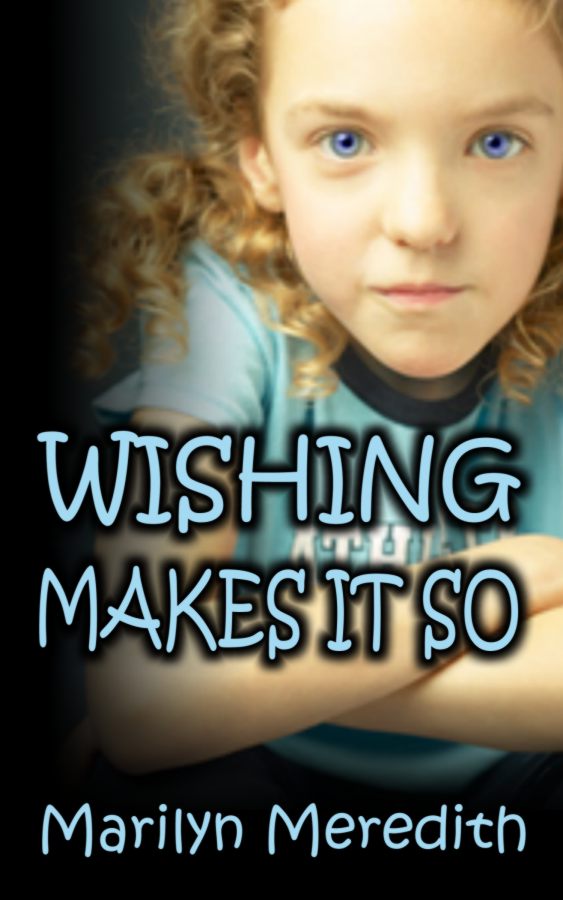
And probably the scariest of all, Wishing Makes it So, which probably falls into the psychological horror genre–the tale of a really bad little girl.

wishingmksitsmpl (2)

http://www.amazon.com/Wishing-Makes-So-Marilyn-Meredith-ebook/dp/B004SRFLBE/ref=sr_1_1?s=digital-text&ie=UTF8&qid=1444831568&sr=1-1&keywords=Wishing+Makes+it+So+by+Marilyn+Meredith

Of course any mystery worth reading has scary elements in it–but these are the kind of books some folks love to read during this spooky season.

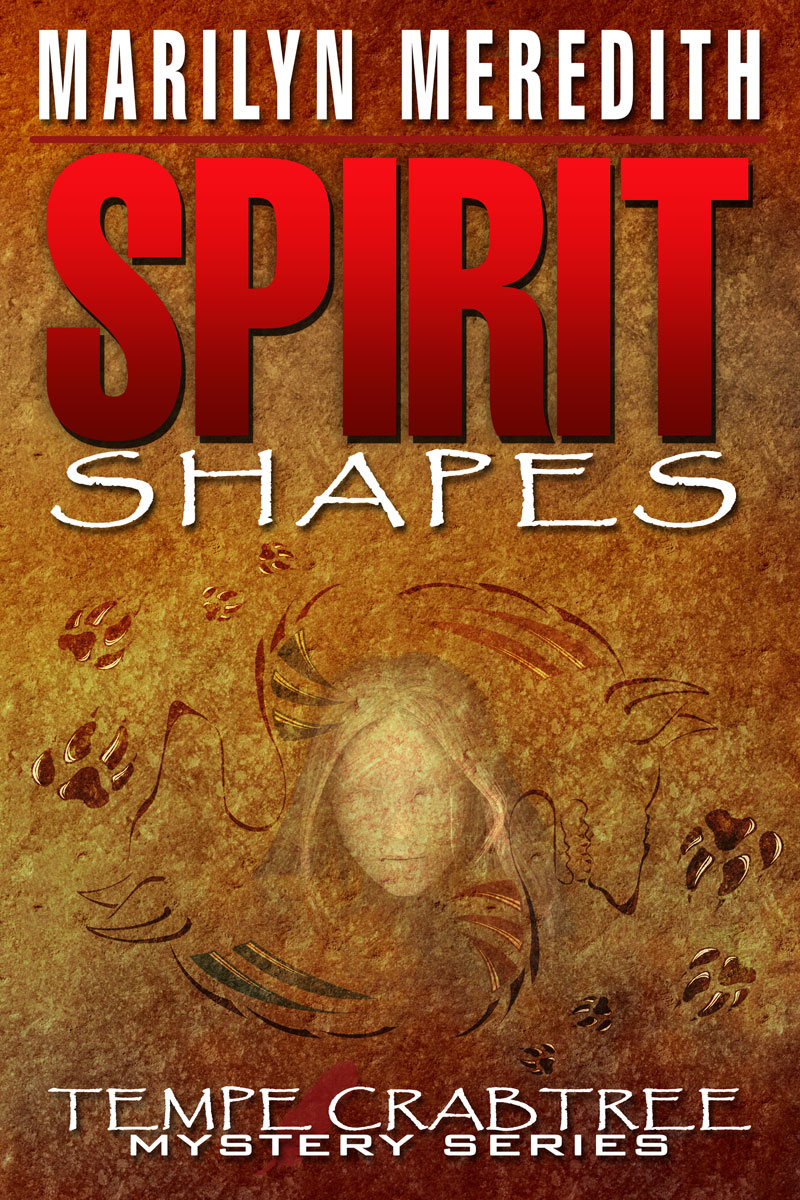
And if your taste runs more to ghosts and haunted houses, here’s a couple you might want to try. This is a Deputy Tempe Crabtree mystery that revolves around a very haunted house:

Spirit Shapes Cover

http://www.amazon.com/Spirit-Shapes-Tempe-Crabtree-Mystery-ebook/dp/B00FEJDA04/ref=sr_1_1?s=digital-text&ie=UTF8&qid=1444831972&sr=1-1&keywords=Spirit+Shapes+by+Marilyn+Meredith

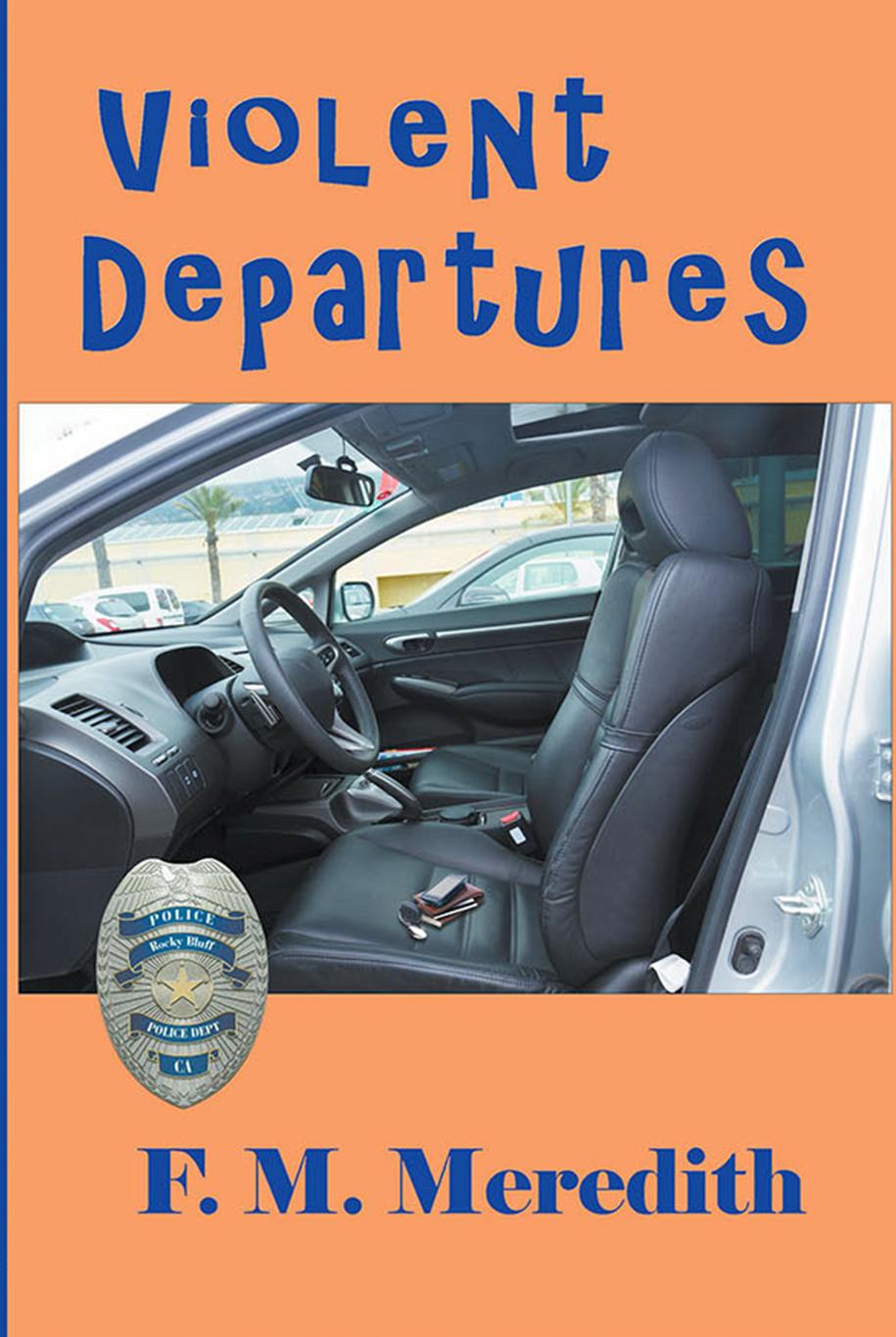
And a haunted house is features in the latest Rocky Bluff P.D. series, Violent Departures.

Violent Departures

http://www.amazon.com/Violent-Departures-F-M-Meredith-ebook/dp/B00URUJAUE/ref=pd_sim_351_3?ie=UTF8&refRID=0F5AKZ1RMK3S259M02RG&dpID=51OE5NYMEYL&dpSrc=sims&preST=_UX300_PJku-sticker-v3%2CTopRight%2C0%2C-44_AC_UL160_SR107%2C160_

Have a most spooky Halloween!

Marilyn aka F. M. Meredith

Guest Blogger S.L. Smith – Murder on a Stick

Before explainingMurder on a Stick(3) why I wrote Murder on a Stick, I’ll tell you a bit about myself and my writing.
One of the first decisions I made, as an author, was where to stage my novels. It boiled down to creating a fictional setting or writing about the familiar. I chose the latter. The Pete Culnane mysteries are set in St. Paul, Minnesota––my home for the past three decades. One benefit is a built-in audience of locals who enjoy books set in locations they know. A drawback is my compulsion to get it right, portraying the sights, sounds, and smells in a way that rings true for locals and becomes real for those who have never been here.

Despite my knowledge of St. Paul, each novel requires lots of on-site and Internet research, and a variety of interviews. While looking for a location for book three, I thought about the Great Minnesota Get Together, otherwise known as the State Fair. Most Midwesterners have at least a passing knowledge of this fair. That gave me a shot at attracting them as readers. However, the overriding reason for selecting this venue was my love for this event. I’m not alone there. The 2015 attendance (12 days) was 1,779,738.

While writing Murder on a Stick, I spent four days at the fair, researching. My efforts included speaking with police and deputies from across the state. These are people who use vacation hours to ply their trade at the fair. A paramedic and an EMT from the St. Paul Fire Department explained the role they play and the tools at their disposal. A volunteer from one of the information booths provided pages of facts and trivia about the fair. I love learning when I read, and I used some of this information to provide that opportunity to my readership. The thing that surprised me the most was a fair-related tidbit about Teddy Roosevelt.

You can get almost anything on a stick at the Minnesota State Fair. Murder on a Stick takes that a step further. Due to my commitment to realism, I felt compelled to obtain a sample of the sticks on which 100+ foods are served. These delicacies include hot dish, s’mores, key lime pie, and walleye pike. Obtaining these sticks took a couple of days. Thankfully, the vendors gave me their sticks without the food. Hence, I saved a fortune and avoided gaining 50 pounds. I drew upon the expertise of a retired lead investigator from the Ramsey County Medical Examiner’s Office to determine if any of these sticks was a feasible weapon. The title of this novel provides the answer.  🙂  By the way, any idea what using one of those sticks as a weapon says about the crime?

The State Fair is located in Falcon Heights, a suburb of St. Paul. My protagonists do not have jurisdiction there. You have to read the book to discover why that didn’t handcuff me.

By now, I hope it’s clear that I enjoy the research part of writing, and that there are few places where it’s more fun than at the Minnesota State Fair.

Book Blurb:

You can get almost anything on a stick at the Minnesota State
Fair. This year, murder is added to the list. Family and friends
construct radically different portraits of the victim, and the
list of suspects keeps growing. No suspect has a corroborated alibi. Three admit being at the
fair that day.

The investigation crisscrosses the Twin Cities,
and travels from the fairgrounds to Rochester. St. Paul
investigators Pete Culnane and Martin Tierney must separate
fact from fiction, truth from lies.

Bio:

Sharon Newer Pipe PhotoS.L. Smith’s long career working alongside law enforcement and fire officials while with the Minnesota Department of Public Safety inspire and inform her mystery novels. Yearly trips to the iconic Minnesota State Fair addicted her to the unique atmosphere and the foods often found only at the fair.

Buy links:

http://www.amazon.com/S.L.-Smith/e/B005GVK1DO/ref=sr_ntt_srch_lnk_1?qid=1445136445&sr=1-1

social media links:

Facebook:

https://www.facebook.com/SLSmithauthor2012?ref=ts&fref=ts

LinkedIn:

https://www.linkedin.com/profile/view?id=AAkAAAMQ48sB4Tnfh8fQc3wE0z7MfGkdaF3ajf0&authType=NAME_SEARCH&authToken=Oyje&locale=en_US&trk=tyah&trkInfo=clickedVertical%3Amynetwork%2CclickedEntityId%3A51438539%2CauthType%3ANAME_SEARCH%2Cidx%3A1-1-1%2CtarId%3A1445136900972%2Ctas%3ASharon%20l.%20%20Smith&_mSplash=1

Metamorphic Rock

Metamorphic rock results from the transformation of pre-existing rock which is subjected to high heat and pressure, causing structural and chemical changes. Marble, a stone often used for sculpture, is metamorphic rock.

There’s no such thing as a pure first draft in my world. Unless I’m writing very short fiction, less than 2,000 words, I don’t begin at the beginning with an outline or a seat-of the pants inspirational process and work straight through to the end.

I’d like to be a pure “pantser” but I have dysgraphia, the equivalent of dyslexia on the output end. Almost every word I type comes out with the letters scrambled. Even the spacing gets disordered. (I gave this disability to one of my characters and used it to provide a clue in Snake Face.) When I’m on a roll, I produce material that stumps spell-check, so I have to go back every few paragraphs and clean up promptly while the intended meaning of my gibberish is fresh in my mind. As I correct the typos, I can’t help noticing word choices, sentence structure and dialog that need revision. I’m what’s been called a “write-it-or.” Result: polished scenes that sometimes need to be cut from the story. Rather than delete them completely, I save them in various files for recycling.

Writing is artistic. It’s also geologic. I’m not only carving a final product from the block of stone that is my work in progress, I’m forming that rock myself.

Parts of it are sandstone, sedimentary rock layered gradually into place over years of collecting these scenes I didn’t use, as well as characters, settings, and ideas for murder-less mysteries. Other parts of the rock are igneous intrusions, hot surges of molten inspiration erupting from my creative source, the hidden place like the deep core of the earth. The metamorphosis occurs when heat from this process contacts the surrounding rock or when there are tectonic shifts or other sources of high pressure. Books and classes and blogs on the craft of writing apply some of that pressure.

Finding the essence of the story, I carve the stone I’ve built up. Critique partners help me reshape it. And then I cut, cut and cut some more. Sometimes I need to add material—back to forming the rock–and then sculpt again.

Amber in tree final

A Fresh Start

thumb_IMG_1225_1024

I’m in the early stages of drafting the fourth book in the Adam Kaminski mystery series, mysteries that take you places. Right now, I’m developing characters – one of my favorite parts of writing.

My main characters I already know, of course: Philadelphia detective Adam Kaminski, his partner, members of his family. These recurring characters grow and develop in each book in the series, a different kind of challenge for an author. Today, I’m working on new characters. Thanks to the theme of my books – each book embroils Adam Kaminski in a murder investigation in a different city – I also get to develop new characters for each story.

The first new character I create is the victim. For me, the victim defines the story. I have to ask myself, who has to die? How? Most importantly: why? What’s the motive? Which of course leads me to the killer. And thus the plot.

So I create the characters, the victim, the killer, the other people involved in the story. I figure out their backgrounds, their likes and dislikes, what their childhoods were like, their favorite ways to enjoy themselves, their fondest memories, their feelings about their parents, the way they dress, the way they imagine themselves. Once I know these things, the physical description follows naturally – it comes from the character. A person who is insecure might be nervous, jumpy, twitchy. Another character is tall, upright, unbending, sure of himself.

I write using the program Scrivener. I know that for writers Scrivener tends to be a love it or hate it kind of tool. I love it. Scrivener provides templates for character sketches, which makes it easy to keep all this information organized.
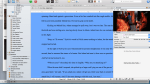
Another of Scrivener’s many features is that it lets you include an image on the screen as you write. So as I’m developing characters, I search the web looking for photos of people who have the attributes I’m looking for in my characters. I never use a photo of someone I know – the physical appearance might be correct, but I would risk writing up that person’s personality instead of the character I’m trying to create.

The character I have not yet been able to find a perfect image for is Adam Kaminski. I have such a strong feeling for who he is and what he looks like, I’ve rejected every photo I’ve found. For him, I write without an image – a problem I had to overcome to create a facebook ad. I know that in ads, photos of people work much better than photos of things. So a picture of a man who might be Adam Kaminski is more likely to be successful than a photo of the book cover. All well and good, but the challenge I faced trying to find a picture I could live with! (Do you know how hard it is these days to find an image of a young man without a beard?).

I ended up with an image I like, at least in part because the young man is looking down, so you can’t see his face straight on. It still leaves a little mystery, a little bit of his appearance left to the imagination. For that’s where my characters really come to life: in the imagination of my readers.

To meet my characters for yourself, visit my website at janegorman.com or stop by my amazon page.

BOOKS I’D LIKE TO WRITE

DSC_0194-final      I often think about the books I’ve started or thought about but never really got down to writing. Lawrence Block in TELLING LIES FOR FUN AND PROFIT, said he had a friend who, on being asked where he got his ideas, said that he said that “there was a magazine published twice a month called The Idea Book,” and that he, as a professional writer, had a subscription. There isn’t any magazine called The Idea Book, but there are lots of stories in everyone’s life that can become novels or short stories.

I started to write a mystery novel a long time ago, set in a just post-colonial African country. I didn’t get very far, but it was clearly based on my experiences in East Africa as a Peace Corps volunteer. I’d love to go back to that. I have lots of ideas about what would happen, and, because it would be a murder mystery, who was the victim and who the murderer. But when I started writing the story in the pre-computer age, it was so difficult to edit my work on a manual typewriter that I gave up.

How did writers manage before computers? I have to give them a lot of credit for perseverance. I know writers who still write by hand, but I would never have the patience. I want to correct as I go along, and having to rewrite paragraphs or put arrows directing me to some other section would be unbelievably frustrating.

Another idea I had, which began a novel that never got beyond the first chapter, was the result of talking with a woman I met on an airplane. I don’t remember where we were going, but she told me that she worked during the day as an attorney and had a night life as a rock singer. It may well have been something she made up for my benefit, but it gave me a wonderful idea for a novel. I worked on it for a while, but I never got very far. Not enough courage at the time, I guess.

The more I write, the more ideas come to me. I loved the report that fellow Ladies of Mystery blogger Jane Gorman wrote about on September 21st regarding the buried mystery train. That would make a great story. Murders reported in the local paper give me ideas for mystery novels. I kept a clipping for a long time about a man who was arrested years after the body of a woman he worked with was found in the trunk of her car. In a mystery story, the hero–cop, private investigator or amateur sleuth–would have found out much earlier that he was the murder. Fiction can be much more organized than life.

Most recently, I read a book called PSYCHIC JUNKIE: A Memoir by Sarah Lassez.Jans PhotoThe book made me think of creating a mystery about a woman who is addicted to going to psychics and letting  them guide her life. This led me to write PSYCHIC DAMAGE, a thriller which is due out in early 2016. I hope you’ll look for it.

Ideas for stories are everywhere. You just have to look around you. What do you do with your ideas? Don’t throw them away! Save them for stories.