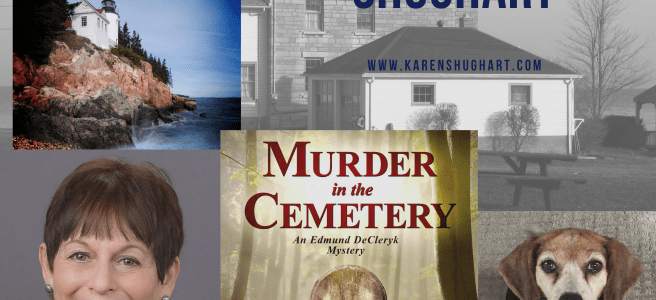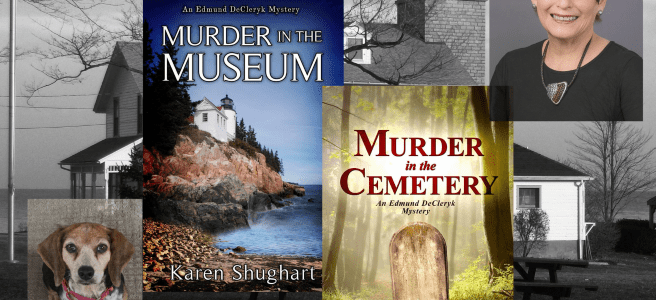
Counting Our Blessings by Karen Shughart

Sometimes life sends us lemons, lots of them, maybe more than a bumper crop. We can make lemonade, lemon meringue pie, lemon sorbet… but still, sometimes there are too many bitter lemons to use them all up.

Without going into a ton of detail, this past year has been a tough one for me and my family. We’ve had several non-Covid-related deaths; some serious, life-threatening illnesses; surgeries; and other family challenges that at times seem unending. It’s been exhausting, emotionally draining and downright frightening. Then there’s been the pandemic, the terrifying weather events, and the general unrest on so many levels in our society and the world. I expect we are not alone.

How does one survive? Lately, when the stressful occurrences seem to be relentless, it’s been hard to think that any of it will get better. At times over the past many months, I’ll admit I’ve been depressed and angry and more than a little sad.

But then I take a couple big breaths, close my eyes, and remember to count my blessings. It’s a platitude, I know, but I tell myself we’ll get through it; we have the strength.

Photo by Jill Wellington on Pexels.com

I am married to a loving, caring man. We have wonderful children. We enjoy an incredible support system of family members and family of the heart, dear friends who’ve also been there to cheer us up as we’ve needed it. We live in a stunningly beautiful maritime village where we have a roof over our heads, our home is warm in winter and cool in summer. It’s a safe place to live, too, where we’re not scared to walk freely for fear of violence.  It could be so much worse.

 We have plenty of food, transportation to get us where we want to go and medical care. We may not be rich, but we have an abundance of what we need.  So many people don’t. Sometimes it’s easy to lose sight of that.

We adopted a Beagle during the earlier days of the pandemic. She had multiple health issues. With excellent medical care and lots of love, she’s fine now; a happy and healthy little dog who makes us laugh and gives us an immeasurable amount of joy. That’s too, is a blessing.

So, during the month when we are supposed to give thanks, I will. Sometimes it’s easy to lose perspective and dwell on all that’s going wrong, all that’s contriving to decenter us. I’m making a concerted effort to remember what I have and how much worse my life could be. We actually do have enough lemons to make tasty drinks and desserts and even enough to share with others during the darkest days.

My Take on the Natural World

I’ve been thinking about how I and other writers use the natural world in my stories. It’s a cliche to use a storm to reflect the turmoil within, sunny weather to underscore the openheartedness of a certain character, a snowstorm to emphasize the challenges that someone faces. To give readers a sense of the season, I might talk about the unexpected rain that thwarts a character’s effort to sneak into a home without leaving a trace, or the noisy dry leaves underfoot that give her away as she tries to sneak up to an open window. I’ve been thinking recently about how the literary use of fiction differs from the natural world as I encounter it daily.

My experience of the natural world consists of squirrels eating the pumpkins decoratively arranged on my front porch. And then there are the half-eaten early apples left by the rabbits. The raccoons have moved out of the garage because there’s a hole in the roof that lets in too much light. The skunks moved out ages ago because of the neighbor’s dog always barking at them. The mice have learned to stay out of the kitchen because we have a dog is too interested in them. That said, I have nothing against mice.

In this area, residents who live along the water, in lovely homes with terraces facing the sea, time their evening dog walks to avoid the coyote who has moved in recently. I spotted him trotting down the middle of the street when I was driving home late one night from an event. The wild turkeys seem to have moved on, which is fine with me. During the spring mating season the toms are aggressive. During the summer the birds stop traffic, attack any car that honks at them, and befoul yards and damage feeders. The toads in the garden are welcome but the aphids are not. The worms are also welcome, but I haven’t seen a garter snake in years. I’m very fond of bees, but they’re scarce now, as are the monarch butterflies. 

As writers we get to pick and choose the details we want to work with. If a man is trying to elude a car following him, he might speed up and then skid on wet leaves, which are as dangerous as snow and ice in some parts of the country. An old woman with dementia wants to hide her wealth from a designing nephew and buries it in the garden. We can see the plot twist coming–she never tells anyone and forgets where it is. But what about the squirrels that will dig up and eat anything? Now the squirrel is relevant.

The features of nature that are so prominent in ordinary life have no value if they don’t advance the story. Describing the mice that sneak around the kitchen at night might make the story feel grounded in real life but unless at least one mouse does something to help the story along, he’s clutter. The art of fiction is in transforming the mundane into something that matters, the string of a tea bag twisted around the bag and spoon to squeeze out every drop by a woman who resents her co-workers. The coyote no one has seen except one neighbor, who insists it’s out there, roaming the neighborhood after midnight. I want to know more about these two, that woman and that man.

The ordinary matters only when I as a writer make it matter. As I scratch out sentences and then tap them into the computer, I use what I see or recall to set the stage for a new story, and then I try to twist it into a compelling, haunting moment. Nature is neutral until it takes sides, helping one character or hurting another. One of my goals this year is to use more of the natural world that I experience and avoid cliches.

It’s Apple Harvest Time by Karen Shughart

If you drive around our area in October, you will notice the leaves on the trees have begun to turn, colorful red, orange, and yellow instead of multiple shades of green. The air smells of sweet decay, new mown grass, and when the waves crash against the beach, a clean, verdant aroma wafts through the air, a bit like the ocean but without the brine.

You’ll notice farm markets, large pots of colorful mums clustered together at the edges of the parking lots, filled with a bounty of vegetables: squashes, pumpkins, eggplant, green beans, and apples, lots of apples.

New York is one of the largest apple-growing regions in the country, second only to Washington state. On the south shore of Lake Ontario, where we live, you’ll see acre upon acre of lush orchards, laden with the heavy, ripe fruit. What might surprise you, if you don’t know much about apples, is that not only do they come in different sizes and colors, but there are also hundreds of varieties, old favorites and those recently developed. Each year brings more choices; there’s an almost infinite selection.

Photo by Karen Shughart

Apple harvest here, in the north, is a reason to celebrate. One of our friends spent his earlier years as an MD but has become an apple farmer in retirement (the story of his journey to this point is a long and interesting one), with 100 acres of the sweet and savory fruit.  Now he can be seen-cowboy hat, jeans, and boots, shirt sleeves rolled up to the elbows-cheerfully working alongside his seasonal employees to pick the crop before the frost creeps in.

We love going to his farm, when on a late afternoon, with a variety of cardboard boxes and tote bags in hand, we stroll through the stands of trees, lined up in rows in military precision. We carefully choose apples that will last in cold storage in our garage throughout the winter: baked into breads, pies, and cakes, eaten with sharp cheese, or sliced into a salad.

After, we’re likely to cluster around a large island in his farmhouse kitchen, drinking glasses of wine and eating charcuterie boards piled high with cheeses, sausages, artisanal breads, and apples, yes, apples. When the skies are clear and the air is cool, he’ll host an evening barbecue for friends in his meadow at the edge of the orchard; a huge bonfire burning with apple wood. Then, we gather, to laugh, share stories and eat a meal of locally sourced food. One year a white bedsheet affixed to the side of his barn served as a screen for an outdoor movie while we munched on apple fritters and popcorn cooked over that fire.

I love October for many reasons: the cool nights and bright warm days; the quiet and calmness now that summer residents and visitors are gone; the bright colors, and the earthy pungency of burning leaves that fills the air. But mostly because it’s apple harvest time, a time for convening with friends and sharing the bounty of the season.

Writer’s Block

I recently read an article about writer’s block, and nodded as I read through the various suggestions to overcome it. The problem is, I don’t think I’ve ever had real writer’s block as it was described in that and several other articles. I’ve never felt the blank wall closing in on me, the paucity of the well of ideas, the cold empty feeling of not knowing what to do next, the inability to move forward in any way. I do, however, have moments when I don’t like the ideas I’ve come up with, I know they’re not going to work, and I can’t think of something better. I may not call it writer’s block, but I have something in my brain that’s not working.

Carl Jung believed in the all-powerful unconscious to create art in its many forms. 

“The creative process, so far as we are able to follow it at all, consists in the unconscious activation of an archetypal image, and in elaborating and shaping this image into the finished work. By giving it shape, the artist translates it into the language of the present, and so makes it possible for us to find our way back to the deepest springs of life.” (Collected Works 15, paragraph 115) https://jungiancenter.org/speaking-in-primordial-images-part-1-jung-on-creativity-and-the-creative-process/#_ftn2

I don’t think of myself as a Jungian, but I do think that the unconscious plays a role. When the ideas that seem obvious to me also feel unsatisfactory, I set the work aside and do something else, such as write a blog post, outline a different story, read. I let the obvious and unworkable material evaporate and hope something better will come along. And eventually it does.

John Cleese, a man who seems to exude creativity in everything he does once said that he never takes the first idea. If you clap onto the first idea that comes to you, you miss something better. You have to be willing to wait until the dross fades and the pure rises to the surface.

Sometimes I try out the less perfect ideas and use them as a bridge to the next scene or chapter, which I’ve already sensed is a good piece. After a while, the problem with the “bridge” scene becomes obvious and I can rework or remove it. 

One of the best pieces of advice I ever got from another writer was to take my time, don’t rush it, let the story grow organically. If that means setting it aside for a few hours or a few days, do it. The mode of expression is different but the idea lines up with letting the unconscious do its work.

It doesn’t take much to spark a story idea, but it does take more thinking to get the feel of the entire story, who the characters are and how they will interact, the setting and how it affects the characters and the plot, and the tone or mood of the whole thing.

In my experience the writer’s block occurs when I push forward too hard, before I’ve let the story develop. When ideas start popping (yes, like the first signs of popcorn popping), then I settle down to write it out, knowing that I’ll have to stop at a later point and wait for the rest of it to show up. A moment of writer’s block is telling me something, and I’ve learned to listen. 

Back to the Concerts by Karen Shughart

We moved from a mid-sized metropolitan area to a small village on the south shore of Lake Ontario in the Finger Lakes region of New York almost seven years ago. We love being part of a community where everyone truly does know your name, and the beauty surrounding us is inspirational. I wouldn’t be writing the Edmund DeCleryk mystery series anywhere else.

There’s lots going on here, especially during summer months, but attending monthly cultural events was an integral part of our lives where we used to live, so we decided to explore what was available in nearby Rochester and other nearby communities.  The highway system is good, and within a short drive there are a multitude of choices:  Broadway offerings performed by excellent touring companies; ballet; opera; community theatre; choral performances, and concerts of every sort. 

We discovered a wonderful performing arts venue, The Smith Opera House, in nearby Geneva, and that each year they offer a subscription to a cultural series that includes performances by both the Rochester and Syracuse symphony orchestras, world renowned dance troupes and award-winning vocal groups. This series became the opportunity for a monthly date night, preceded by dinner at one of our favorite restaurants, located a few doors away from the performing arts hall. It was something we looked forward to, especially during winter months.

Photo by Gabriel Santos Fotografia on Pexels.com

Then the pandemic hit, and our date nights in Geneva fizzled. The series was cancelled, and we found ourselves scheduling nights at home: pizza, perhaps; or takeout from a nearby restaurant; followed by streaming cultural events on TV. It was nice watching events from the safety and comfort of our home, and we agreed we enjoyed those evenings, but it wasn’t the same.

The Smith has opened its doors again, but for safety reasons there will be no subscription series this year. Each performance will be available as a separate entity, there will be no paper tickets (just an email confirmation) and patrons must order online or purchase their tickets at the door the evening of the event. Masks plus proof of vaccination will be required, plus there will be social distancing inside the venue.

We’re fine with that.  I just ordered two tickets for the first symphony performance to be held later this month. The restaurant we like has re-opened but with strict guidelines; we’re fine with that, too. We’re happy to be able to get out for an evening.

While we are looking forward to resuming some semblance of normalcy in our lives, I must admit to feeling a bit anxious about attending these performances in person as more cases of Covid and its variants seem to be gaining a chokehold on our country again.   We also realize that things could change between now and then. It’s okay, we’re willing to deal with it. Life is in flux, it usually is, but we’re hoping for the best.