So Many Blogs…. by Karen Shughart

This is my 45th blog for Ladies of Mystery. I started writing at this site in September, 2019, and I’m proud to say I haven’t duplicated a topic, not once. That’s a lot of blogs, and when I realized how many I’d written, I was surprised and took some time to reflect on this. Is it really possible to blog every month and avoid duplication? Why yes, it is.

Think about it. There’s a huge world out there, with infinite possibilities for observation and discourse. You can write about the seasons, or the place in which you live. You can write about writing, the writing process, your latest releases, the struggles, and challenges, of creating a book or a chapter or the characters in your books. About marketing and promoting. You can write about family and friends and animals. Music. A special outing. It’s an endless list if you just look around and observe.

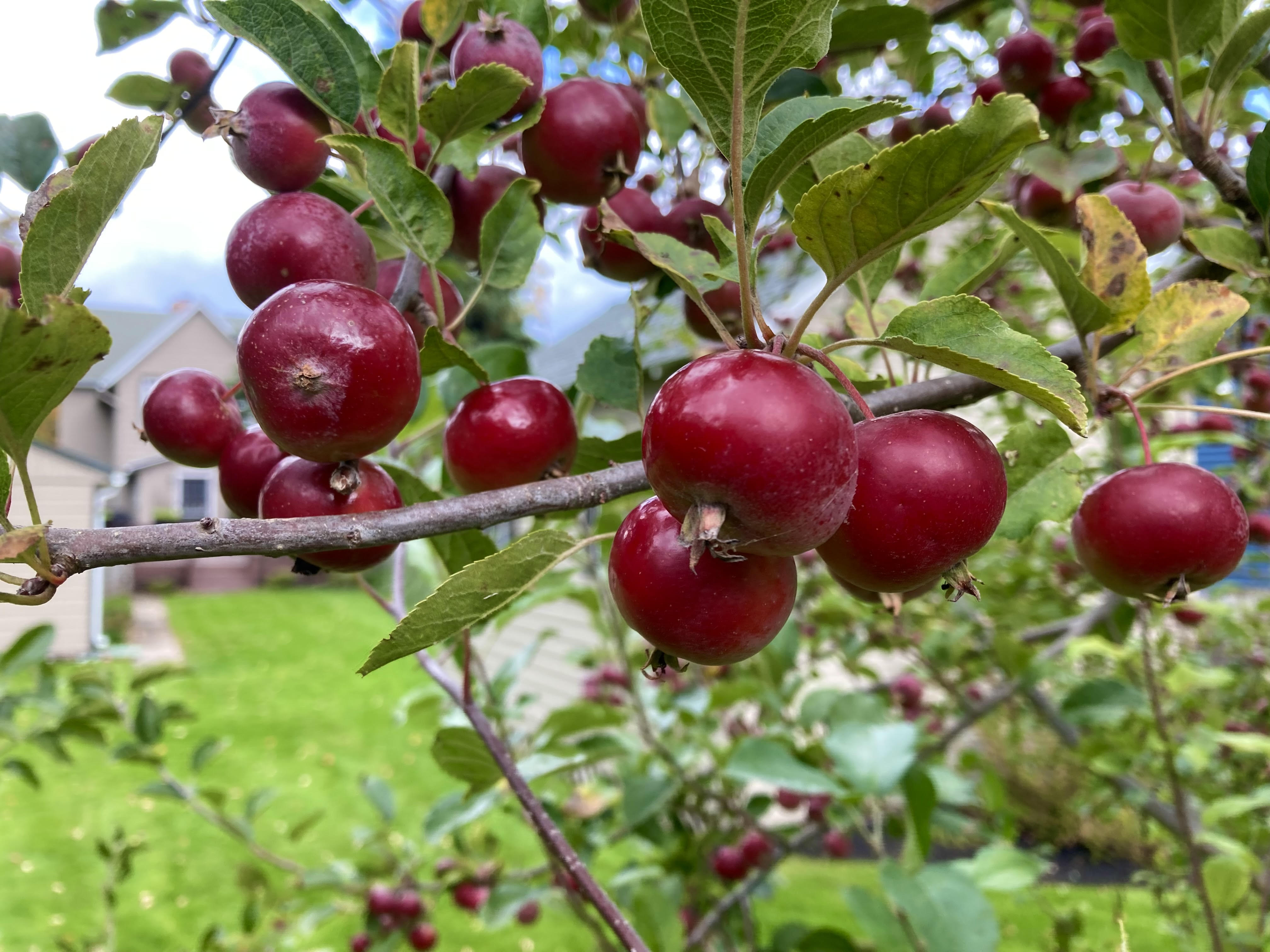
You can write about gardening, beaches, swimming or snowshoeing. Trips taken, meals eaten, beverages sampled, and cultural events you’ve attended. Wine tastings. Memorials to loved ones and pets who have passed. You can write about rain and snow and sun and wind. You can write about suffering, loss, and experiencing joy. During Covid, one of my blogs was about kindness and the many ways it manifested itself in our community; another about what it’s like to live across the street from a large lake in the middle of apple growing country.

Sometimes I whiz through whatever blog I’m writing for the month. My rough draft gets tweaked a little, and then voila, it’s ready to publish. Other times it takes a bit longer, sometimes more than a bit longer, as I search for the right word or tone or to put a semblance of order into my thoughts. It depends on the topic, and my mood, but eventually it gets done.

When I first started writing blogs here, I carefully constructed a list of the topics I wanted to write about for each month during that particular year, and I stuck to it. It helped me focus and because I was new at it, it also helped alleviate some anxiety when faced with a deadline. Then, occasionally, I would scratch the blog I planned to write for something that seemed more appropriate at that time. As I’ve become more comfortable, I typically pick my topic on a monthly basis, depending on my mood and life experiences at the time.

The books in my Edmund DeCleryk cozy mystery series typically run (give-or-take) about 70,000 words. I try to limit blogs to no more than 500, they’re easy to compose; really, no more than a page in a book. Plus, readers don’t want to spend a whole day reading a blog. And that’s why I’m stopping here. There’s more to write about, but I just checked and I’m coming up on those 500 words.

Karen Shughart is the author of the maritime-themed Edmund DeCleryk cozy mystery series that includes historical backstories with a twist, and recipes provided by the sleuth’s wife, Annie, the head of the local historical society. Book three, Murder at Freedom Hill, is an International Firebird Book Award winner in the mystery and fiction categories.

Writers and Their . . . Warnings?

Several articles over the last few weeks have circled around the issue of “trigger warnings.” I’m used to seeing them before certain television shows, but I haven’t seen them on books yet.

Jamie Beck’s essay in Writer Unboxed explored the perplexing and even confounding question of trigger warnings for novelists. Her publisher “engaged a sensitivity reader to evaluate the portrayal of a neurodiverse character in my summer 2023 release (The Beauty of Rain). I eagerly anticipated the reader’s feedback, whose notes on that aspect of the manuscript were ultimately helpful and unsurprising. Conversely, her recommendation that I add trigger warnings about suicidal ideation and prescription drug abuse did momentarily throw me.” In the end, after extensive discussion, she decided to add a warning in the author’s note, as an expression of her commitment to building “a trusting relationship” with her readers.

The essay is reviewed in Victoria Weisfeld’s blog, where she considers other books, including one that seemed hardly to need a trigger warning of any sort. On Fabian Nicieza’s highly comic mystery, Suburban Dicks, she comments, “A reader would have to be extremely thin-skinned indeed to take his jibes seriously, but then we do seem to be in such an era.”

The idea of trigger warnings may have grown out of academia. In 1991, when I attended Bread Loaf Writers’ Conference, a young MFA student admitted in a workshop that her fellow students were paralyzed in their classes for fear of writing something that would lead the teacher to accuse them of . . . of what wasn’t clear. But in general, they feared writing something considered politically incorrect, and as a result couldn’t write anything. 

At MIT students are sometimes afraid to speak for fear of consequences, which suggests we haven’t made much progress since 1991. According to an article in the Boston Globe, “A recent FIRE survey of 45,000 students at over 200 US colleges found that 60 percent were uncomfortable publicly disagreeing with a professor about a controversial topic; at MIT, it’s 68 percent. In the national survey, 63 percent of students worried about damaging their reputations because someone misinterpreted their words or actions. At MIT, 68 percent worried about this.” It should be understandable that my brain jumped to the news of Ron DeSantis, governor of Florida, shutting down the AP course on African American History. 

For me the issue isn’t whether or not what I write will offend someone, a reader I’ve never met and probably never will. I write a traditional mystery, and avoid violence in any form. But the question upends my longstanding view of the reader, as someone who comes to my work with an open mind and an optimistic attitude. 

Whenever I’m looking for something to read in the library, I pull several titles off the shelves until I find one that appeals to me. I check the genre (thriller, sci-fi, traditional, cozy, etc.), read the blurbs and jacket copy, and consider the author. Once I make my choice I go home wanting to like the book, and I give it my full attention as a reader, a form of respect for another writer’s best effort to date. Do I look for trigger warnings? No. Have I ever missed one and wished it had been included? No. Have I read into books that I wished I hadn’t? Yes. 

I don’t think I could read a novel and notice every instance that might cause distress in a reader. Would a deadly car crash qualify? Or back story about a child taken from the home because of physical abuse? How about the story of a bully who made high school miserable for a group of students? This is the kind of information I’d expect to find in the jacket copy—a clear indication of the parameters of the story. But I also wouldn’t want the jacket copy to give away important features. 

There’s no easy answer to the question of using or not using trigger warnings, but the discussions have caught my attention and made me think. I don’t want a reader to be distressed by one of my books (very unlikely, considering what I write), but I also don’t want to find myself unable to write freely out of fear or concern about a reader’s reaction. The decision will be different for each writer, and may vary with the book. I look forward to more discussion, and learning more about how this plays out for writers.

https://writerunboxed.com/2023/01/24/to-warn-or-not-to-warn

https://www.bostonglobe.com/2023/01/24/business/mit-students-faculty-afraid-speak-their-minds-sensitive-issues-report-says/

https://www.bostonglobe.com/2023/01/24/opinion/ron-desantiss-fear-american-history/

https://www.apmresearchlab.org/motn/what-americans-think-about-liberty-rights-freedom-may-2022

The Characters Keep Expanding by Karen Shughart

It’s fascinating to me how, with each successive book in my Edmund DeCleryk mystery series, the number of characters keeps expanding. With the first book there were a handful as I introduced the investigators and their families and friends, but the number grew as I included  the murder victim, witnesses and those involved as suspects or  who helped with the investigation.  While each book can be read as a standalone, because this is a series there are not only recurring characters- the support cast, so to speak- but new ones added as part of each new plot.  

For the first three books I was able to keep track of those characters without having to write their names on a chart, although occasionally I browsed through previous manuscripts when I couldn’t remember a minor character’s name. Now I’m in the process of writing book four, Murder at Chimney Bluffs, and keeping track of all the names has become much more challenging. So, to make things easier, I’ve created a list that includes old and new that I keep by the side of my computer to refer to when necessary. The list is so long that I now have two columns, divided into main and supportive characters, their friends and family, those involved in the historical backstory, or who are suspects or otherwise related to the crime or the killer.

Photo by Helena Lopes on Pexels.com

I’m asked if I construct an outline for my books and stick to a plot I create at the outset, but I don’t.  Instead I typically go where the story takes me. Like a train picking up cargo along the way, I add characters, or discard those who appeared in previous books if they’re not relevant to the current one. If appropriate, I’ll bring them back as the series continues.

 A former board member of the historical society and museum who retired and moved to Canada; his son; Annie’s predecessor who moved to England with her husband; a CIA agent who worked with Ed when both were Navy SEALS;  Ed’s close group of male friends from childhood ; Annie’s chums who comprise her support group; most have had at least cameo roles in all the books.

A new and influential member of Annie’s board of directors will appear for the first time in book four, and I expect he will also be a recurring character. Astonishing how the number has grown from book one to book four. At last count, I’m close to 50, some major and many minor.  As I think about it, what’s happened is that I’ve been building a community, and in the end, that’s what cozies do.

Karen Shughart is the author of the Edmund DeCleryk cozy mystery series, published by Cozy Cat Press. Her books are available in multiple formats at retail outlets and online. Read a recent interview about her writing with AllAuthor: https://allauthor.com/interview/karenshughart/

Those Pesky Revisions

Once in a while I come across a new writer asking what to do now that he’s finished his novel and is ready to get an agent. As the conversation flows I hear the optimistic assumption that even though this process will take time, it will end well. Left unsaid is the ending—the book will be published to blushingly great acclaim. I seem to come across these discussions when I’m in the deepest slough of revision. Right now I’m on the third rewrite for my current WIP (not to mention all the many drafts I did before I naively thought it was finished). It came back from my agent with lots of compliments on certain parts of it but not the first hundred pages.

“Get rid of the BOGSATs,” she wrote.

BOGSAT? This was new to me, so I had to ask. What is a BOGSAT? It’s embarrassing that I didn’t know what it refers to because I’m certainly guilty of having a lot of BOGSATs in the first third of the book. For those of you who know what I’m talking about, you can stop reading here. You know what follows.

BOGSAT refers to Bunch Of Guys Sitting Around Talking. In other words, too much talk, not enough action. In my case, the people sitting around talking were mostly women, the main character’s mother and sisters, and occasionally the MC and her best friend. One of the themes of the book is female relationships, and families. Nevertheless, respecting my agent’s judgment as I do, I set about removing the BOGSATs, and this is where it gets interesting.

What happens in place of talking? Action, of course. As I stripped out a stretch of dialogue I held onto the specific information that needed to be delivered. In one scene, it’s important for Ginny to learn that the parents of two children under the care of the social services agency where she works have been arguing about money. If her co-worker can’t tell her this and ask for her advice, how does Ginny find out there is a money issue in the family? She catches a glimpse of the husband wearing a coat that he can’t possibly afford. How does she know this? Her sister sees it, drools over it, and tells her sister how much it probably cost. Her sister wants one. That took care of one scene, about five pages in the first hundred. On to the next.

Ginny is worried about something from her teen years becoming public. It’s linked to an event long forgotten, or so she thinks. At a celebration of life for an acquaintance, the man leading the program blurts out the deceased’s role in the event. Ginny wonders how long her secret can last.

In a grocery store she can’t simply stop and chat with someone to elicit information. Hmm. She spots an out of town reporter who has been investigating the event of concern to Ginny stopping people as they come out of the store. She notices who rebuffs him, who ignores him, and whom he ignores. The chief has told her about him, and she wonders just how much he’s uncovered. She soon finds out. The reporter wasn’t in the earlier version. He appeared only as the author of an article. Now he’s on the ground, poking around, making Ginny nervous. She’s keeping track of him.

Removing dialogue does more than eliminate the “talkiness” in the ms. It means I have to use the other characters differently, use Ginny differently, uncover little bits I hadn’t thought about before. Getting rid of the BOGSATs is changing the story little by little. Ginny Means will still be who she is doing what she does, but how she interacts with other characters is becoming different. There is a place for the BOGSAT, but it’s not in the first third of my book.

Imaginary Friends by Karen Shughart

When I was in elementary school, one of my best friends and I would walk home after school each day and create stories about an imaginary friend named Ponytail.  It was the 1950s, and many girls of that decade sported ponytails at one time or another. There were rock and roll songs that mentioned girls in ponytails, and TV shows and movies where the ingenues, in their swirling, petticoated dresses and bobby socks, flitted about, ponytails bouncing. Ponytails were part of the culture and fashion of the day. It was a fitting name.

I don’t remember Ponytail’s adventures, but I do remember being excited when we began our journey home to resume our ongoing saga and looking forward to continuing it the next day. Then, as my friend and I got older, the stories we created about our imaginary friend stopped, and we moved on to other discussions. Preteenagers don’t admit to having rich fantasy lives, at least they didn’t when I was growing up.

Last month I was interviewed by author LeAnna Shields on her podcast, The Cozy Sleuth. It was a lot of fun, and at the end I offered to turn the tables and interview her. Two weeks later, that’s what happened. During that interview, LeAnna mentioned that while many people have one imaginary friend, she had a multitude of them when she was growing up, which is partly what motivated her to become an author.  After I thought about it a while, it made sense. If you’re an author of fiction, that’s exactly what you do-create characters that are birthed strictly from your imagination.

As I look back, I realize that Ponytail was the continuation for me of a love of creating poems and stories that began when I was about five. It started when my brother and I were on a trip with our parents, and we had a flat tire. It was a rhyming poem about the frustrations of young girl whose trip was delayed because of that tire, and I blurted it out to my mother while my dad was fixing the tire. She loved it, wrote it down, and taped it to the refrigerator when we got home.

From the time I started to read, I immersed myself in almost anything I could get my hands on, sometimes appropriate for my age and sometimes not- my parents never censured my choices- and trips to the library were frequent,. Later, in the literature classes I took in school, I was transported from my daily life into the adventures and travails of characters created by a diverse group of authors. I became an English major in college and after that, each job I had was one where I wrote,  although back then it wasn’t fiction. But I always yearned to write stories with characters that were mine.

The idea of becoming a fiction author remained an unattainable dream for many years. For me, like so many of us, life got in the way.  Five years ago, finally retired and with children grown, I decided to do something about it.  I created and was fortunate to get published the first of the Edmund DeCleryk Cozy mystery series ( Cozy Cat Press), replete with my own imaginary characters. The mysteries take place during the present, but with historical backstories starting in the 1700s and moving ahead in time with each successive book, providing clues that help the sleuth solve the crime. I hadn’t really thought about it until now, but if I keep on going, perhaps someday one of those backstories will take place in the 1950s, and one of my characters can have an imaginary friend named Ponytail.