

Ten years ago, we moved from the suburbs of an urban area in Pennsylvania to our vacation home on the south shore of Lake Ontario in New York state. Figuring out what to take and what to leave, combining two homes into one – each with its own distinct personality – was challenging, to say the least.
We knew our life at the lake would be far more casual than the one in a city suburb; we didn’t need the silver serving dishes, warming plates, crystal pitchers and elegant tablecloths that we regularly used before we retired and were entertaining a lot.
As difficult as it was, we got rid of boxes and boxes of books we donated to the library; kept only those that had absolute meaning to us. We sold numerous LP records, something I will always regret now that record players are back in favor. The couple who purchased our house bought much of the furniture; the rest we either sold at a consignment shop or brought with us, just in case we decided to use it.
We kept other items we weren’t sure we’d need but couldn’t bear to part with, storing them in our lake house attic and in Rubbermaid closets in our garage. There was a 40-cup coffee urn, three crockpots, an assembly of pots and pans for cooking and jars for canning, flower vases, a Lazy Susan, bedspreads, throws and decorative pillows; area rugs. And lots of glassware.
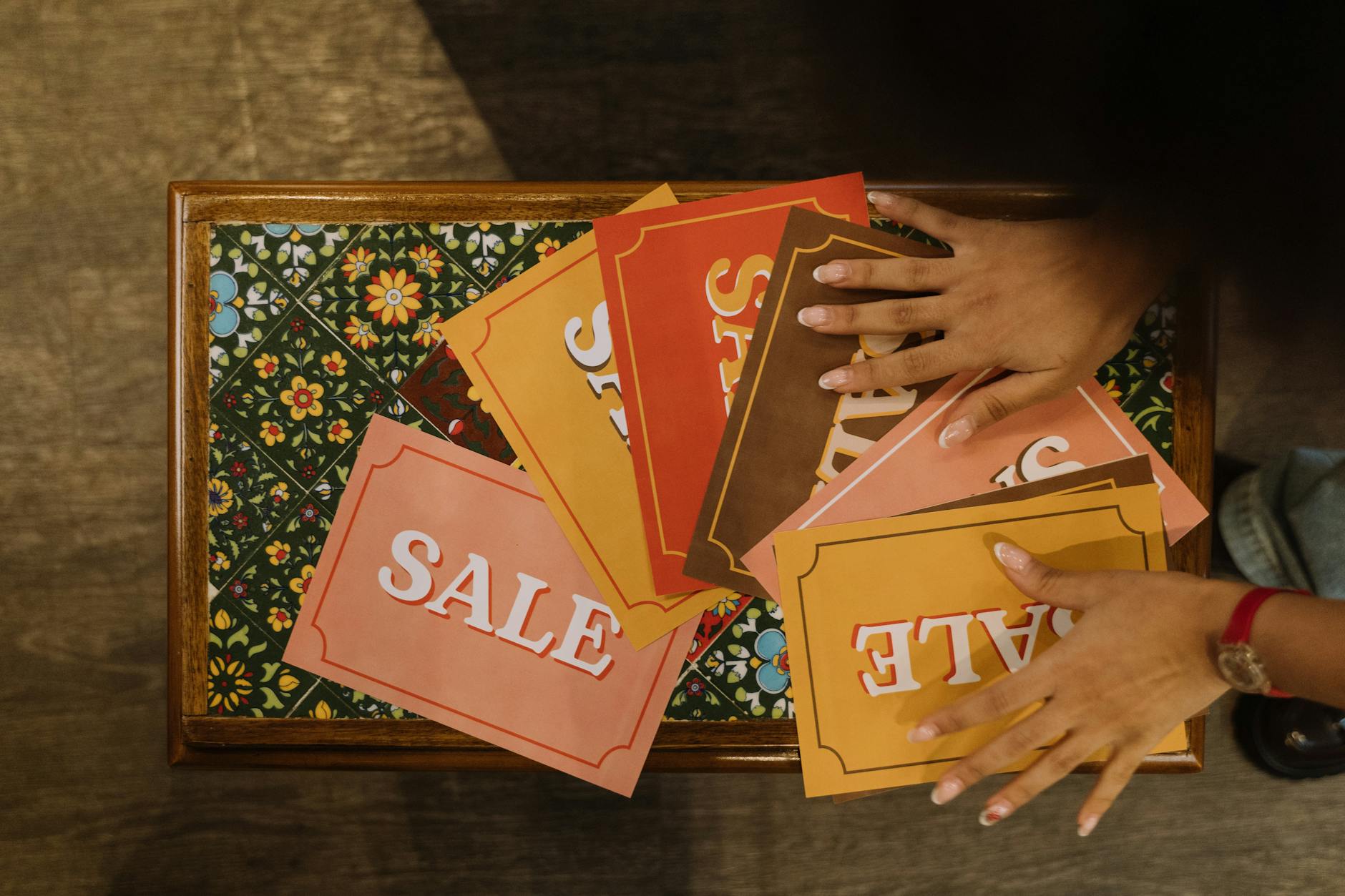
Because we’ve never used most of the items we stored away in the ten years we’ve been here, and we are certain our grown children don’t want them, we decided to participate in our village’s community yard sale this year. While I’m glad we did it, it was a lot of work. We chose what we could part with and a storage shed that houses our porch and deck furniture in winter served as a holding center. We determined ahead of time what to charge for each item and affixed a sticker with the price on it. On the day of the sale, we lugged everything out to our front yard in a wheelbarrow and placed compatible items with each other on tables, ladders and drop cloths on our grass.
It turned out to be a good experience. We met nice people who liked what we had to offer, and it felt good to clean out the clutter. Now our attic contains suitcases, a wicker chair that we may use at some point, and our Christmas decorations. There’s not much left to sell for next year’s sale, except for some of those Rubbermaid closets that now stand empty in our garage.
Karen Shughart is the author of the Edmund DeCleryk cozy mystery series, published by Cozy Cat Press. She has also co-written two mysteries; two non-fiction books and is a monthly contributor for Life in the Finger Lakes magazine. She is a member of CWA, N.A., and F.L.A.R.E. (Finger Lakes Authors and Readers Experience). Her books are published in multiple formats and available at local gift shops, bookstores and at Amazon: https://www.amazon.com/gp/product/B0BZF9TC3W?ref_=dbs_p_mng_rwt_ser_shvlr&storeType=ebooks

 Ladies of Mystery
You must be logged in to post a comment.