

It’s an old phrase: priming the pump. Back in the 19th century, it meant pouring liquid into a pump to expel the air and make it work. Even now, an internet search will tell us that before any centrifugal pump can be operated, it must be primed. Priming is the process of replacing air in the intake lines and portions of the pump with water.
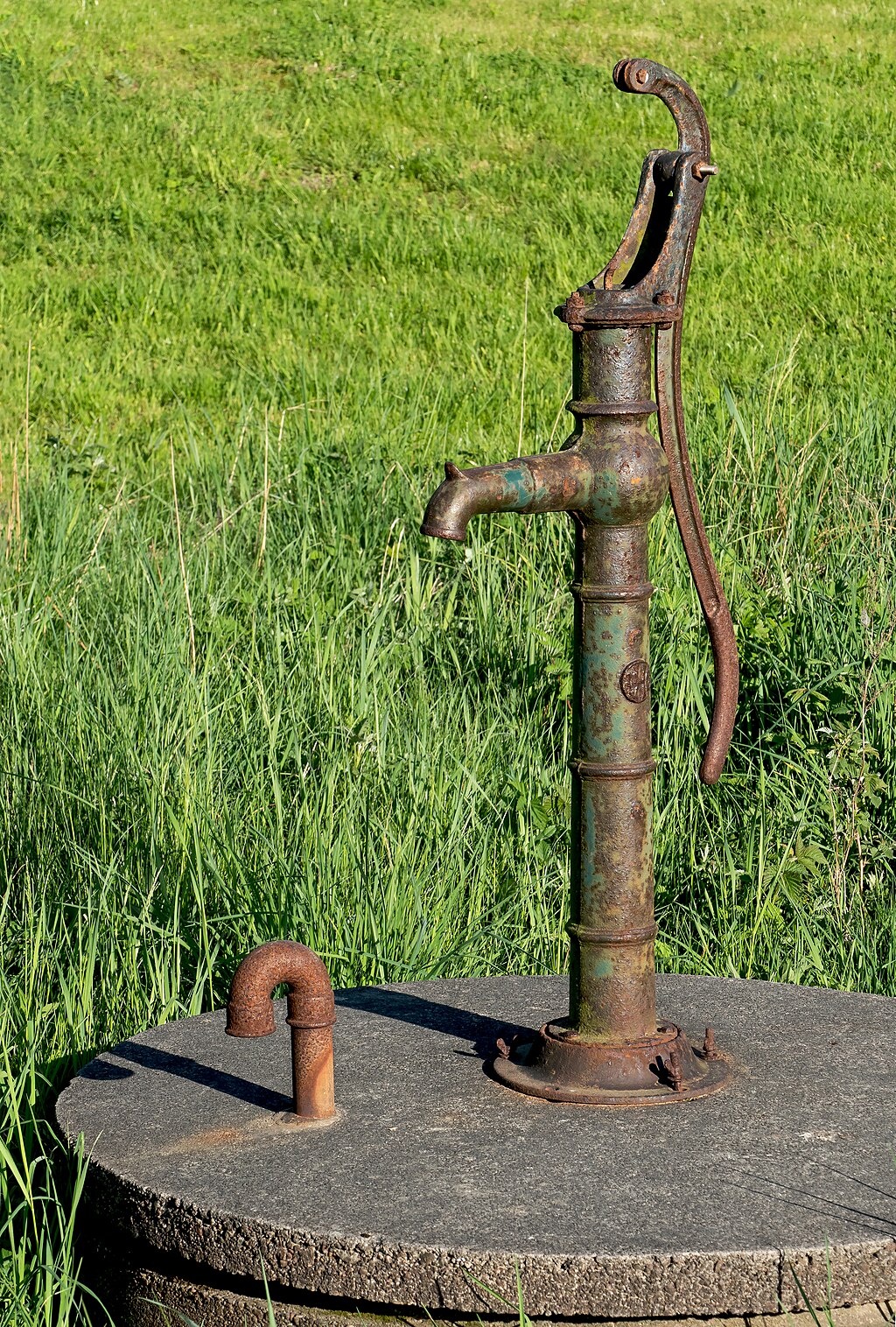
But our subject is books and writing. Priming the pump also means encouraging the growth or action of something. In this case, my work-in-progress.
It’s a historical novel. I have a large pile of words that will eventually become a coherent first draft. Where the hell I’m going? How am I going to get there? Will it make any sense? It probably will, to me. Will anyone else want to read it?
Thus I prime the pump. I’ve been seeking inspiration in one of my research books, taking lots of notes. I’m paying attention to the timeline of actual events, in order to integrate my fictional characters into the crowded parade of real people who were doing things in my setting in 1878 and 1879. As I do this, I write notes to myself, usually set apart in brackets, outlining things I want my protagonist to do. Or learn.
There’s a lot going on, but it’s impossible—and improbable—for me to place her physically at all the significant events, much as I would like her to be an eyewitness. I must pick and choose the most dramatic scenes and figure out a logical reason for her to be there. The rest, she’ll have to learn from others. Besides, the book already looks like it will be long. Some events need to be mentioned in passing rather than detail.
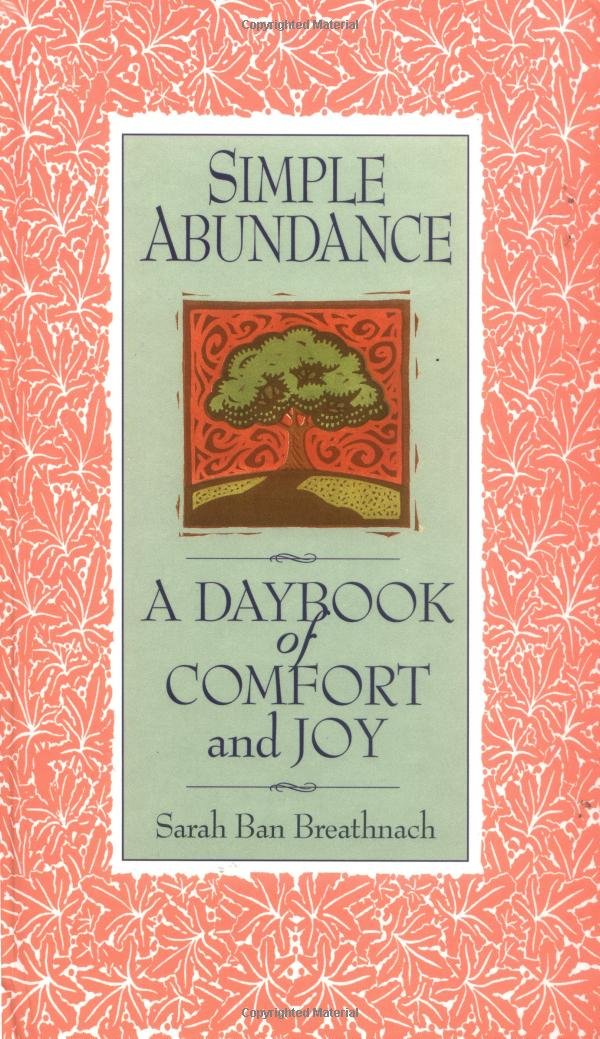
So, reading a book, in this case, a research book. Or another book. Like this one. Years ago, I was going through a bad patch that soured me on life and left me feeling perpetually grim, grumpy, and depressed. A friend tossed me a lifeline, a book. It’s Simple Abundance: A Daybook of Comfort and Joy, by Sarah Ban Breathnach.
I’m not one for touchy-feely, self-help books. Over the years, I’ve bought a few, gotten little from them, and quickly donated them, passing them on to other readers. But Simple Abundance spoke to me at a time when I needed it. It’s a collection of essays, one for each day of the year, looking at things like joy, gratitude, beauty, and so forth. I read one essay every morning. I’m always surprised and gratified when the essay for a particular day speaks to something that’s going on in my life. Such as the day my father died. That essay was exactly what I needed at the time.
One of the best takeaways is the gratitude journal. Each evening, I jot down three or more things that I’m grateful for—even if it just clean sheets on my bed, a quiet day at home, and especially a productive day of writing. I find that keeping the gratitude journal has changed the way I look at life. That helps immeasurably with my writing.
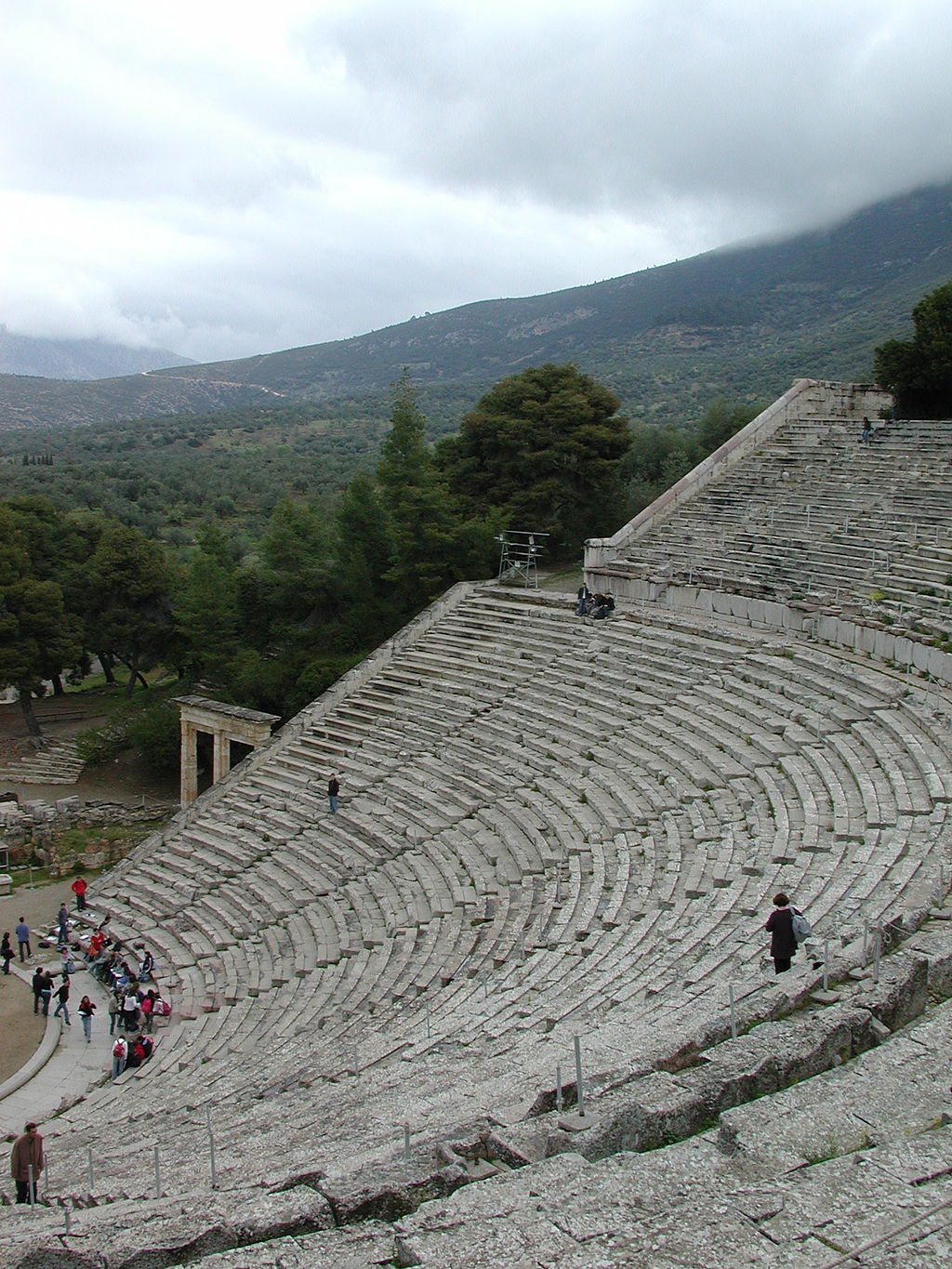
Simple Abundance also introduced me to the Greek poet Constantine Cavafy. On a date at the end of the year, the author quotes Cavafy’s poem Ithaka. During my trip to Greece in October 2023, my group visited the ancient theatre of Epidaurus, constructed in the late fourth century BCE. It’s considered the most perfect ancient Greet theatre with regard to acoustics and aesthetics. It is still used for the performances of ancient plays.
Our tour guide demonstrated the acoustics at Epidaurus by standing in the middle and reading a poem—Cavafy’s Ithaka. As we enter the new year, I leave you a few lines from the poem [translation by Edmund Keeley and Philip Sherrard, C. P. Cavafy/Collected Poems, Princeton University Press, 1992.]
As you set out for Ithaka
hope the voyage is a long one,
full of adventure, full of discovery.
. . . .
Keep Ithaka always in your mind.
Arriving there is what you are destined for.
But do not hurry the journey at all.
Better if it lasts for years . . .
May your voyage this year be long, full of adventure and discovery. And productive!


 Ladies of Mystery
You must be logged in to post a comment.