
It’s All in the Details by Karen Shughart

Even in fiction, it’s important that some details are correct, especially in a murder mystery when describing an investigation and its resolution when the killer is captured. While the plot, setting, and characters can be a complete figment of the imagination, there’s got to be some accuracy when describing the measures taken to solve the crime.

Our communities offer many resources to those of us who write mysteries, among them sheriffs and police personnel, district attorneys, public defenders, prosecutors, and judges. Having access to these experts and being willing to learn from them adds a level of authenticity to our stories, and hopefully results in more reader satisfaction.  I’m fortunate that these professionals have been available to me when I’ve had questions.

Photo by Sora Shimazaki on Pexels.com

There’s wiggle room, of course, but when investigators on TV are trying to solve a crime and get DNA results in an hour, that’s not how it really works. Although technology has evolved, and today it’s possible for a speedier turnaround time- sometimes in as little as six hours-I try and stick as much to the facts as possible.

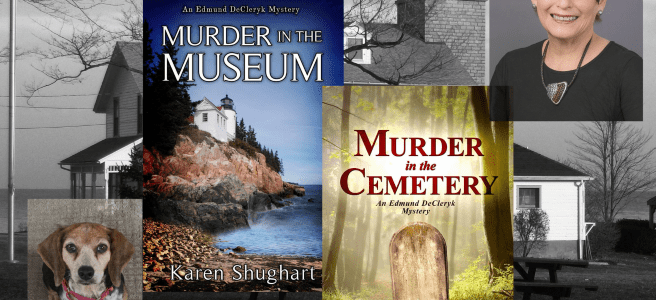
I’m working on Murder at Freedom Hill right now, the third is the series of Edmund DeCleryk Cozy mysteries.  In the last two books, the crimes were solved without my needing to provide precise details of what followed after the murderer was apprehended. This time around it’s a bit more complicated.

I’ve realized as I’ve been writing this book that my knowledge of some those procedures is a bit rusty, and I wanted to clarify the steps that must occur from arrest to sentencing, the difference between probation and parole, and the circumstances that permit the defense attorney to make a deal. A few weeks ago, I met with our county’s district attorney.  We spent about an hour together, and after, I went home and revised some sections of the book for clarity, although I must admit that I fudged a few of the details to mesh better with the story.

 The women and men who work at various levels of law enforcement and in criminal justice professions are a valuable resource to those of us who write mysteries. They help provide a framework that allows us to create a book that weaves fantasy and reality into a believable plot.

The Wine Blog by Karen Shughart

I’ve always believed that it’s easier to write about what you know, which is why wine features so prominently in my Edmund DeCleryk mysteries. Like my husband and me, Ed, and his wife Annie, live in the northern Finger Lakes region of New York, the second largest wine producer in the U. S. Wine is very much part of the lifestyle here.

Our own wine journey began many years ago. Our kids were in college, our careers at their peak, and we came home each night exhausted. We made the transition from workday to evening by having a glass of wine (or sometimes for Lyle, a Scotch) before dinner.  We caught up, chatted about our day, and even when my husband traveled for business, we designated a time to call each other, evening drink in hand. Although now retired, we continue the tradition to this day.

This image has an empty alt attribute; its file name is restaurant-love-romantic-dinner.jpg

One weekend we were invited to a dinner party at some friends’ house. We were asked to bring a dish to share and a bottle of wine to pair with it. It was the genesis of a gourmet group that met quarterly for many years, rotating hosts. A specialist at a wine store helped us choose the wines to go with each course. We quickly learned that to enjoy wine is to slowly sip and savor it.

Some of us took a cruise together from San Francisco Bay, along rivers that led to the Napa, Sonoma and Carneros wine regions of California.  Each evening we’d dock and before dinner attend a wine education session. The next morning we’d board a bus that would take us to charming towns for vineyard tours, wine tastings and to explore galleries and shops.

One weekend Lyle and I traveled to the Finger Lakes; a short drive from where we lived in Pennsylvania. We were enchanted by the wineries and restaurants, the vibrant jazz scene, and postcard-picture beauty.  We purchased an 1890s cottage on Lake Ontario; after retirement, we decided to make it our permanent home.

We joined a wine club.  At a series of monthly classes at New York Kitchen in Canandaigua, we learned about regions around the world where wine is crafted and how terroir, the natural environment in which grapes are grown, results in differences in color, smell and taste of the same varietal.  We cleaned up our musty basement and created a wine cellar in what was once a cistern, dry as a bone with thick stone walls and floor and about 56 degrees year ‘round.

Over the years I’ve learned a lot about wine, and I write about it in my mysteries. It is, after all, part of the local lore, and an integral part of the culture. And just like Lyle and me, having a glass of wine at the end of the day is a way for Ed and Annie to unwind and share their stories.