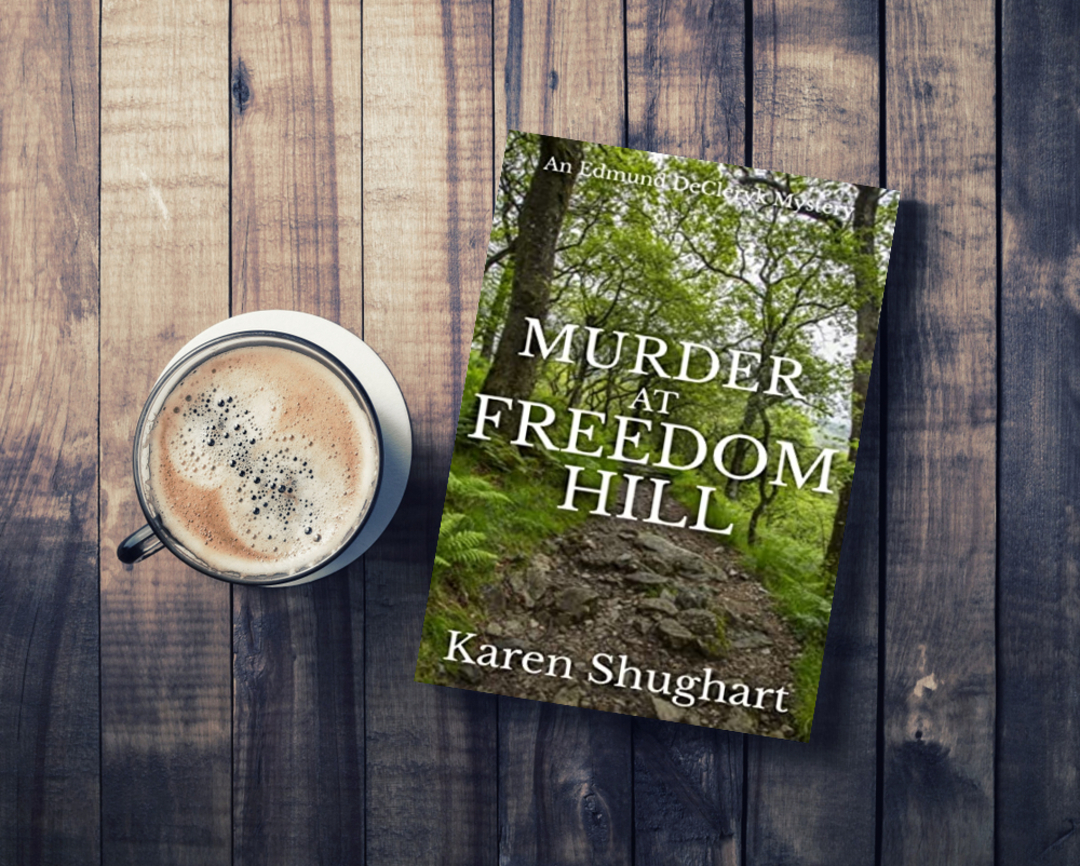
Merging Fact With Fiction by Karen Shughart

I’ve been a contributing blogger for Ladies of Mystery for roughly five years, and initially, at the beginning of each year, I made a list of the topics I wanted to write about for each month. But a year or two ago I decided to be a bit more flexible and instead of sticking to the script, so to speak, to write about what motivated me at the time.

When I began to think about what to write for this month’s blog, at first I came up with a blank–some months are easier than others–and after that I considered writing something about Valentine’s Day or Presidents’ Day. Somehow neither felt right, and I couldn’t think of anything original to say about the topics. Then I decided that because February is also Black History Month I’d write about the third book in my Edmund DeCleryk cozy mystery series, Murder at Freedom Hill, which is about the murder of the beloved, biracial mayor of the fictional village of Lighthouse Cove, NY, whose body is found on the path leading to the beach at a historical site called Freedom Hill on the south shore of Lake Ontario

Freedom Hill is a real historic site a short drive from our house where before and during the Civil War, through an intricate, dynamic and well-developed Underground Railroad system, escaping slaves fled down a path to boats that would transport them across the lake to freedom in Canada. At that same time Maxwell Settlement, upon which the fictional Macyville in the book is loosely based, was a thriving community of freed people of color who worked along side abolitionists to help those slaves escape.
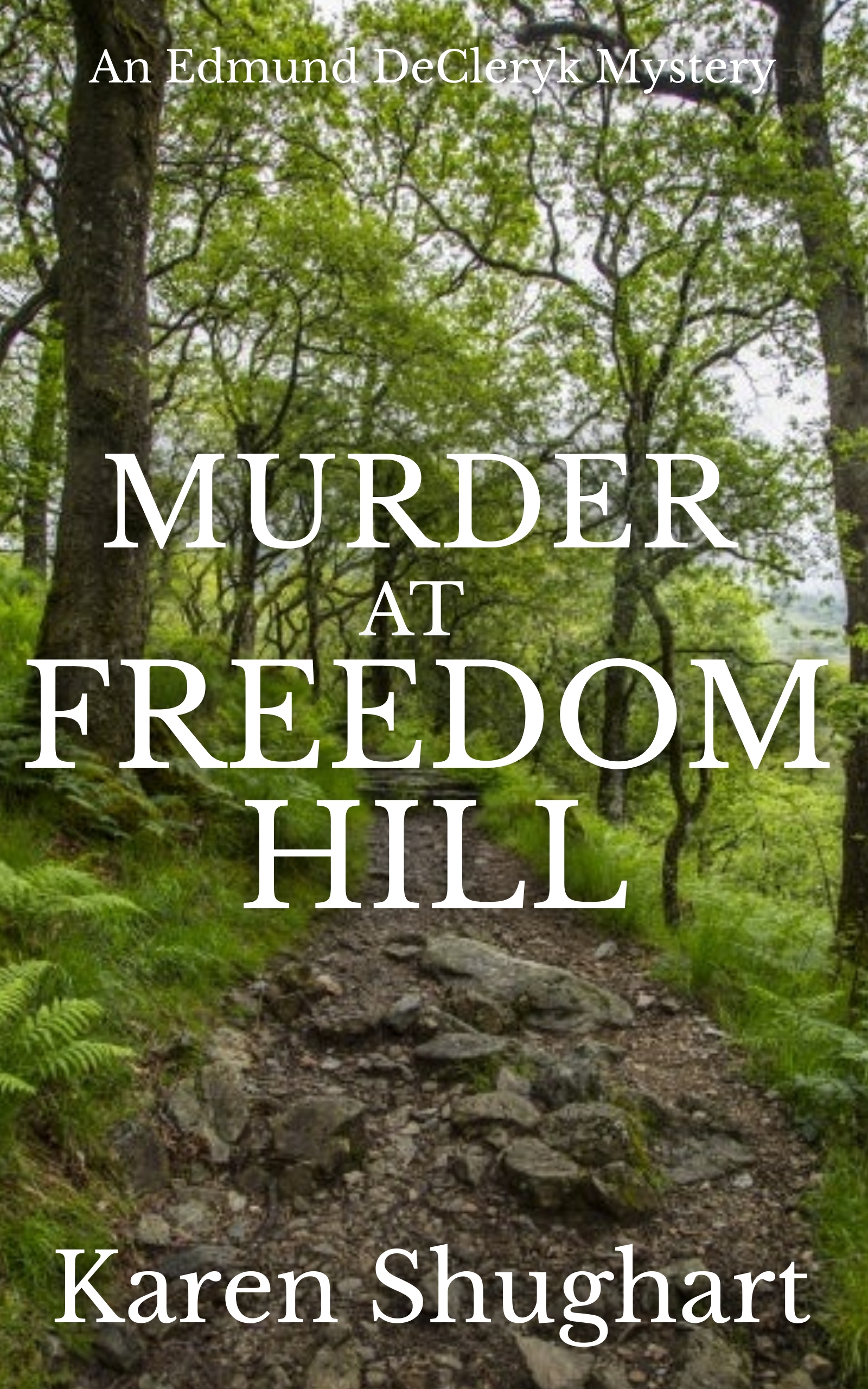
In the book, when criminal consultant, Ed, is hired to investigate the mayor’s murder he wonders if the crime might be racially motivated and related to an exhibit the mayor had been working on with Ed’s wife, Annie, head of the local historical society and museum. The exhibit’s focus is on Macyville and the mayor’s ancestors, both Black and White, who lived there, but a critical piece of information the mayor had promised to provide is missing.

The historical society, with help from the mayor, has also obtained a grant from the National Trust for Historic Preservation to restore Macyville, which had fallen into disrepair after its residents left for better opportunities after the Civil War, and a fire destroyed it in the 1920s (the real settlement remains in ruins, but there’s a historic marker designating the site). Annie is working with contractors to assure the project will be completed in time for July 4th weekend festivities, but she suspects that someone is trying to stop it from moving forward. Is the mayor’s death related, or is something else afoot?

I enjoyed doing the research for this book and merging fact with fiction- as I do with all the books in my series- but for some reason this particular period of history has always fascinated me. It was gratifying to learn how so many of our residents played a critical role in helping to shelter fleeing slaves from capture before transporting them to freedom.

Karen Shughart is the author of the Edmund DeCleryk cozy mystery series, published by Cozy Cat Press, including the award-winning book three, Murder at Freedom Hill.  All books are available in Kindle, Kindle Unlimited, paperback, and Audible. She is a member of CWA ( Crime Writers Association of the UK-North America Chapter) and F.L.A.R.E ( Finger Lakes Authors and Readers Experience).
Let There Be Light by Karen Shughart

My husband and I live in a charming maritime village on the south shore of Lake Ontario in New York, the prototype for Lighthouse Cove, the village where my Edmund DeCleryk cozies are set. This time of year in our village activities surrounding the holidays abound, and there truly is something to do for people of all ages: festivals; tree lightings; parades; caroling; shopping and dining opportunities, and a judged competition for the best outside holiday decorations.

 I especially like writing about the seasons in my books. In my third, Murder at Freedom Hill, the crime occurs just before Thanksgiving with the investigation continuing through the entire holiday season. I enjoy describing how the folks living in Lighthouse Cove celebrate, with light-filled activities that juxtapose the dark, horrific murder that has occurred.

Ed, a retired Navy SEAL and former police chief, now works as a criminal consultant who is hired by the current police chief to solve the crime. His wife, Annie, head of the local historical society and museum, curates exhibits, organizes special events, and because of the historical backstories that frame each crime, often becomes involved in the investigation.

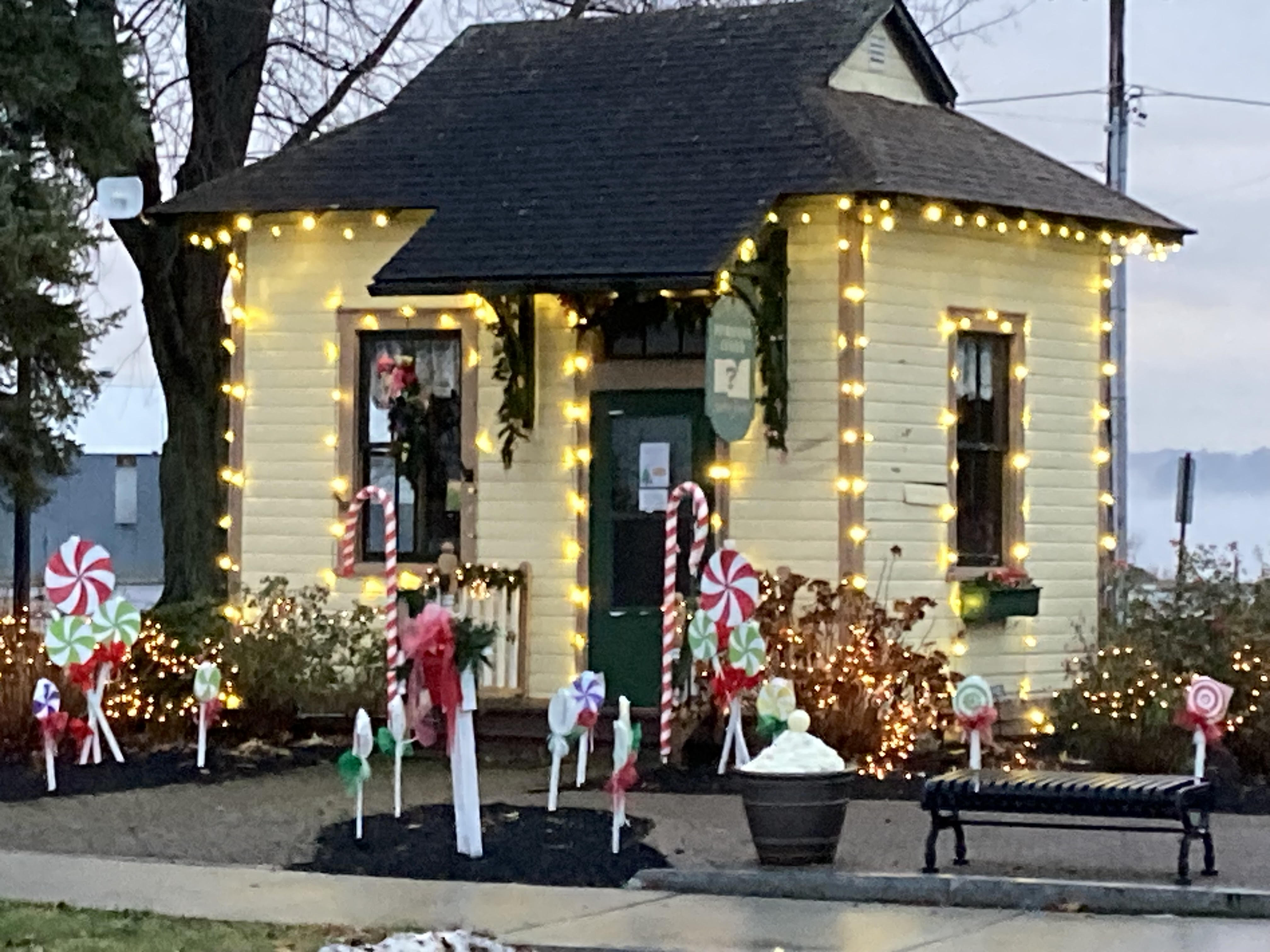
One of these special events occurs early in December, when the days are short and darkness prevails. A Festival of Lights, held on the grounds of the museum, provides diverse groups with an opportunity to showcase the ways in which light plays an important role in their cultures during this time of year:

Photo courtesy of Lyle Shughart

“The Holiday Festival of Lights was held in the park next to the museum the following Saturday evening and started at dusk. Tall stadium field lights provided illumination, and the museum staff and volunteers had strung multi-colored holiday lights on bushes and around tree trunks. Several portable fire pits had been placed at strategic spots near park benches to provide warmth.

The Neighborhood Association maintained a booth that offered free hot chocolate and cookies. Other booths, with representatives from local Christian, Jewish, Muslim, and Hindu congregations, offered information about their holiday customs including the significance of light, and samples of traditional holiday food.

Santa ambled through the crowd passing out wrapped red and white candy. A group from near Tug Hill brought live reindeer, tame enough to pet. Children hopped on the back of a fire truck, a huge wreath on its hood, for a ride around the block, speakers blaring seasonal winter songs.

A large evergreen tree located in the middle of the park was festooned with multi-colored lights; a Chanukah menorah, Kwanzaa kinara, and clay diyas—oil lamps representing the Hindu holiday of Diwali—flanked the tree on large tables on either side.

Towards the end of the evening, the high school student chorus handed out sheets for a sing-along and led the community in a diverse selection of melodies representing all the groups at the festival.”

A definition of the symbolism of light from the National Gallery of the UK states: “Across cultures, light is an ancient symbol of understanding and intellectual thought: it is the opposite of ignorance, or darkness. Almost universally, the dark is …frightening and sinister, associated with things we cannot understand. Light is said to conquer darkness and to bring order out of chaos.”

We all need a little light in our lives this time of year, so, let there be light!

Setting the Scene by Karen Shughart

All the books in my Edmund DeCleryk cozy mystery series are set in Lighthouse Cove, NY, a fictional village on the south shore of Lake Ontario, with the crimes occurring in the present but are related to something that happened in the past. In book one, Murder in the Museum, a map dated 1785 discovered in the historical society museum – led by sleuth Ed’s wife, Annie – and a journal dated 1845 found at an archaeological dig in Toronto, Canada, provide clues to why the victim was killed.

In book two, Murder in the Cemetery, a relic at the cemetery where casualties of the War of 1812 are buried; long-lost letters written by the wife of a patriot transported to England as a prisoner of war during that time;  a missing artifact at an exhibit at the Victoria and Albert Museum in London, England; and a diary discovered at an abandoned farmhouse help Ed and Annie solve the case.

In book three, Murder at Freedom Hill, the crime is thought to be related to the victim’s ancestry, his forebears lived in a settlement where free people of color lived harmoniously with abolitionists who helped transport escaping slaves to Canada across the lake before the Civil War. Another heinous deed, related to that settlement, is revealed during the investigation of the murder.

But what the books also have in common is that I weave into the plot the seasonal setting.  After book one, instead of just one prologue I decided to write two, the first with the historical backstory and the second describing the season.

I continue descriptions of the weather throughout each book, it helps to construct the mood. For example, Murder at Freedom Hill begins in November, before Thanksgiving. In one of the early chapters, Ed discovers that the village mayor has been murdered. A beloved member of the community, the mayor also served on Annie’s board of directors and the two had become close friends. After conferring with Detective Brad Washington at the crime scene, Ed gets into his SUV and drives to the museum to tell Annie about his death. Lots of sunshine and a clear sky start the day, but then the weather changes:

“The brilliant sky at sunrise had made way for clouds the color of brushed pewter that hovered over the roiling silver lake. The day looked like an antique photograph: sepia; gunmetal grey; milky white and black; faded like withered grass. The direction of the wind had changed, picking up speed from the northwest, with fallen leaves swirling around the museum parking lot as Ed pulled into a spot. The temperature had plummeted- winter silently creeping in like a cat about to pounce upon its prey.”

What I enjoy about writing cozy mysteries is the ability to expand description if it fits into the plot, and the weather can either give readers a sense of doom and gloom or provide an interesting juxtaposition to an odious deed.

Karen Shughart’s cozy mysteries are published by Cozy Cat Press. She’s currently working on book four of the series, Murder at Chimney Bluffs.

Let It Go by Karen Shughart

There’s a certain amount of pressure for all authors, regardless of how they’re published, that’s self-imposed. We set out to write a book and determine the time frame for finishing it, and therefore must adhere to some sort of schedule. And for those of us who are with traditional publishers, there’s the added pressure of submitting our book at an agreed upon deadline,

When I started writing my Edmund DeCleryk cozy mystery series, I wrote every day. I didn’t set a specific number of hours but instead spent time at the computer until I was either so exhausted that I literally couldn’t see straight or was happy with the advancement of the plot. In the past this has worked well for me, but this summer it didn’t.

Let me explain.  We live in a resort village that is a bustling hive of activity during summer months. Our beautiful scenery, gorgeous waterways, pristine beaches, and a multitude of activities centered around what we call Summerfest results in visits from family and friends, picnics, cookouts, concerts, festivals, outdoor movies, yoga classes, boating excursions and, on cool nights, time spent with friends drinking wine around a blazing fire pit watching the stars.

This year in particular, I was also happily bombarded with invitations to do book talks and signings, sometimes more than one a week. In addition, we took three short trips: to visit family; for a couple’s getaway; and when I participated as a panelist at a  mystery lovers’ conference in another state.

I must admit, at first I felt anxious about my inability to carve out time to continue writing my fourth novel, Murder at Chimney Bluffs, after making good headway last winter and spring.  Then I took a deep breath and thought. ‘It will be done, and isn’t a big part of life enjoying experiences that could help make my writing be even better? Let it go.’

And I did. When my publisher emailed me to get a sense of when she could expect my next book, I responded that I thought I could submit it to her a year from this coming November or maybe even December, but not before. She thanked me and said no problem. When I gave talks and attended signings, which I really do enjoy, I wasn’t the least bit anxious about not writing.

At the entrance to a town a little west of us there’s a huge sign that announces “Where Life is Worth Living”.   And that’s certainly true about this place we call home.  I finally conceded to the pressure to write and allowed myself to enjoy every minute of every day and relax about not keeping to a schedule. I’ll get it done, I know. There’s something to be said for letting go.

Karen Shughart is the author of the Edmund DeCleryk cozy mystery series published by Cozy Cat Press. She lives on the south shore of Lake Ontario in a village in New York state that’s the prototype for Lighthouse Cove, the s fictional setting for her books.

What’s Your Method? By Karen Shughart

I recently read an article about renowned American author, John Steinbeck, who gave six tips on writing that were included in a letter he wrote in 1962 to a friend. These caused me to reflect on how I write my cozy mysteries, and I was astonished to realize how much of his advice applied to me. Below are the tips with my italicized notes beside them:

  1. Abandon the idea that you are ever going to finish. Lose track of the 400 pages and write just one page for each day, it helps. Then when it gets finished, you are always surprised. I don’t write every day, but when I do I try to write at least a chapter or two. I don’t have pages in mind; instead, I aim for 60,000-75,000 words, the length for cozies.
  2. Write freely and as rapidly as possible and throw the whole thing on paper. Never correct until the whole thing is down. Rewrite in process is usually found to be an excuse for not going on. It also interferes with flow and rhythm which can only come from a kind of unconscious association with the material. This one hit home. I write the entire story and revise and expand afterword, my first draft is typically too short.
  3. Forget your generalized audience. In the first place, the nameless, faceless audience will scare you to death and in the second place, unlike the theatre, it doesn’t exist. In writing, your audience is one single reader. I have found that sometimes it helps to pick out one person—a real person you know, or an imagined person and write to that one. Instead of picking a person, I write towards a targeted audience, mainly women (and some men) who are middle-aged or older. Cozies are called “clean” novels because they do not contain graphic language or violence or explicit sex scenes, something that appeals to my readers.
  4. If a scene or a section gets the better of you and you still think you want it—bypass it and go on. When you have finished the whole, you can come back to it and then you may find that the reason it gave trouble is because it didn’t belong there. I do this a lot. See below.
  5. Beware of a scene that becomes too dear to you, dearer than the rest. It will usually be found that it is out of drawing. I have a slash and burn mentality when it comes to writing. I may fall in love with a scene, but I’m brutal about cutting it if it doesn’t fit.
  6. If you are using dialogue—say it aloud as you write it. Only then will it have the sound of speech. I do this with every character. Sometimes when I’m writing dialogue for a male, I check with my husband to see if it sounds authentic.

So, there you have it. I hope you authors reading this blog take time to reflect on your own writing methods. For those of you who are our readers, perhaps you’ve gained a little insight into the writing process, at least for John Steinbeck and to a lesser extent, me..