A Fresh Start

thumb_IMG_1225_1024

I’m in the early stages of drafting the fourth book in the Adam Kaminski mystery series, mysteries that take you places. Right now, I’m developing characters – one of my favorite parts of writing.

My main characters I already know, of course: Philadelphia detective Adam Kaminski, his partner, members of his family. These recurring characters grow and develop in each book in the series, a different kind of challenge for an author. Today, I’m working on new characters. Thanks to the theme of my books – each book embroils Adam Kaminski in a murder investigation in a different city – I also get to develop new characters for each story.

The first new character I create is the victim. For me, the victim defines the story. I have to ask myself, who has to die? How? Most importantly: why? What’s the motive? Which of course leads me to the killer. And thus the plot.

So I create the characters, the victim, the killer, the other people involved in the story. I figure out their backgrounds, their likes and dislikes, what their childhoods were like, their favorite ways to enjoy themselves, their fondest memories, their feelings about their parents, the way they dress, the way they imagine themselves. Once I know these things, the physical description follows naturally – it comes from the character. A person who is insecure might be nervous, jumpy, twitchy. Another character is tall, upright, unbending, sure of himself.

I write using the program Scrivener. I know that for writers Scrivener tends to be a love it or hate it kind of tool. I love it. Scrivener provides templates for character sketches, which makes it easy to keep all this information organized.

Another of Scrivener’s many features is that it lets you include an image on the screen as you write. So as I’m developing characters, I search the web looking for photos of people who have the attributes I’m looking for in my characters. I never use a photo of someone I know – the physical appearance might be correct, but I would risk writing up that person’s personality instead of the character I’m trying to create.

The character I have not yet been able to find a perfect image for is Adam Kaminski. I have such a strong feeling for who he is and what he looks like, I’ve rejected every photo I’ve found. For him, I write without an image – a problem I had to overcome to create a facebook ad. I know that in ads, photos of people work much better than photos of things. So a picture of a man who might be Adam Kaminski is more likely to be successful than a photo of the book cover. All well and good, but the challenge I faced trying to find a picture I could live with! (Do you know how hard it is these days to find an image of a young man without a beard?).

I ended up with an image I like, at least in part because the young man is looking down, so you can’t see his face straight on. It still leaves a little mystery, a little bit of his appearance left to the imagination. For that’s where my characters really come to life: in the imagination of my readers.

To meet my characters for yourself, visit my website at janegorman.com or stop by my amazon page.

The Fiction of Fiction

thumb_IMG_1225_1024

I recently read about a Nazi mystery train someone claimed to have discovered buried in a tunnel in Poland. Experts from around the world will be working with Polish officials, first to figure out if it’s really there and, if it is, to dig out and expose it. The next step will be to figure out what to do with its contents. Not an easy task. Either of them. But what a great mystery.

mystery train
Image links to Washington Post story on mystery train

I’ve been asked a few times how I come up with the stories that I write. It’s a good question. And an impossible one. Because I have never stopped believing that truth really is stranger than fiction. It’s the true story of the Polish lustration laws that inspired the first book in my mystery series. A Blind Eye tells the story of a murder inspired, at least in part, by events of long ago. Events that still resonate, powerfully, today.

The connection between fiction and truth is a contentious one. Like many of you, I’m sure, sometimes I read for pure escapism. I look for books that truly take me away: to another time, to completely different people with different problems, even to another planet. But I’ve also noticed that some of my favorite books – the stories that most stay with me, make me think – are those tied to the present. My present. Stories that connect, even tangentially, to the reports I read about every day in the news. Reports about people like me, living in cities or towns like mine.

Frederick Douglass National Historic Site

My other books also use real life stories as their foundation. In A Thin Veil, the second book in the Adam Kaminski mystery series, Adam must help a law enforcement officer in Washington, D.C., who finds himself stuck between the duty he owes to the dead and the respect he owes to the powerful.

Here in Philadelphia, we’re gearing up for a visit from Pope Francis. Talk about unbelievable stories! As a proud Philadelphian, I’m looking forward to my city being at the center of the country’s – perhaps even the world’s – attention. The city will shine, I am sure. Of course, as a mystery writer, I can’t help but think what a great opportunity an event like this presents for an imaginative culprit. All That Glitters tells the tale of a similar event in Philadelphia, and a murder perpetrated in the ripples of unease and upheaval that surround it.

How about you: do you like your stories to be based in fact or do you prefer your fiction to be purely fictional, a true escape from the real world?

Visit my website at janegorman.com or find my books on my amazon page.

A toast to success!

thumb_IMG_1225_1024

“Ever tried. Ever failed. No matter. Try Again. Fail again. Fail better.” Many of us are familiar with this quote from Samuel Beckett. Many of us feel like we live it every day – well, at least the “fail again” part.

I’ve been reading a lot of columns and blogs on success and failure recently. Perhaps because it’s a hot topic of conversation right now (hey, if Chuck Wendig is talking about it…). Or perhaps because I’m unconsciously seeking them out, trying to figure out my own definition of success. And failure.

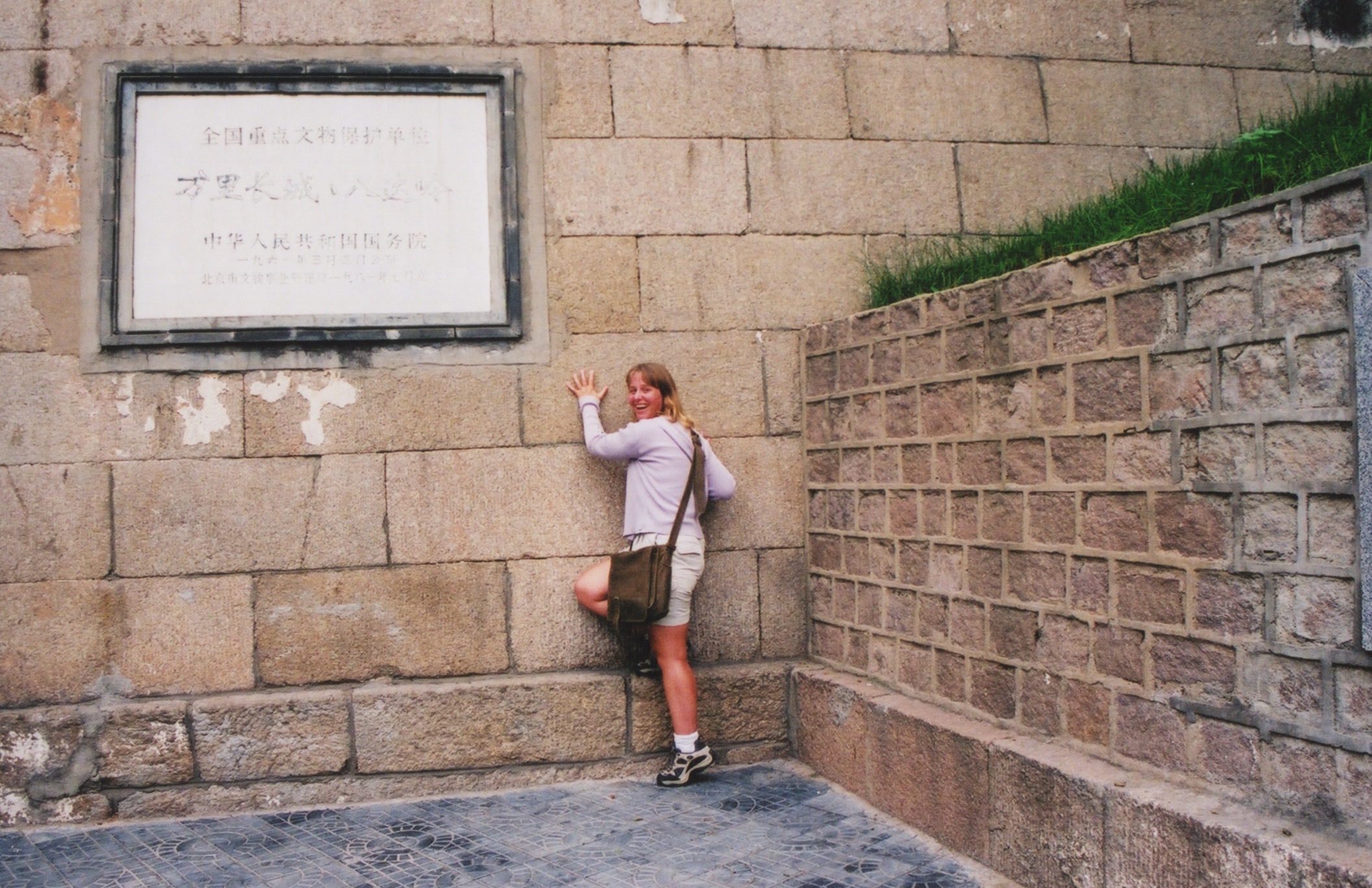
A much younger me trying to scale the Great Wall of China. I did not succeed.

As a writer, it’s my job to make sure failure is part of the story. Do my characters know exactly what they want, or do they have to make some mistakes first, to realize what they need? Does the detective catch the killer with his initial instinct, or does he struggle through a few wrong turns first?

For my characters, the choice is easy. They need to fail. They need to fail repeatedly, in fact, before they’re allowed to succeed. Who wants to read a story about a detective who always catches the killer as soon as he’s on the case? Not a very exciting read, if you ask me, and as James Scott Bell describes eloquently here.

We as readers are eager to read about a few failures before our hero succeeds in his goal. Perhaps because we thrive on the tension that comes with the ups and downs of the hero’s investigation. Or perhaps because seeing literary heroes fail before they succeed gives us hope for our own failures. Because we know that everyone—ourselves included—needs to fail before we can succeed.
A-Blind-Eye-Web-Small

I accept the value of failure in my endeavors, as frustrating as that can be. But I’m still left with a particularly vexing question: how do I define success? Sure, I can learn from my failures, figure out what to change to achieve a different result next time. But what qualifies as success? (Here’s a link to a post I enjoyed on achieving “success.”)

To tell the truth, I haven’t figured that one out yet. Each time I hit a milestone that I thought would define success, I realize there’s another peak ahead for me to climb. Until I figure out what Success (with a capital S) means to me, I plan simply to celebrate the small accomplishments, each baby step that brings me that much closer.

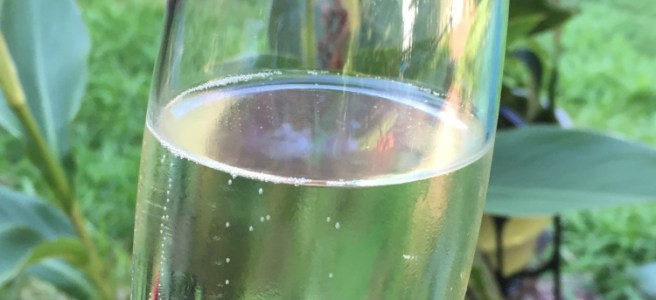
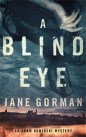
bubblyFor me, my small step toward Success this week is that my first book, A Blind Eye, is now available for pre-order as an ebook on Amazon (it will be available in other formats in September). So if you’ll join me, let’s drink a toast to these, the baby steps.

How about you? Have you figured out how to define success for what you want to achieve?

www.janegorman.com

Mysteries that take you places

thumb_IMG_1225_1024Warsaw’s Royal Palace dominates one bank of the Wisła River. It has been a royal residence and cultural center, a site of devastation and of hope. It is also where Łukasz Kaminski was left to die.

The Royal Palace marks the easternmost edge of the Stare Miasto, Warsaw’s Old Town, a cobblestone-paved area that stretches west toward Warsaw’s modern business district. Scars etched into the walls of the palace paint a picture of a long history, showing repairs, additions and changes wrought upon the structure over the past seven centuries.

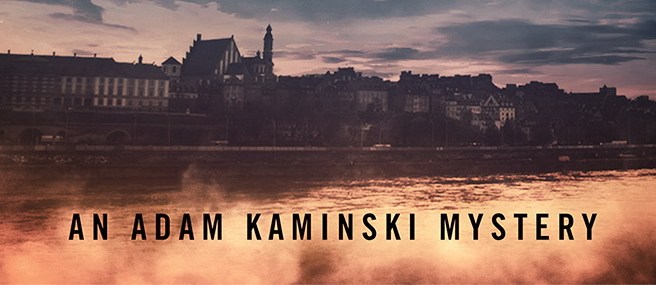
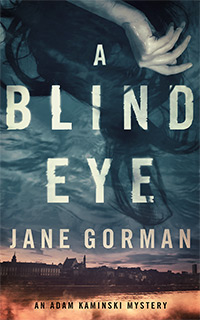
I use the Old Town as the opening scene in A Blind Eye. One of my characters, Łukasz Kaminski, has been beaten and left for dead. As he slowly recovers—both his strength and his memory—he makes his painful way through the Old Town to the Royal Palace. The photograph on the book’s cover shows the scene, looking at the Palace from across the Wisła River.

A-Blind-Eye-Web-Small

It’s a fascinating place, and well worth a visit if you ever find yourself in Warsaw.

The Great Tower was erected in the fourteenth century and the palace expanded significantly in the sixteenth and seventeenth centuries. It was a royal residence, the place where parliamentary deliberations were held and the administrative and cultural center of the country. Like so many places in Poland, however, it suffered through wars and partitions.

Once a site of great artistic collections, its art and artifacts were looted. In the nineteenth century, during the partitions of Poland, most of the collections ended up in Russia. Only some of the collections were returned when Poland regained its independence.

World War II brought yet more destruction. Warsaw’s Old Town was devastated during the war, the Royal Palace no exception. If you’re on Pinterest (and I know it’s not for everyone), I’ve pinned some images there showing the brutal impact of the war on the built environment.

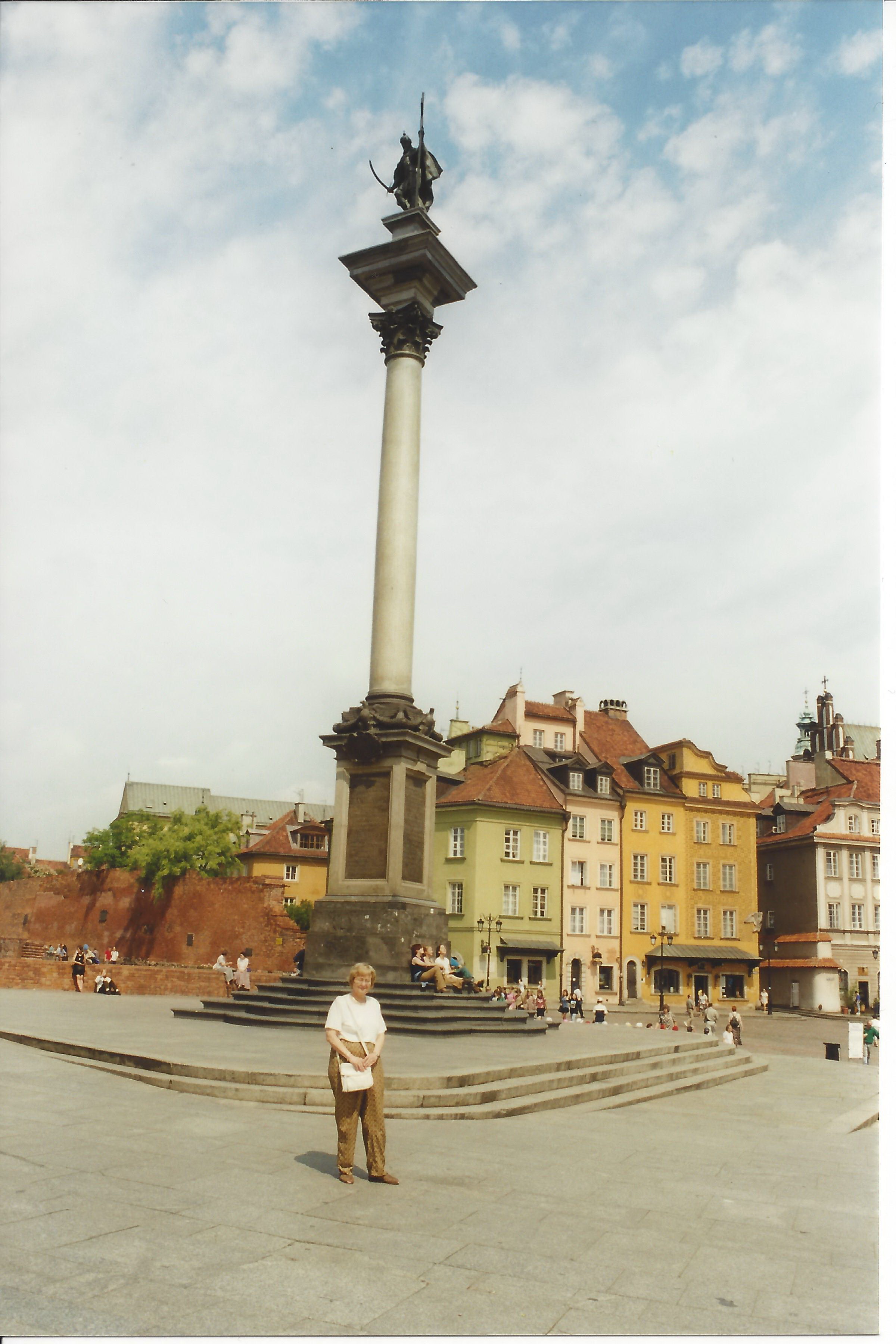
The decision to rebuild the castle was made in 1971, but funds were solely lacking. The Polish people came together to rebuild. I remember my mother telling me about her childhood in Poland, collecting used tin cans to send back to Warsaw for the rebuilding Royal Palace Zygmunteffort. Every little bit helped. Thanks to the dedication of the Polish people, the needed funds became available in 1980. In 1984, the reconstructed interiors were opened to the general public. Here is a photo of my family (many years ago) in front of the Royal Palace and another of my mother in front of Zygmunt’s Column in the Old Town.

The Royal Palace is just one of the many fascinating places I explore through fiction. I’ll share more in future posts. How about you, what wonderful places have you visited through the joys of reading?

And in the end…

And in the end …

thumb_IMG_1225_1024

June is national crime reading month in Great Britain, thanks to the Crime Writers Association, UK. Imagine that, a whole month dedicated to reading crime fiction! Then again, I generally dedicate about twelve months out of the year to that…

The CWA’s been posting some wonderful blogs on the subject. Commentaries on subjects such as Does Authenticity Matter in Crime Fiction? (I know a few mystery writers with very strong opinions on this subject), and Are Crime Writers Psychopaths? (now there’s an interesting question).

As you can probably tell by now, I don’t just read and write crime fiction and mystery… I also read about crime fiction and mystery. Blogs by authors, book reviews, blogs about mystery books. If it’s mystery-related, I’ll read it! One commentary that caught my attention recently was posted over on WritersWhoKill (another great blog, if you’re interested).

IMG_0894

Kara Cerise references a 2006 study of German students to see what kind of ending they preferred – and what that said about their personalities. Does craving a surprise ending or twist suggest that you have high self esteem? And if you prefer a story that confirms your suspicions, does that really say the opposite about you? The study is a few years old and fairly limited in sample size. But it is a great question for discussion.

I think about endings a lot, of course. One of the hallmarks of a traditional mystery is that justice is achieved in the end. But what counts as justice? I play around with this a bit in my books. Does the killer have to get caught? What if there was someone else who motivated the killer, knowingly or not — does he or she have to get caught? There are lots of definitions of justice.

A-Blind-Eye-Web-Small

I’ve had some enthusiastic comments from early readers on the ending of my first book, A Blind Eye. I can’t say too much – spoilers, spoilers (for the Doctor Who fans in the audience) and besides, the book won’t be published until September – but it’s made me really think about what achieving justice means, particularly within the traditional mystery genre. After all, when we pick up a juicy mystery, we have certain expectations, don’t we?

So tell me, what do you want to see at the end of the mysteries you read?