The Dunning-Kruger Effect and Writing

You may have heard of this phenomenon, but if you haven’t, here’s the short version: studies by Dunning and Kruger found that competence and confidence don’t always go together. Being a professor, I’ll give an academic example. Students who have the least knowledge of a subject often think they did best on the exam. They lack the foundation from which to question themselves and are amazed when they get Fs. Students who understand more of the material tend to be critical of their performance, in part because they assume others worked as hard as they did. Also, they know enough to know they aren’t perfect. Their sighs of relief when they get As and Bs are sincere. They had doubts. Confidence goes back up when students have real mastery, but not as high as the confidence of the truly ignorant.

What does this have to do with writing? I don’t know about you, but I had no idea how bad the first novel I wrote was at the time I finished it. The theme and the setting still speak to me, and the characters have potential. The writing, however, makes me cringe. I know enough to recognize its faults now and am glad I didn’t inflict it on anyone. Salvaging it would be more work than it’s worth.

Having reached competence but not genius, I’m now in the dip in the confidence curve. I’m stunned that my critique partners haven’t suggested major changes in my work in progress. They noticed places where I could improve it, of course, but I expected they would find problems in the plot, and they didn’t. They said the mystery works. Maybe it flowed well because it started with material I cut from an early draft of the book before it, Ghost Sickness, and because it deals with themes I care about: ethics, spirituality, health and illness, and the exploitation of desperate people.

Nonetheless, before sending it to the next set of readers, I’m going through it to see where it could tighten up further now that I’ve been away from it for a couple of months, drafting the book that follows. So far, I’ve kept myself from acting on the urges of the little demon in my head that’s telling me I should rearrange huge chunks and cut others. I can think of important scenes I almost cut from two other books, scenes which turned out to resonate deeply with readers, so I’m not giving in to the demon, but I wonder if I’ll be relieved or alarmed if the next set of critiques don’t tell me to tear it apart and start over.

Over the Easter weekend, I did my first ever book signing event. After ten years onstage acting and then twenty-odd years as a college professor, I didn’t have jitters about either the reading or the question-and-answer session. It was informal and enjoyable. I sold a few books and got feedback that I should narrate my own audio books, so I trust that my perception of success is not a Dunning-Kruger effect. I plan to try reading the WIP aloud after I complete the current round of revisions and see if it feels alive and ready for an audience. I’ve never done that as part of my self-editing process, but it may be exactly what I need. The actor in me may notice pacing and energy in ways the silent reader doesn’t. If I hear it and cringe as if it were that old first manuscript, I’ll know I have more work to do. If it plays, then it’s ready for the next beta readers, and I’m ready for whatever they tell me. The challenging thing about the Dunning-Kruger effect is that when it applies to us, we can’t tell. One of many reasons I can’t live without my betas.
The Storms of Fortune

The laws of fiction aren’t the laws of life. Luck is a deciding factor in many aspects of our lives. Some people are born with better cards, born into the one percent. Some people are dealt such a stunningly bad hand I can only reel vicariously at the things that strike them and think, no, this much can’t happen to one person. One of my students has had so many illnesses, physical and emotional, and so many concussions, it doesn’t seem possible that she could have one more stroke of bad luck—and then one hits her.

Many years ago, I did quite a dance with bad luck and good luck, though none of my misfortunes were anywhere near as bad as hers. I was living in the Jamestown area outside of Williamsburg, Virginia, a low-lying area of wetlands near the James River. It was wonderful place for walking and running, and the townhouse I rented had a beautiful wildflower garden my landlady had put in. And then I got new neighbors. Bad luck. Their younger children were undisciplined and inconsiderate, so noisy I felt they were in my apartment all the time. My neighbor on the other side who had kids the same age agreed—those little boys were terrors. She didn’t want her children to play with them. When the wild boys finally settled down at night, their teenaged sister entertained other teens in the neighborhood on the front lawn. Every night. I had to leave if I wanted to reclaim my peace of mind, so I found a quiet place out in the country, further inland on the other side of Williamsburg. Moving was inconvenient and expensive, but it was just my chance misfortune that I had to do it.

Within a month, two hurricanes struck almost back to back. The place I had been driven out of near Jamestown was flooded up to the second story. In retrospect, I had good luck to get bad neighbors. But the people who didn’t move, who might have tried to work with the homeowners’ association about the noise—they had bad luck. And none of them had earned it. Even the loud family couldn’t summon two hurricanes. This story would not work as fiction.

Overcoming adversity is the essence of a strong story in fiction, but bad luck isn’t the primary obstacle and good luck isn’t the source of success. The protagonist is in pursuit of a goal and her obstacles are organic to that pursuit. Her actions, not her luck, determine her success or failure, while the actions of antagonist, also a willful actor, create setbacks and conflicts. Readers don’t like to see chance events determine the plot. It feels as though the author cheated if she turns the plot around an unearned blessing or random disaster.

If I want to work luck into fiction, I need to give it context, such as a shamanic culture’s prediction that if you refuse your calling as a seer or healer, bad luck will follow you until you accept the call. (As the title suggests, this is a theme in the first Mae Martin mystery, The Calling.) Another way to work with good or bad fortune is to set it as prior history. A character in Shaman’s Blues describes himself as a “trauma magnet.” Some of his bad luck, he invited by recklessness; some it was a bad roll of the dice. But this enters the story as a pre-existing condition—quite literally, since it’s set in 2010 and he’s uninsured and uninsurable. That’s his background. What happens in the plot depends on his choices, given his circumstances at the point at which the story begins.

I recently read a powerful novel, Peter Heller’s The Painter, in which nature is almost a character. The protagonist, through a series of emotionally driven decisions, ends up being pursued on back country roads by someone who seems determined to kill him. The author develops everything that builds up to this chase, so there are no events that feel like luck. We know the lead character has a good truck for rough-track driving; he camps and fishes throughout the book and the truck is ever-present in the story. He’s in an unfamiliar stretch of mountains and woods but in a region he knows well. And the weather has been threatening. The flash flood he encounters is random luck, but he put himself in the situation, and it’s the decision he makes in reaction to it that determines which kind of luck it is, and what kind of man he is, too.

That’s the satisfaction of fiction. The catharsis, the resolution. It can make us feel that even luck itself is within the grasp of our limited human strength.

Perfectionism and the Cut Revision

scissors

Everyone who confesses to this fault, I suspect, is actually bragging. It’s the classic answer in a job interview. “What’s your greatest weakness?” “I’m a perfectionist.” I’m going to be contrary and confess that I’m not one.

My clothes? I have no clue what’s fashionable. If an outfit is clean and has no holes in it, it’s good to go. I don’t wear makeup, and haven’t since I quit acting. If I’m not onstage, the face I woke up with will have to suffice. My apartment and office are neither neat nor chaotic, clean but on the disorderly side. I don’t worry about it other than to move my free weights out of the living room if I’m having guests. Maybe.

So much of my life has been spent in public—acting, dancing, teaching academic classes and yoga and fitness classes—that I have spent many hours being irretrievably imperfect in front of an audience. When responding honestly to a novel situation in a classroom, I’ve sometimes said the wrong thing and couldn’t put it back in my mouth. I could only try to clarify. How many times in teaching yoga have I called right left or called elbows knees? You can’t redo live performance or teaching, only do your best and have a sense of humor.

Of course, I have higher expectations of my language skills when I can revise. While I’m not a full-blown perfectionist, when it comes to word choice and sentence structure, I can get close. One reason I do my plot analysis with a printout is so I won’t be distracted by the changes I would make if I could touch the keyboard. I indicate which sentence I should cut or revise with an orange highlight and a C or an R and keep going. After I make the needed plot changes, I do the “cut revision.” The purpose of this is tightening: consolidating ideas and examining every scene for excess lines, every line for excess words. It may seem perfectionistic to do this before I send it out for the second round of critiquing, but want my critique partners to be able to tell me if the plot is paced well without the distraction of verbal clutter. (I cut four thousand words from my current WIP.)

Another reason I cut so much is because I know my editor will usually ask me to add a few lines to clarify something. We can go back and forth several times over the best way to rephrase a sentence without either of us thinking the other is too picky. I keep double-checking my research, too, finessing tiny details. As long as it makes the book better, I don’t feel pathologically perfectionistic. I know when it’s done, and then I’m ready to let go. No matter how hard we try to make them perfect, no book ever is.Amber in tree final

Fiction Keeps Me Sane

A day without fiction is like a day without food, sleep or exercise. At times, I may be so busy I can only write for twenty minutes or can only devote fifteen minutes to reading a novel, but I don’t go without. This is requires no self-discipline. It’s like the desire to run that grabs me on a beautiful day or the need to get up from my desk for a yoga break.

My fiction time comes after I empty myself of the day with journaling and meditation. It takes a lot to shut down my community and planetary concerns and my ever-growing to-do list for work and then keep them shut down for the night. These thoughts aren’t unhealthy, but once I’ve talked with others and taken what action I can for the day, I need to shift gears to save my sanity. At a set time in the evening, I turn off everything but my laptop and in perfect silence, I write. Ah. The best time of the day.

There’s only eustress, not distress, in the effort of writing, even when I’m analyzing a stuck plot or revising the antagonist’s motivation again and again until it makes sense. At present I’m working on a “cut revision,” focused solely on eliminating excess verbiage. (And slaughtering darlings as I go.) It makes me happy. So does the first draft; so do the later revisions. Writing is totally absorbing in all its stages. This is what Mihaly Czikszentmihalyi calls flow. Activities that bring about flow create more happiness than those that are easier. Reading is more demanding than watching TV and is thus more likely to produce flow

I have to write at night, and then I have to read before I go to sleep. The harder the day, the more I appreciate my escape into a well-told story. While I’m in engaged-citizen mode or professor mode, I’m trying to make the world a better place, but in its own way fiction does that, too.

My fellow writers, I thank you. You’re doing your part to keep me sane.

Does anyone else depend on fiction this way? Or have I actually gone crazy?

How a series is like a spider plant

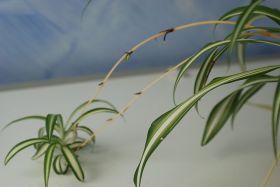
spider-plant

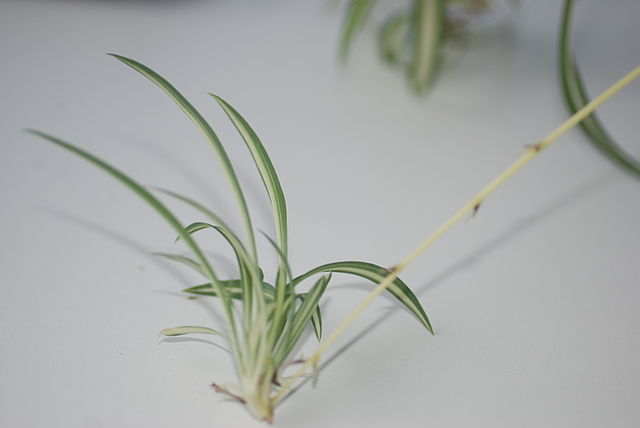
My writing process reminds me of a spider plantsprouting new plants which have potential to live and thrive if I cut them off the parent plant and pot them. But I have to choose how many little spiders I want to do that with, and how many I’d rather leave attached or simply trim off.

My last book, Ghost Sickness, took root from two stories I discarded. A scene that ended up being close to the end of it was originally the beginning of one of the rejected plots, while several key characters and settings came from the other. Maybe I should have entitled this post “Reduce, Reuse, Recycle,” because when I’m cutting, I store a lot of the cuts in a Scenes to Recycle file. It often ends up being the gentle way to kill my darlings, but it can also lead to creative recycling. Shaman’s Blues, my second book, hatched from a subplot in Soul Loss, which was originally going to be the second book and ended up being the fourth.

I’m well along in the first draft of the sixth book in my series, tentatively titled Medicine Buddha, and I can see that it’s going need trimming. I like the subplots better than the main plot. The antagonist doesn’t feel strong enough. My protagonist doesn’t have enough at stake. But I like the theme I’m working with and I love the settings. I’m also happy with reintroducing some characters from prior books, giving them important roles in this one.

This work in progress hatched like a baby spider plant from a second draft of Ghost Sickness. I cut scenes and subplots from it which are now the opening scenes of the main plot of book six. My protagonist, Mae Martin, attends a workshop on energy healing and medical intuition. There she encounters a fellow student, Sierra, who makes claims about reincarnation and self-healing and causing one’s own illness because of karma. She also claims that Mae’s boyfriend is part of a special soul group with her and that Mae isn’t in it. When I dropped Sierra into the workshop scene, I had no idea she was going to be my main antagonist and I’m still not sure she is.

I don’t like to repeat myself. Since the crimes in my books aren’t murders, I have to think of new types of wrong-doing for each book. Sometimes the malfeasance is on a spiritual and ethical level; sometimes it’s a criminal act. I’m trying not to make Sierra an echo of Jill Betts, the neo-shamanism expert in Soul Loss, and I’m also aware that I can’t repeat the manipulations done by Charlie, the shady professor in The Calling, who misuses his knowledge of spirituality and alternative healing.

Maybe this antagonist will evolve, or be replaced as the real “bad guy” in the book by a person who’s in her shadow right now. Maybe she’ll end up being a victim of sorts. That was my original plan but my characters acted differently than I thought they would. Still, I think it would be interesting if Mae had to protect and help a strange, difficult person she dislikes. I don’t know yet. Maybe I’ll recycle that idea in the next book. It could work better there. First, I need to wrap up the current WIP. Then I’ll see which little spiders need to be trimmed and set aside for possible other books, and which will get to remain part of the big plant.spider_plant2

*****

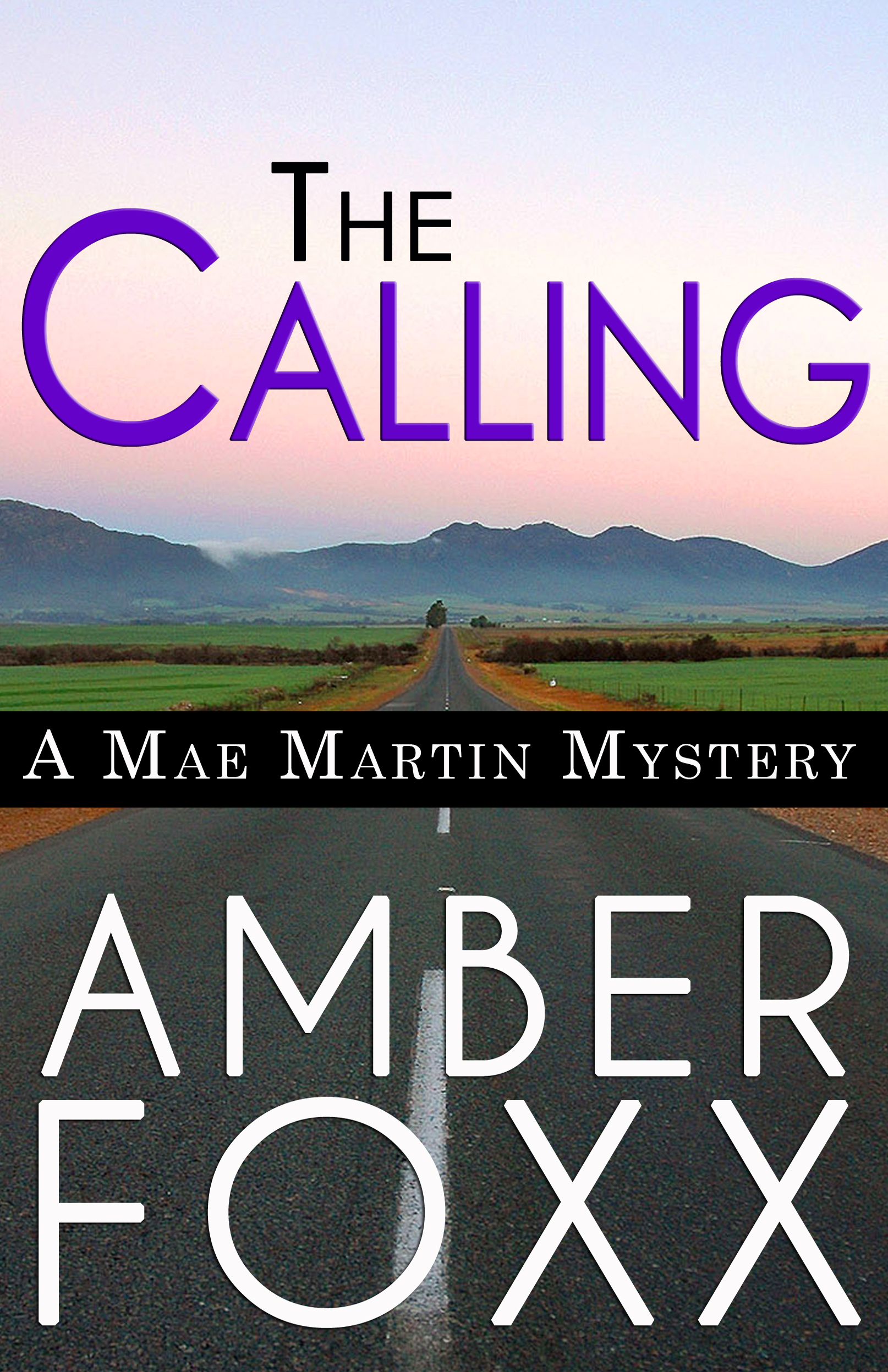
The first book in the Mae Martin Psychic Mystery Series, The Calling, is on sale for 99 cents through the end of December.callingebooknew