Mystical Mysteries

Mystical Mysteries

If I could channel the spirit of any author to mentor me, it would be the late James D. Doss of Los Alamos, New Mexico. I discovered him through a review in New Mexico Magazine and read all seventeen of his Charlie Moon mysteries, some of them more than once, and I know I’ll read the whole series again. Though I don’t attempt to write like Doss—no one else could—he influenced me greatly as a writer of unconventional and mystical mysteries, where the ordinary and the spiritual meet.

Here’s a short list of the things I love about Doss’s books:

  • Characters. Complex and eccentric, they surprise the reader. I love the ongoing characters and the unique, colorful people introduced in each of the books. My favorite one-book character is six-year-old Butter Flye in The Night Visitor. Doss wrote child characters with unsentimental realism. Butter is tough and strange and yet likeable, and I have never laughed louder or longer reading any book, let alone a mystery, than I did when I read the encounter between Charlie’s irascible aunt, the shaman Daisy Perika, and Butter in the back seat of a truck.
  • Spirituality. The visionary experiences that Daisy and her ward Sarah Frank have are written in a way that makes me feel as if I’ve taken the shaman’s journey with them. The spirit world is integrated seamlessly with earthy realism and humor that says Doss understood this aspect of Indian culture: the sacred and the comic are not opposite or incompatible. He mixed Catholic mysticism into the books as well with beauty and sensitivity, another Southwest truth. Many people adhere to both Native religions and Catholicism at the same time. My favorite character for expressing that unique blend of spiritual worldviews is Nahum Yacitii, the old Ute shepherd who apparently ascended to heaven in a windstorm and comes back to visit the few who can see him.
  • Language. I read a Doss book and I am in the place. When he takes us for walk in the Canyon of the Spirits with Daisy, I hear every step and smell and feel the air. Even the description of the nervous, jerky second hand of a ticking clock is a marvel of observation that sets the mood of a scene perfectly. (I leave you to find this treasure, also in The Night Visitor.)
  • Mastery of the omniscient narrator. Most writers can’t pull this off, but Doss could show the thoughts of every character in a scene without causing the slightest confusion or disorientation in the reader, often to humorous effect. He could even use the point of view of an animal—a bird, a deer, or a prairie dog—as the only witness to an event, and make it work.
  • Hanging out with the guys. Doss wrote real, not hyper-masculine, male characters. Charlie often fails to understand the women around him, but he does it so sincerely I like him for it. The friendship and repartee between Charlie and Scott give me a sense of hanging out with the guys in a way a woman doesn’t often get a chance to in real life, even when some of her best friends are men.
  • Humor. I get a kick out tall tales Charlie Moon tells just for the fun of it, pulling people’s legs. While the essence of each book is serious, dealing with life and death and love, there is a layer of humor as well, coming from the genuine interactions between characters and from their various eccentricities. Daisy is a spiritual visionary and also a quirky, cranky old lady.

Doss resolved the tangles of Charlie’s love life finally in the last book. I wonder if there were more books in his mind when he left this world, though. Daisy was the oldest living member of the Southern Ute tribe, and Sarah Frank, a young adult by the end of the series, was trained—somewhat—as Daisy’s shaman’s apprentice. Was Sarah destined to inherit all the spirits in the canyon, and the ancient little spirit-man living in a badger hole, the pitukupf? I’ll never know. It’s the sign of a good series, though—I still think about it. The characters live on.

This is revised from a tribute to Doss originally posted on http://amberfoxxmysteries.wordpress.com.
On the Trail of Inspiration

Some of my friends here think I’m crazy. Not because I’m any more peculiar than most people in Truth or Consequences—that would be more difficult than the odd thing they question, which is running at noon. In the desert. In July.

It’s much more pleasant than it sounds, though it would have been hell in June before the rains came. Now the temperatures are in the upper eighties or low nineties, with a few little storm systems flirting with the mountains, and no one around except the quails and jackrabbits and lizards. Snakes are hiding from the midday sun, and all the humans are out on the lake. That’s the way I like it. Not that I have anything against snakes, but I prefer not to meet them—or my own species—while I run. I want to be alone. It may look as if I’m only exercising, but actually, I’m writing.

With my train of thought taking a crooked path between lizard sightings and admiration of quail chicks, cacti and the rain-promising sky, I get creative. At the beginning of the run I pick a plot problem and turn my mind loose to play with it. Something about the free flow of running breaks mental dams. Key lines of dialog and important character goals arrive, ideas that refused to show up at my computer the night before. Snake Face has a lot of music in it, and all of those songs came to me on my favorite trail in Elephant Butte Lake State Park, complete with melodies no one will ever hear.

Over the past couple of years, someone has had the urge to make art along that trail. First, there was the miniature Stonehenge. Now there’s a spiral of pebbles presided over by a bulbous lava rock that looks like the Venus of Willendorf with a few too many endowments, and another that looks remarkably like a fluffed-up bird. The bird rock faces out, with its clutch of egg pebbles nearby. The fertility goddess squats on a large flat rock overlooking the spiral. All along the trail I keep noticing additional smaller arrangements, such as a square white rock placed in the center of the square red patch on a larger white rock. I find light green on dark green, bright yellow on dark brown and gold, all sorts of little rocks arranged on shape-and-color-compatible members of the community of stones marking the trail’s boundaries. These creations required time and thought and close observation.

As I wondered how long they took and try to picture the person behind them, a plot puzzle I was struggling with resolved itself. These little henges and heaps are going to find their way into the book in progress, perfectly suited to a certain character and his needs. Art meets art on the trail of inspiration.

Stories Behind the Story

Amber in tree final

It was the mystical—some people would say woo-woo—aspect of Santa Fe that inspired the plot of my new book Soul Loss.  I had a friend there, an actress and water aerobics instructor, who channeled beings from the Pleiades, and her husband, an actor, did a little energy healing on the side. Through them I met a man, a gardener by trade, who could see energy. He said that most people had a dark crystal over their heads, and if they were ready, he could remove it, but the spiritual opening would be intense, and once it was off, it couldn’t be put back. This is only a small sample of the diversity of other-worldly connections I’ve encountered in the City Different.

When I started writing it four years ago, Soul Loss was meant to be the second book in the Mae Martin series. I began with the scene that is still Chapter One, in which a fortune teller gets a strange and chilling client. I knew what Mae’s role would be, and the nature of the mystery, which revolved around the troubles affecting a psychic fair. Then, about five chapters into the first draft, Jamie Ellerbee popped up out of the blue as a minor supporting character. With his eccentricities, his complex history, and his intense personality, he took over the book. I set Soul Loss aside and did the final revisions on The Calling, in which Mae’s life took an unexpected turn and a new world opened up for her. Parts of my original draft of Soul Loss split off and became Shaman’s Blues, and then Snake Face, giving Mae time to get to know Jamie and to adapt to living in New Mexico. Then, I could finally get back to what was now book four.

The seed for the scene I mentioned was planted by a sign I saw on the garden wall of a small adobe house many years ago: Fortune teller. Palm Readings. Tarot. I was curious and wanted to go in, but didn’t have time to stop. Later, when I thought to look for the sign again, I couldn’t remember which street it had been on. The idea of a traditional fortune teller in Santa Fe stuck in my mind, though, mixed in with a memory of a young woman of Romani ancestry I’d met while I was in graduate school. She gave occasional Tarot card and palm readings in the lobby of the campus center. I don’t remember what her reading for me said, but I couldn’t forget her forthright personality. She didn’t fit the stereotype of “Gypsy fortune teller,” but she was one. I began to picture her as the person inside the little house with the sign I couldn’t find again.

Another encounter that became a seed of this story took place at a complementary and alternative medicine conference. The workshops and presentations were enlightening—except for one, with a famous neo-shamanist. I wondered if the people who said they had visions and met guides were making things up, or if I was biased by prior experience with more traditional ceremonies. A few years after that, I met two women in a small town who conducted shamanic journey groups for twenty-five dollars a session. Their credentials?  A weekend training with this same famous teacher. Could they really have learned to be shamans? The question stayed with me and found its way into Soul Loss as part of a mystery only a psychic could solve.

soul ebook

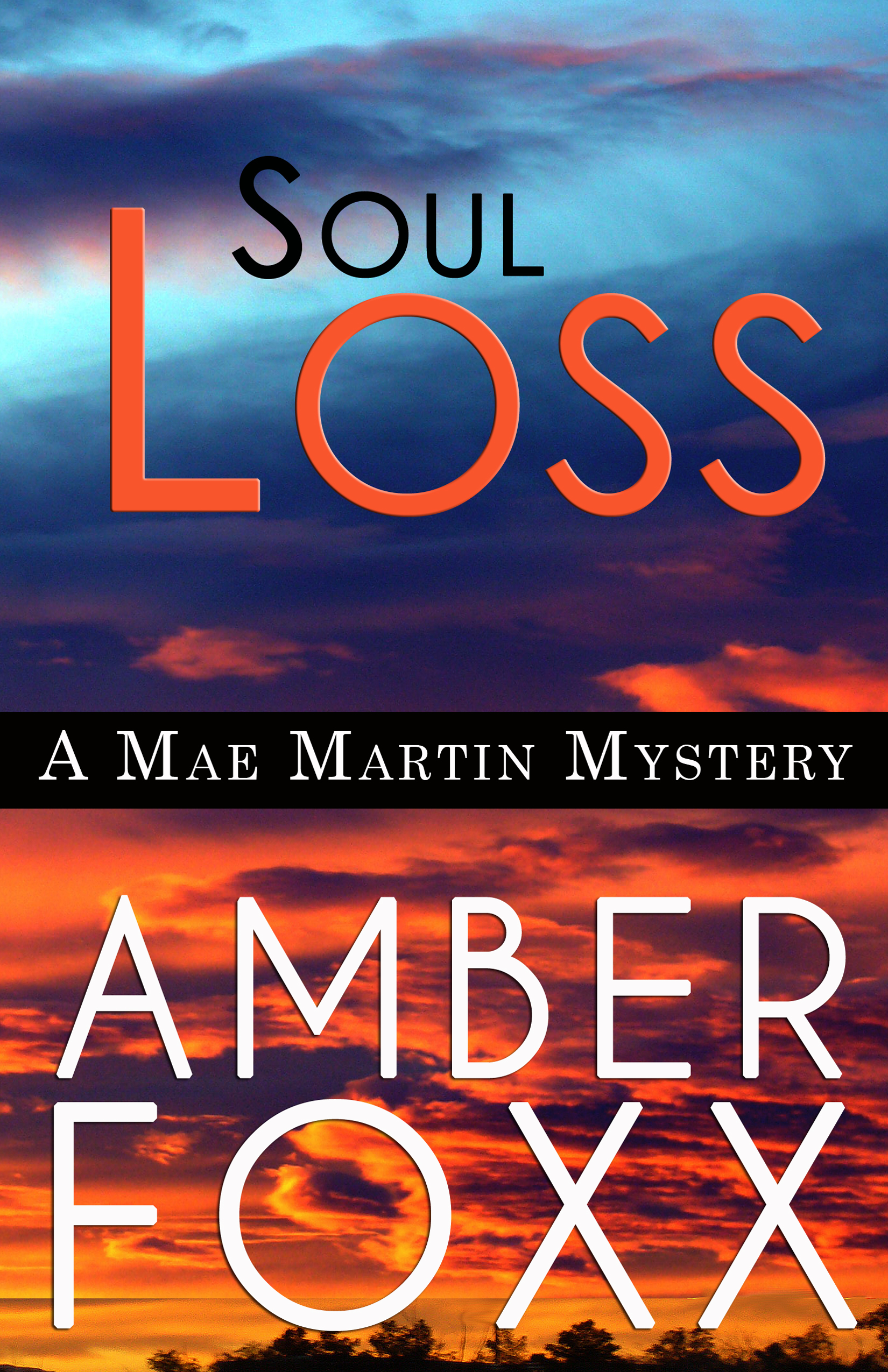
Soul Loss

The fourth Mae Martin psychic mystery

Spring winds blow strange times into the City Different:

Mae Martin’s friend Jamie Ellerbee has dropped out of her life—and perhaps his own life as well. A teenaged model breaks contact with her parents after an encounter with a Santa Fe shaman. A psychic fair can’t recruit any psychics. Something is wrong with all of them … except one.

Faced with mysteries that reach into in the spirit world, Mae takes on her most challenging work yet—work that puts her gifts as a psychic and a healer at risk.

The Mae Martin Series

No murder, just mystery. Every life hides a secret, and love is the deepest mystery of all.

To learn more about the background behind the book, check out my guest posts on these great blogs:

On a yoga’s healing process: http://killerhobbies.blogspot.com/2015/06/yoga-stories.html

On the concept of soul loss: https://awomanswisdom.wordpress.com/2015/06/08/guest-blog-losing-and-recovering-the-soul-by-author-amber-foxx

To help new readers to get caught up on series, the first three books are discounted to $2.99 through August 18th. Happy summer reading!

https://amberfoxxmysteries.wordpress.com/buy-books-retail-links

Goodreads giveaway for Soul Loss: https://www.goodreads.com/giveaway/show/143009-soul-loss

Follow:

https://amberfoxxmysteries.wordpress.com/

https://www.facebook.com/pages/Amber-Foxx/354071328062619

https://twitter.com/AmberFoxx4

Amber Foxx Interviews Amber Foxx

AmberMysteriousOn my other blog, I enjoy doing Amber in tree finalinterviews and coming up with questions for the authors whose books I’ve reviewed. So, when it came time to write this introduction, I knew what I had to do: talk to myself.

Q: How did you decide to become a writer?

A: It never occurred to me not to write. I grew up in a word-loving environment. My parents owned—and often played—audio recordings of Shakespeare’s plays, and they frequently brought my sister and me to live theater as well. As a child, I wrote stories influenced by Nancy Drew and poems inspired by Dr. Seuss, and had a short story published in a teen magazine when I was twelve. I think I got paid twenty-five dollars for it.

Q: Do you write full time or do you have a day job?

A: I have two day jobs. I’m a college professor and a yoga teacher. Those jobs overlap, since I’m in Health and Exercise Science, and I teach yoga as part of my course load as well as off campus.

Q: One of the characters in your first book, The Calling, is a professor from New Mexico who practices yoga. Is Bernadette Pena based on you?

A: No, though I do have some things in common with her. When I was working at a college in the South a few years ago, I taught some courses on alternative medicine and non-Western healing traditions. For many of my students, it was their first opportunity to explore scholarly research on things like shamanism, Ayurveda, herbal medicine, energy healing, and other practices. One of those courses on made its way into The Calling. Its potential to disrupt assumptions about the nature of reality fit perfectly into the plot.

Q: Is your protagonist, Mae Martin, based on you?

A:  Mae is modeled after a good friend I met through my work as a fitness director and yoga teacher in northeastern North Carolina. Aspects of The Calling were inspired by some of her life experiences. I admired her combination of practicality and spirituality, and her intense determination to be herself in a situation where few people supported her.

Q: Did you set out to write genre-blending mysteries? You’ve had favorable reviews in which reviewers seem to have a hard time finding the right genre label for your work.

A: When I decided to write mysteries without murder, I wasn’t thinking about stretching the genre so much as being true to the stories I wanted to tell. I’d tried writing a mystery with a dead body in it but half-way through, I realized I couldn’t keep putting Mae in that situation. It didn’t feel right for the character or for me. There are ways people hurt each other, short of killing, that lead to layers of secrets in families and friendships. Phenomena such as psychic ability fill life with mystery as well. As long as there’s something that the protagonist doesn’t understand and neither does the reader—and solving for that X in the equation is central to the plot—then the story is a mystery.

Q: You mentioned psychic ability as if it were a real thing. Do you think it is?

A: Yes. I could take up pages with my personal experiences, and at every college where I’ve taught, students have confided some remarkable psychic events. And then, I’ve lived in Santa Fe and in Truth or Consequences. In both places, not only are art, music, dancing, and eccentricity part of everyday life, so are psychics and alternative healers.

Q: Is that why you moved the series from the South to the Southwest?

A: That’s one reason. In the new location, Mae “fits in” better because she doesn’t have to try to fit in anymore. It’s hard to feel like a nonconformist in New Mexico. There’s not much to conform to. The other reason is to move the plots in new directions. Living in a place where her gift is more readily accepted, Mae encounters new kinds of mysteries, as people ask her for answers only a seer could find. The setting also lets me bring in some of the stranger aspects of “the woo-woo,” with a questionable health-nut psychic in Shaman’s Blues and everyone from a celebrity modern shaman to an artist who claims she channels angels to a medium who speaks with dead in the upcoming June 15th release, Soul Loss.

Q: Thanks. Is there anything else you’d like to add?

A: Just this:

http://amberfoxxmysteries.wordpress.com

https://www.facebook.com/pages/Amber-Foxx/354071328062619

https://www.goodreads.com/author/show/7554709.Amber_Foxx

http://amberf.booklikes.com/

https://twitter.com/AmberFoxx4