Best Laid Plans

This has been a busy month for me. I launched Her Last Breath, my third book in the Hood River Valley Mystery/Thriller series a couple of weeks ago. It took longer than I thought it would, but it’s now out on Amazon. I think it will be available to bookstores and libraries on October 19th.

I’ll be selling my books at our local Fall Craft Show on the 18th and 19th. And I have an upcoming book signing in Pendelton, Oregon at Brett’s Books New and Used on November 1st.

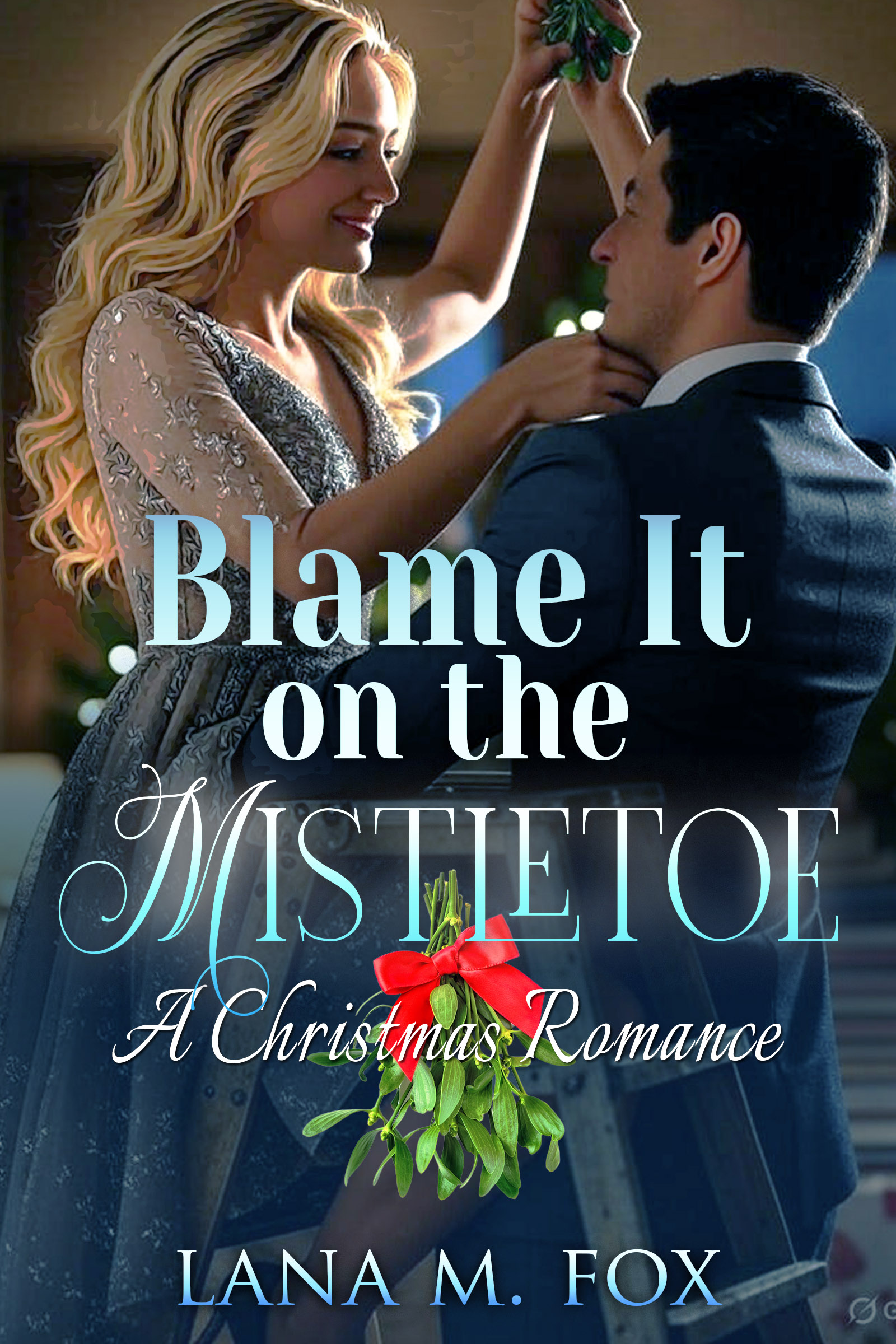
I’ve been getting ready for those events and trying to finish the edits on another book. This one is a Christmas Romance. Several years ago, I wrote about 80% of this book and never finished it. It had always been on my bucket list to write a Christmas Romance. For some reason, I just didn’t know how to end this one. Maybe it’s because I’m normally a mystery writer and the ending is typically the solving of the crime.

There were no crimes in my Christmas Romance. There’s a little intrigue, but crime doesn’t take a leading role. So, I talked to my friend and fellow author, Cassie Moore, and we brainstormed until I had the idea for the ending, and I was able to finish it.

The premise of this book is: What do you do when the man you thought you’d spend the rest of your life with dies, and you’re certain you’ll never love anyone else again? And then a stranger comes along and turns your world upside down?

While Brynn Cummins fights her attraction to mystery author Jack Andrews, she finds herself embroiled in two family problems that seem insurmountable. Her son’s ex-wife is trying to take their two-year-old son away from him while he’s being deployed. and after she has given up all parental rights. And Jack’s ex-wife is needing his help because she’s going through cancer. Then her crazy brother gets involved and complicates Jack’s life even more.

As love blooms between Brynn and Jack, can they navigate their way through their problems and find their way to each other? Or will the problems be more than their fledgling relationship will bare?

I’ve been editing two books, trying to get one formatted and into production, while setting up book signings. Then one of our dear friends died unexpectedly. He had been having cognitive issues for the last few years, but I thought he was strong physically. He wasn’t, and dealing with his death has been so hard. He was such a good man, and he will be missed.

His Memorial Service is next weekend. Last weekend I was supposed to go to my cousin’s funeral. Instead, I ended up in the hospital. I’ve been here two days, and they are planning to do surgery today. When you think you are already too busy, and life drops something like this on you, it’s like, how am I supposed to get everything done when I was already overwhelmed, and now I have a hospital stay?

I’ll be glad when today is over and I can get well and move on. I had warning signs. For the last few weeks, I kept having chest pains that moved into my abdomen and back. But they didn’t last long, and I was in denial. I didn’t want to take time out for health reasons.

Then last Saturday the pain came and wouldn’t go away. I tried lying down and getting up and walking around, all things I’d done in the past to alleviate the pain. It just got worse and worse, so I called my husband and said, “I think you need to take me to the hospital.” It’s probably a good thing I came. I will be fine, I just have a few days of recovery, and I’ll be up and around again.

I’m determined to make it to the Memorial Service for our friend this weekend, and to the Craft Show. Someone will have to carry my books in, but hopefully I can arrange that.

Fast forward a couple of days, and I’m home. Surgery went well and I should heal nicely. I’ve learned that no matter what plans I have that I feel can’t be changed or shelved, life has a way of changing those plans sometimes.

I still plan to make my friend’s memorial. But I may have to bow out of the Craft Show as much as I hate that. Amazon doesn’t plan to get my new book to me until the day after the show closes. I’m keeping my fingers crossed that they’ll come early, but I just checked tracking, and it doesn’t look good.

I could scream, but I know that won’t do any good. The books will come when they get here. There will be other opportunities to sell my books. I just need to chill and let life do what it’s going to do.

Settings and The Three Bears

It wasn’t hard for me to pick the setting for my mystery/thriller series. I’d always wanted to write one set in the valley where I grew up and still live. I love this valley with its green trees, lush vegetation, beautiful orchards, majestic mountains and gorgeous rivers.  And it’s fun to write about murder and mayhem in a place that is so serene and beautiful.

However, there are things about setting my stories here that I never considered before I actually started publishing my books.

Like the woman who said she and a friend had been talking and wondered which people in the valley I was writing about. I told her that I have never used a real person in my books. Rather I use a culmination of people I’ve known or read about.

This wasn’t the first time someone has asked me if I use real people when I write. I say the same thing every time. No, no and NO! These are fictional characters and are not based on any real person, dead or alive.

On the other hand, a lot of my readers who live here or have lived here, or visited here in the past, love it when I mention the name of a road or a building or an orchard because they know exactly where it is. Although, I must admit, I’ve taken some creative liberties and added a few places that aren’t really here. Or moved things where I needed them for the story.

My Three Bears Story:

When I wrote my first book, a standalone mystery/suspense titled, The Truth Will Set You Free, I had wanted to set it in Hood River. But after writing a few chapters, I realized my town was too big for the story I wanted to tell. So, I moved it to a small town east of Hood River called Moiser. After I’d written a few chapters, I realized it wasn’t working. Moiser was just too small. So, then I headed west of Hood River to the small town of Cascade Locks, and it was just right!

After that book came out, I was selling my books at a Christmas Bazaar in Cascade Locks and a lady picked up one and read the description on the back. As she read, she said, “Oh, oh, oh.” Her voice rose and lowered with each utterance. Then she turned to the lady with her and said, “I’ve got to buy this. I know exactly who it’s written about.”

Since I don’t know many people who live in Cascade Locks, three in total, I knew she really didn’t know who it was about. But she bought the book and hopefully she enjoyed it.

Right now, I’m working on a standalone that I’m setting in The Dalles, a town thirty miles east of us. Why did I pick The Dalles? I spent a couple of days there last spring selling books, and I met some wonderful people. They shared stories of their town that I was fascinated by. While I’ve been to The Dalles many times over the years, I’ve never spent a lot of time there.

I love it that The Dalles has the oldest bookstore in Oregon, Klindts Books. There’s a lady in The Dalles who used to do graveyard tours. I still need to talk to her. The old buildings downtown are reputed to be haunted. Like a lot of towns in eastern Oregon, the businesses in town have gone away or moved to the west end of town. They are trying to bring in new businesses, and there are some exciting things happening. I had no idea it was such a fascinating place.

I love JA Jance’s Sheriff Joanna Brady books. The way she writes about Bisbee, Arizonia made me long to go there. When I finally did, it was nothing like what I’d imagined while reading her books. I wrote to her, and she wrote back saying writers can make any setting interesting. She certainly did.

How important is setting to a story? I’ve read books that were set in big cities and thought it could’ve been any big city in the states. And I’ve read books set in small towns that could’ve been any small town. And then there are the books where the setting is like another character. That is what I’m striving for.

When my first book came out a lady bought it and told me later that she and her husband drove to Cascade Locks to see the town where the book was set. I loved it that she thought about the book after she finished reading it and enjoyed it enough that she wanted to see the small town it was set in.

I know of a lot of authors who spend a great deal of time researching their settings. Whether they do it by actually traveling to the place or reading everything they can get their hands on about it.

Even though my books are set in such a familiar place, I find myself having to look at a map to get the name of roads and sometimes drive around to make sure that what I’m writing about is actually where I think it is.

Maybe someday I’ll go further afield. I’d love to set a book in some places I’ve been, like Venice or Vienna or the Swiss Alps. And I’d be happy to travel to different places for research. Of course, I’d have to stay a while!

The Joy of Writing a Series

The third book in my Hood River Valley Mystery/Thriller Series is coming out soon. Her Last Breath is about a serial killer who has targeted my detective’s ex-husband, the sheriff. Here is the blurb:

Game on, Sheriff!

Detective Liz Ellisen is ready to walk away. After closing the most grueling case of her career, her resignation letter to Sheriff Mitchell Ellisen—her husband of twenty-five years and soon-to-be-ex—sits unfinished on her desk.

Then the call comes.

A young woman’s body is discovered in an abandoned barn. Staged to look like suicide, but Liz knows better. This is murder—calculated, methodical, and just the beginning.

In the barn’s dusty loft, an old Army trunk holds grim secrets; women’s pelvic bones, yellowed with age. As more young women vanish, taunting messages directed at the Sheriff begin to surface.

While racing to find the missing women, Liz battles demons on all sides—her failed marriage, her birth mother’s sudden reappearance, and the mounting evidence that points to an unthinkable suspect.

The clock is ticking, the body count rising and the killer’s game escalating.

Liz can only wonder why the Sheriff is being targeted by a killer…or is he the killer?

I’m excited to get the reaction to this book from my readers. Will they like the direction I’m taking the series? Will they continue to want more stories about these characters?

With this third book, I’m finding joy in writing a series character. I’ve found that with every book I learn more about my characters. I’ve become more engaged in their lives. I want to know what will happen next. And I hope my readers feel the same way.

My first published book was a standalone. Lots of people asked if I planned to write more books about the characters. Although I was happy that they wanted more, I felt it was one and done. I told the story, and it was finished. In my mind I didn’t need to write another book about these characters.

Then I decided to write a series. I’m finding that along with all of the fun things in doing a series, there are also issues. Keeping true to each character. Keeping them interesting and the story fresh. Remembering names and dates is a challenge and I’ve found myself messing up sometimes.

I took an online class from Deborah Crombie who writes the amazing Duncan Kincaid/Gemma James series. She said that one of the most important things you should do when writing a series is to keep a series bible. List everything about the characters that you can think of because you will need that information at some point.

I don’t know how many times I’ve had to go back to that bible and look for the name of a character who had a small part in the story. Or the name of a street where something happened. I tripped myself up by changing my detective’s parent’s names. Her father started out as Joel Scott, which I changed to George Scott, then discovered while writing the third book that I’d changed his name back to Joel! Needless to say, I had to do ‘search and find’ and change his name to George because that’s what I used in the published books. And I had changed her mother’s name from Melanie to Missy and had to change it back. It’s a very good thing that I caught both name changes and that I had written the correct names in my bible.

While the characters with small parts don’t seem that important, you never know when they will take on a larger role in a story somewhere down the road. So, it’s very important to get their names right. I’ve also had my first readers find eye color changes, and my characters being in a room and a scene or two later coming out of a different room. I’m so thankful for first readers!

I’ve been busy editing the new book, and now that it’s in the hands of my editors, I’m beginning a new standalone. I’m excited to write this book, which is something very different than what I’ve done so far. But I also find that I’m anxious to get back to my series and see what my characters are up to next. I touched on human trafficking in My Sister’s Keeper, the first book in this series, but book four will go deeper into the topic. I’m so excited to start writing it and I hope I do it justice.

Research: How Much is Too Much?

Recently, I picked up a book by a well-known author whose books I like. The book was one of a series and I was so excited to begin reading, but after a couple pages I realized I wasn’t enjoying the story. The author included so much information about the different agencies her characters were working for that it read like a textbook, not a novel, and I found myself getting bored and having trouble reading on in the book. And that wasn’t the first time I’d run into that. Another author whose books I love is doing the same thing. There are probably more, but these two stood out for me.

I know that a lot of people watch cop shows and true crime shows on TV. It has become very popular in the last few years. Is this the audience these authors are thinking of when they put everything they know about certain bullets, or forensic information in their novels?

 I can’t help but wonder, are we writing nonfiction or are we writing stories? I know it’s important to do the research and get things right, but what if our readers find the facts we throw in are too much?

For me, in the case of the authors I mentioned, I wanted them to get on with the story. I wanted to delve into the story and live with the characters, and the decisions they make, not be lost in the technical jargon.

I struggle with how much research to include in my own stories.  Where is the line between too much and not enough? It’s tempting when you are fascinated by what you discover in your research to add it all to the novel, but I was taught that you need to know a lot about the subject, but you don’t necessarily need to include all your knowledge in the book.

In my current mystery/thriller, Her Last Breath, which is coming out soon, I had to research old bones and what can be learned from them. I read a lot of information on forensic anthropology that was fascinating, but only one or two lines of my research was included in my book.

Could I have gone on and on about it and told the history of forensic anthropology? Sure, but would it have added anything to my story? I didn’t feel it was needed, and I didn’t want to get bogged down in the research so I didn’t, but it was fascinating, and I could understand why an author would enjoy the research so much they felt like they needed to share it with their readers.

Are there readers who would’ve been happy to read all my research? Maybe. But I’m sure there were those like me who would’ve wanted me to get on with the story. Therein lies my dilemma. I feel it’s important to put enough information in to make your book sound authentic, but not so much that your reader feels tired or bored while reading it.

How much of your research ends up in your books? Do you feel like some authors add too much? Or do you feel like the more the merrier as the old saying goes? Send me a message and let me know.

No Time Like the Present


Several years ago, as I was struggling to find my place in the writing world, my neighbor found out I was writing. She told me, “I’ve always wanted to write a children’s book.”

“There’s no time like the present. Start writing,” I said.

She had all the same excuses I had. Her kids were still home and taking up a lot of her time. She helped out in their orchard and did the books for the farm. I encouraged her to start writing a little every day.

The next time I saw her she said, “I’m writing a book.” She was so pleased, and I was happy for her. She did everything right. She joined a critique group, and worked hard on her books, writing and rewriting them. She was patient and when someone would suggest a change in her manuscript, she would painstakingly go through it. Because she didn’t like to drive, I drove her to Eugene so she could use the college library for research. (This was before Google!)

Even though I wrote mysteries and she wrote children’s adventure books, we loved talking about writing together. I read some of her early work and encouraged her to keep writing. She was such a good writer. I knew she’d make it someday and her books would be out in the world for children to enjoy and learn from.

I don’t know how many manuscripts she finished, but she worked hard on one and when it was done, she asked me to read it. Her critique group had read it and liked it, but she wanted another set of eyes on it before she started shopping it around.  I was happy to and blown away by how professional it was. It was polished, and I couldn’t wait to tell her how much I enjoyed it and that I felt it was ready to be sent out to agents or publishers.

I remember going to her house that day. She sat in her recliner looking like she always did. I had no premonition of what she was about to tell me. After we talked a bit, I told her I thought her book was great. There were a couple of little things I thought she could change, but I knew it was ready for publication.

She smiled at me. “Lana, I just found out I have cancer.”

My heart sank. “Oh no, I’m so sorry. But you can beat it. And while you’re recovering, you can work on getting this book to agents. I’ll help you all I can.”

“No,” she said, still smiling at me, “You don’t understand. They gave me six weeks.”

I’m sure in that instant my heart stopped beating for a moment. I couldn’t accept it. I had no words to say to her. I just kept repeating, “I’m so sorry,” over and over. Then she said, “I really thought I’d have twenty more years to write.” She had just turned sixty.

I hugged her and asked what I could do for her, and she shook her head. “There’s nothing anyone can do.” I told her I’d be back to see her and if she needed anything to let me know. I said all the things you say during times like that. Things that make you feel better when you know there really isn’t anything you can do.

Then I went home and cried.

A few days later, I went back to check on her. Her husband and daughter were outside, and I asked if I could see her. Her husband got tears in his eyes and her daughter said, “Mom passed this morning.”

I couldn’t believe it. This bright, beautiful woman who had so much potential, who’d worked so hard to put her work out there for others to enjoy had passed before she had time to get her book out to the world. I know if she had lived, she would’ve had many books out by now.

My own journey has taken several more years. I didn’t take my own advice very well until I reached a certain age and thought, “I’ve got to get these books out there!”  If I could leave you with anything, it’s that there is no time like the present. If you want to write, you have to start. You have to make it a priority. Because no one knows how long they may have.

And one of the great things about writing is that there is no mandatory retirement age. You can write as long as you want. You can write one very long book—think War and Peace or Gone with the Wind—or many shorter books. But you won’t have any written if you don’t start writing now.

Go! Why are you still here reading this? Go work on your book!