SUMMER IN SODUS POINT by Karen Shughart

It’s like a grand, sweeping piece of classical music, starting out slowly and gradually building until it reaches a crescendo; imperceptibly winding down and then soaring to a breathtaking ending.

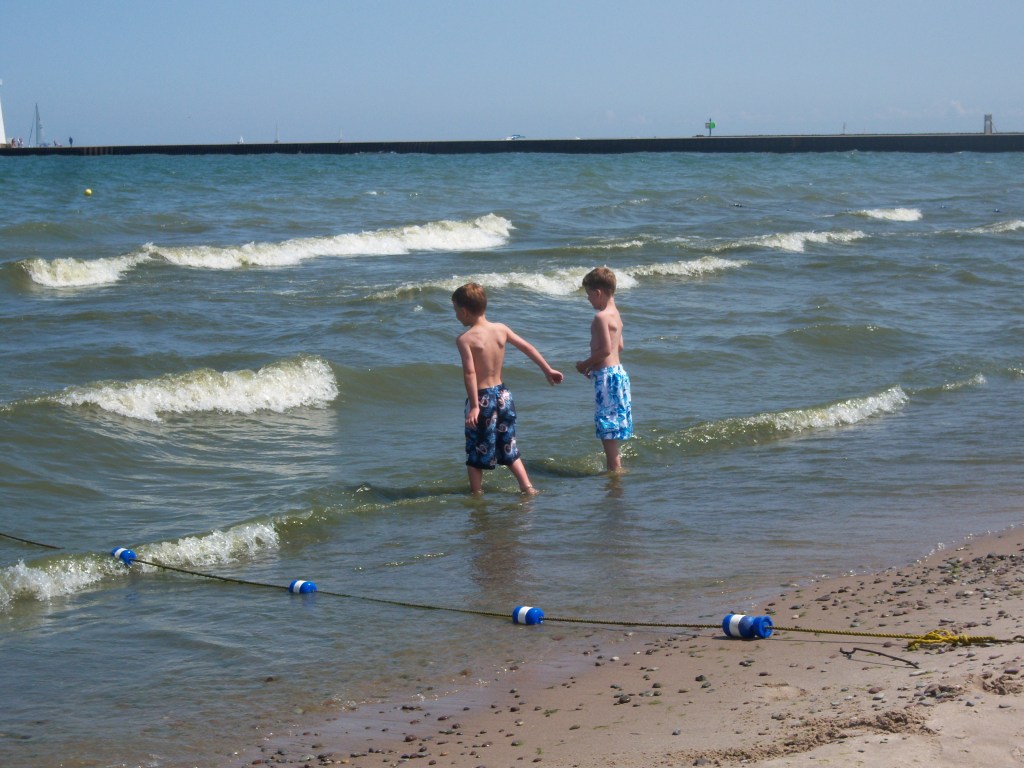
That’s pretty much what it’s like living in Sodus Point in the summer. Located on the south shore of Lake Ontario, we have seasons, defined seasons, and for three-fourths of the year it’s quiet. There are fewer than 900 permanent residents.

The switch is flipped, starting around Memorial Day. There’s an increase in activity. Summer residents begin readying their cottages for warm weather. Tourists, staying at inns and rented homes, stroll our streets, visit our attractions, line up for ice cream, dine on the decks of our waterfront restaurants, or purchase California rolls and bao buns, specialized coffee, baked goods, barbecue, and tacos from food trucks that circle a parking lot like covered wagons.

July 4th weekend brings more traffic-hundreds; maybe thousands from around our region-for classic car and kiddie parades, craft shows, fun runs and a spectacular display of fireworks, beginning at 10 p.m. Our days are long this time of year. We watch the fireworks from our front porch, the jostling crowds and traffic too challenging for the likes of us, and the noise unsettling for our small Beagle, Nova.

A week or two later more visitors from across this country-and pre-pandemic-countries from around the world, descend upon our village to partake of the scenic beauty, pristine beaches, hiking trails, fishing spots, museums, lighthouses, gift shops, great food, and music. There’s lots of music.

Summer is when our historical society and museum sponsors nine weeks of Sunday afternoon concerts in the park on a bluff overlooking the lake. Motorboats anchor, sailboats drift lazily, and pedestrians spread blankets or unfold chairs to listen to a diverse selection of music while munching on hot dogs and sausage, popcorn, and ice cream. Often, during the week, music vibrates through our windows from bars and restaurants lining our business district.

Most of our friends and family visit during summer months. There’s lots to do: sunbathing on the beach, simple meals cooked on the grill, visits to wineries, farm stands and orchards, and to our local farm animal rescue shelter; be sure to bring bags of carrots and apples for feeding the residents. Friends with boats take us and our guests on tours of the bay or for longer sojourns, we rent pontoons. Although we can hear the Sunday concerts from our front porch, it’s a quick stroll to the park, and part of a must-do Sodus Point experience.

Late in August the summer people begin pack up and leave.  School is starting, soccer and football practice, too. Tourism wanes, but the crowds return to celebrate Labor Day weekend. It’s the grand finale: an annual clambake sponsored by our ambulance association; the final concert on the bluff; and another sumptuous fireworks display. Soon, very soon, there will be quiet on our streets with the promise of autumn in the air, a breathtaking ending to a fine summer.


The Wine Cellar by Karen Shughart

This month, to celebrate my birthday, friends treated me to lunch at a lovely restaurant/winery with charming views of Seneca Lake, in the heart of the Finger Lakes. The restaurant not only carries its own wines, but also a splendid selection from other wineries located here, along with those produced elsewhere in the United States and internationally.

Maybe it’s because of the burgeoning wine industry in the Finger Lakes – it’s the second largest producer of wines in the U.S. – that wine features prominently in our social life. Each night before dinner, my husband, Lyle, and I have a glass, every meal we share with friends at their homes or ours as well as at restaurants, includes wine. We sip, we taste, we compare, and we share. It’s part of the culture.

Right around the time that COVID quarantining started, Lyle decided to clean out a basement room directly beneath our kitchen that has thick stone walls and a stone floor.  We figured it may once have been a cistern, the house is about 130 years old. Remarkably, in both the heat of the summer and chill of winter, that space stays cool at about 56 degrees.

For as long as we’d owned our house, this was one room I had never, ever entered. It was gloomy and dark with cobwebs, discarded doors, rusted paint cans, a hodgepodge of debris and a broken wooden table. It took him hours, but eventually he got rid of all the junk, cleaned the floor and walls and cleared out the cobwebs. What an amazing transformation! The stone walls were charming; the floor was, too. It was wired for electricity, there was a burned-out bare bulb hanging from the ceiling. Then it struck me. While we enjoy wine and had taken wine appreciation classes at nearby New York Kitchen in Canandaigua, our wine storage options for collecting it had been limited. This was the perfect space to create a wine cellar.

Just outside the room we hung a round, wooden sign: “Wine Pairs Nicely with Good Friends.” We bought a light fixture to hang from the ceiling. For comfort, my husband installed some interlocking rubber tiles over the floor. We found an authentic wine barrel that we placed in one corner of the room; a huge Finger Lakes wine country poster sits in another. We purchased racks and started filling them, rows organized by varietal.

A colorful rug anchors the middle of the room, with a small, rectangular table covered with a Provencal – print cloth, a perfect spot for wine glasses and bottles to open for tastings.  Over the winter, we had an electric fireplace installed for those chilly wine-tasting nights.

Our journey began with an appreciation for wine and the abundance of vineyards so close to where we live. It has continued with the creation of our own wine cellar, a fun space for small groups of friends and family to gather, and a silver-lining project during the isolating time of COVID.

City Mouse or Country Mouse by Karen Shughart

Are you a city mouse or a country mouse? Does the thought of rural life make you yawn? Or does the idea of living in a city send electric shocks of anxiety through you?

I grew up in Pittsburgh. I enjoyed concerts performed by the symphony orchestra and boarded a streetcar with my mother for shopping excursions and lunch at downtown department stores. Our family went to the zoo, visited museums, and in the summer enjoyed the rides and games at big, regional amusement park. A branch of the Carnegie Library was within walking distance to our home.  I remember attending a live performance of what was the forerunner to the Mr. Rogers TV show. I loved the energy of the city, the hustle and bustle, the diversity of people and activities.

One set of grandparents lived in a small, rural town in Ohio. From their front porch you could see the Ohio River, and there were meadows and fields at the end of their road. We weren’t allowed to swim in that river, but I do remember hikes and picnics in sun-kissed fields, crowded with delicate Queen’s Anne Lace, purple thistles, and sunflowers. You could hear the train whistle and wave to the conductor from their backyard. I loved those visits, too.

 My children grew up in a mid-sized town in central Pennsylvania: safe, secure and with plenty of space to roam around, but we lived within proximity to major metropolitan areas. We exposed them to museums, concerts, historic sites, and a variety of restaurants that served food unlike the types available in our town. Those experiences impressed them, and as adults they have chosen to live where gridlock traffic is juxtaposed with economic and cultural opportunities.

There’s energy in a city that you don’t find in a rural setting. Where you can walk or hail a cab or call Uber to get just about anywhere in minutes. Where GrubHub is takeout. When visiting our children, I sometimes long for that lifestyle. But then, after a few days, I yearn for the solitude of the place we call home.

This image has an empty alt attribute; its file name is 3439-1.jpg

We retired and moved from central Pennsylvania to a bucolic village in the Finger Lakes region of New York on the south shore of Lake Ontario, not too far from several large cities and on the other side, Canada. It’s a big lake, with beautiful beaches and waves that look and sound like the ocean.

Quiet three seasons, in summer restaurants, shops, and museums fill with visitors, and outdoor activities abound. Cars line our street for Sunday concerts in the park, and our July 4th celebration attracts crowds from miles away. You wait in line at farm stands and for tastings at wineries. It’s exhilarating and enervating at the same time. I hold my breath, not fully exhaling until September.

So, what am I? I’d say I’m a country mouse who likes best to feast on the grains of quiet and solitude but occasionally ventures into a city to forage for more exotic fare. What about you?

The First Draft by Karen Shughart

I started writing the first draft of the third mystery in the Edmund DeCleryk series several months ago. It’s entitled Murder at Freedom Hill, and as with the first two books, the murder is linked to an historical event, this time the Abolition Movement and Underground Railroad. Both are part of the history of the village where I live in upstate New York, as are the historical backstories with the previous books, portrayed with a bit of poetic license.

When I start writing a draft, I know the setting (it’s always the fictional village of Lighthouse Cove, NY), have chosen the victim and other characters.  There will be a trip or two to Canada, it’s right across Lake Ontario from Lighthouse Cove; the communities bordering it on both sides are intricately linked by related historical events.

Photo by cottonbro on Pexels.com

I’ve contacted my technical experts with questions on investigative procedures and sentencing guidelines. I have the basic trajectory of the story in my head, and usually have identified the murderer. And I plan for the recipes that will appear at the end of the book, courtesy of Annie, Ed’s wife.

After that it’s a bit of a free-for-all. Structured chaos. The road not taken. Once the first draft is finished, I start to think about changes I want to make in the plot. Sometimes that means getting up in the middle of the night and writing down idea so that by morning they haven’t been erased by a dream or two I may have had in the interim.

I’ve been asked if I create an outline or use index cards when I’m writing a book. I don’t, although I know many authors who do. For me, it’s too confining. I’d rather go where the story leads me instead of being boxed in by my own rigid expectations. Case in point: since starting the first draft of Murder at Freedom Hill, I’ve changed the murderer three times, added a few twists and turns, and lengthened the time it takes to solve the case. It’s a true, excuse the cliché,  work in progress.

The first draft is messy and meandering, and it’s now that the hard work begins. I know I’ll need to clean it up, cut and paste, do a significant amount of wordsmithing, expand the investigation, eliminate overused words, and insert the historical backstory chronologically and strategically. I’ll also need to decide which recipes to include.

The first drafts of Murder in the Museum and Murder in the Cemetery ran about 40,000 words. My background is journalism, so I learned to write sparingly. I think I’m finally getting the hang of it, this draft ended at 55,000 words, a lot closer to my goal of 70,000+.

Writing the first draft is lots of fun, I go with the flow and see where the story takes me.  But now, the real work begins.

Mud Season by Karen Shughart

If you’ve ever read any of my Cozies, you may have noticed that the month of March doesn’t figure prominently in the narrative. Don’t get me wrong. We live on the south shore of Lake Ontario in New York state, and it’s spectacularly beautiful here almost year ‘round. That is to say: it’s spectacularly beautiful eleven months during the year. Not so much March.

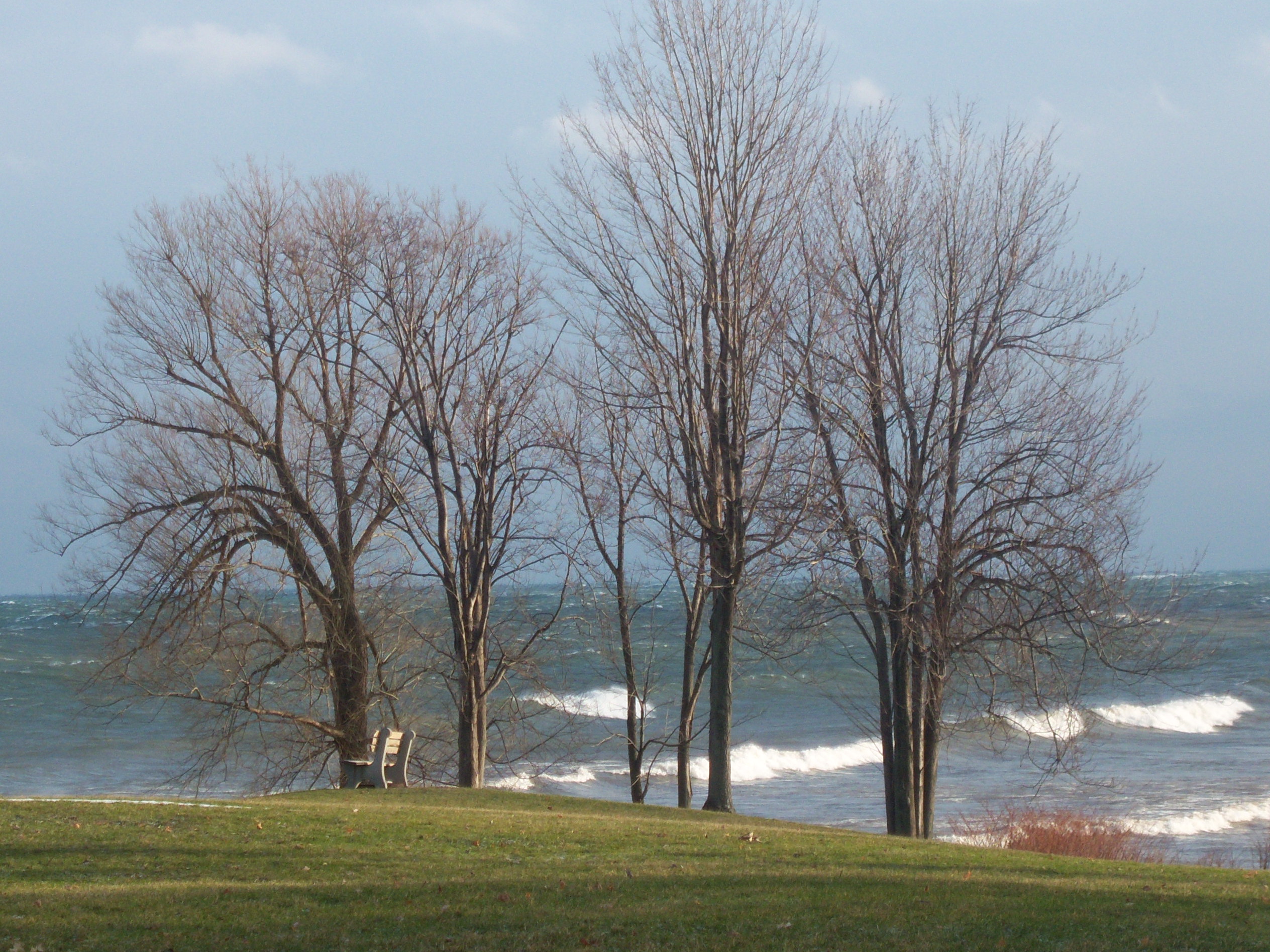
March is the month of transition. One day the temperature plummets into the teens, the next day it rises into the 60s. We can have winds of 50 miles an hour. Then, waves up to 15 feet crash turbulently against the beach, roaring so loudly that they obliviate other village sounds. When the winds die down, there’s an eerie silence, and the lake looks like glass. .

We have snow squalls and rain, sometimes in the same hour. Snow that’s accumulated throughout the winter now starts to melt; quickly, in torrents and rivulets that make our backyard a swamp. I wear my old Wellies to stomp around to view the changing landscape. We don’t have many sidewalks here, and a stroll through the village can be challenging, to say the least. Many of us refer to the month as Mud Season.

Mid-March along the lake by Karen Shughart

Gray days seem to dominate, but it’s not all doom and gloom. You can smell the ripening as the tree buds start to swell and begin turning red or pale green. Snowdrops bloom, and our daffodils stretch up through the melting snow. The sun rises earlier, casting rose gold streaks over the bay; on rare days it is piercingly bright, with a clear azure sky. Those are the days when our middle-aged dog, Nova, sleeps in sunbeams that move from room to room.

We hear lots of birdsong. Robins live here year ‘round, but mostly in winter they hunker down out of site. Now, they make their presence known. A couple weeks ago, I peered out our living room window and spied two sparrows, a male and a female, chattering away on the winter wreath of twigs, pinecones and berries that hangs on our front door. I believe they were having a conversation about whether to build their nest there. It’s a perfect place, protected from the elements and predators.

They returned to that same spot for several days in a row. Don’t get me wrong, I love the birds. I just don’t want them nesting against our front door. Regretfully, I removed the wreath, to replace it later in the spring with one that’s more seasonal. I expect they were surprised when they returned to find their building site was no longer available.

I’ve purposely not written much about March in my Cozies, but now, after writing about this month of so many moods and faces, I begin to wonder why I’ve been avoiding it. Winter is ending, spring is on its way, and change happens rapidly. Hmm, could this be a metaphor, perhaps, for my next Cozy?