
Family of the Heart by Karen Shughart

At the beginning of each year I create a list of the blogs I intend to write for Ladies of Shughart,Karen-0016_ADJ_5x7 (1).jpgMystery. This month I had planned to write about choosing seasons as setting in a book.

But that’s not going to happen.  As COVID-19 continues to shatter many of our communities and insert itself into our lives regardless of whether we remain healthy or not, I decided that  the topic didn’t feel right. Instead, this blog is called Family of the Heart.

Let me explain: My husband and I live in a small village on Lake Ontario in New York state. Our nearest relatives live in Buffalo, about a two-hour drive away; siblings live in Pennsylvania and Florida and our children in New Jersey and California. Trips we’d planned to visit them were cancelled, and now of course, for several weeks we’ve been sheltering in place. One would assume, then, that we are isolated, but the good news is that we are not.

My next door neighbor, Bonnie, called one morning. She was heading to the grocery store and wanted to know if we needed anything. This week, I’ll call and ask her. On  several occasions we’ve participated in Zoom happy hours with friends who we have not seen for ages even though we live within walking distance, and with friends from far away. One evening several of us texted, it was a venting session to be sure, but it felt good to know we weren’t alone in our fear and apprehension.  There’s also been lots of sharing of funny videos and jokes via email and Facebook, and we’re talking on the phone more frequently with those we love.Nova.jpg

Two of our friends adopted dogs; we did, too.  Nova, a beagle, came to us from a no-kill shelter, and we were advised she had some potentially life-threatening health challenges, the result of being neglected and abused in an earlier life.  We decided to adopt her anyway.  She’s lovely and sweet, but we were anxious to see our vet. When we called, she never hesitated, and we took Nova for an office visit after hours, a necessary precaution these days.The good news is that Nova is far healthier than we believed.  We’ve had so much support through this process. Not only from our vet, but also from friends and neighbors who have provided us with items we needed for her care that we were unable to purchase for a multitude of reasons.

These are indeed difficult and stressful times. But we are not alone. We not only have ties to our biological families who may  living far away, but also to those in our community who are helping us get through this. Both are our families of the heart.


Creating Characters by Karen Shughart

Shughart,Karen-0016_ADJ_5x7 (1)If you think about it, creating characters is sort of like painting. I’m not much of an artist, but I’ve taken some lessons, and there are real similarities between the two. In both, you start with a blank canvas. You might have an idea of what you want to do, but the trick will be to get to the point where, whether with paint or with words, you end up with something recognizable, even in the abstract.
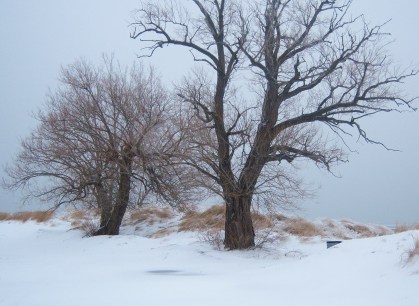
Suppose you want to paint a tree. You outline the tree with the brush, just the bare bones of it, but then you start to add layers of color and texture to make the tree look authentically, well, like a tree. For starters, you’ll probably paint the trunk, then the limbs, then the branches and finally the leaves.  By then, it looks like a tree, but it might be kind of flat, which is fine if you like that type of painting, but what if you want the tree to really look like the maple that stands in your front yard? A brush stroke here, a brush stroke there, perhaps a bit of canvas showing through,  and the trunk and the limbs and the branches start to really look alive, to take shape, to become the tree you view every day from your front porch.

worms eyeview of green trees

Then it’s time to think about the leaves. This is where you get to decide the season of that tree’s life. If it’s winter, the tree, if you live in the north where I do, will be barren of leaves, but with its own stark and weathered beauty. If it’s spring, then you will need to shape the leaves and possibly add some shades of yellow or red to the tips or add white or ivory to the green to give them a fresh, young feel. Summer leaves might include some black or brown strokes mixed into the green, that rich dark color that sends the message that the days are hot and heavy and bright.  If you’re painting a tree in mid-fall, you’ll think about foregoing most of the green and use lots of warm reds, deep yellows, oranges and ochre, what a lovely time in the life of that tree. In later fall the leaves turn brown, but if you look at them closely you’ll see that as with the other seasons of that tree’s life, there are many blended colors you’ll need to use to give the tree character.

Character.  Now that’s an interesting word, isn’t it? According to one of my dictionaries, those three-syllables  can mean many different things:  the mental or moral qualities distinctive to an individual;  a feature used to separate distinguishable things into categories; a graphic symbol or style of writing or printing; reputation or position; a person in a novel, play or movie. As I think about it, those definitions fit, whether you’re painting a tree on canvas or giving spirit, personality and dimension to the characters who live in your books.


Murder in the Cemetery, by Karen Shughart

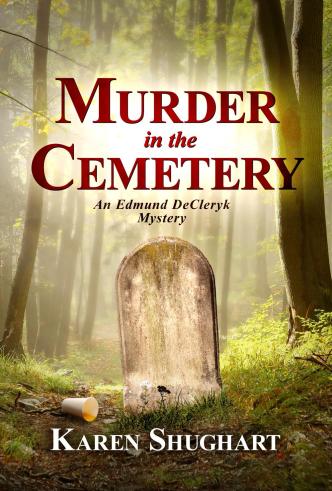
MurderintheCemeteryfrontlargeWell, the baby finally was born. It was a long and hard labor, lasting almost two years, but in the end, I’d say it was worth it. Murder in the Cemetery, book two of the Edmund DeCleryk mystery series, has been published, and as I look back, the labor was one of love.
I thought this time it would be easier. I’d been through it before. I knew a little more about what I was doing and was comfortable working on developing the characters and plot. But I was wrong. It wasn’t easier. This time my expectations were greater, and I put more pressure on myself. I fretted more, and many times woke up in the middle of the night remembering details I needed to include or thinking about plot changes that would make the book better.  I worried that my publisher, Patricia Rockwell, at Cozy Cat Press, wouldn’t like this one as much as Murder in the Museum, the first in the series.  Happily, she did.

One of the biggest challenges in this book was keeping track of all the details. The plot is a bit more complex, so there are lots of them. Plus, there were recurring characters whose personalities and names I had to keep straight.  When I introduced something, such as a conversation early in the book that gave hints to who the murderer was, I had to make sure I followed through to the resolution. Descriptions had to be consistent throughout. Ditto for points of view. And sequence of events, except when there were flashbacks, needed to be chronological.

During a trip Ed and Annie take to England (it has to do with what Ed discovered on the beach at the end of Murder in the Museum) a glimmer of something about the murder in this book wafts through Ed’s head. He dismisses it, but in a chapter close to the resolution, I had to make sure he remembers it.  Annie also had a moment of discomfort when something niggled in her brain, but close to the end she remembered what it was, and it was a detail that helped to solve the crime.

I’m excited that the book is finished. Promotion has begun, but I’m also beginning to develop the plot for book three, Murder at Freedom Point. Whether it will be easier or more difficult to write than the previous two remains to be seen, but I know I will love the conception, gestation, labor, and what I certainly hope will be a very happy and healthy delivery.

Check out my website: https://www.karenshughart.com for a synopsis of Murder in the Cemetery, to read my blogs and newsletters, see what other books I’ve written or to purchase any of them.


What Inspired Me to Write Cozies by Karen Shughart

100_0103Many years ago, when my husband and I were living in a suburb in central Pennsylvania near Harrisburg, we decided to explore the south shore of Lake Ontario. The Memorial Day weekend was approaching, a time when we typically headed to beach towns in Delaware or Maryland.  That year, not wanting to deal with gridlock traffic, expensive hotels and wall-to-wall throngs of people, we were determined to do something different.

We looked at a map. If we headed directly north, we’d come to Sodus Point, NY, located on two peninsulas that jutted out onto Lake Ontario and Sodus Bay. We made a reservation at a bed and breakfast with views of the water and within walking distance to restaurants and shops.  On a cool, May morning we drove into this tiny village, passing a golf course, simple cottages, marinas with a forest of sailboats moored in slips, and further out on the bay, a lazy one or two gliding through the water.  I turned to my husband and said, “This is my dream town.”

We spent the weekend exploring, taking short drives to wineries located in the nearby Finger Lakes, walking along the sandy beach, touring the lovely museum that stood on a bluff a block from the bed and breakfast, and eating at maritime-themed restaurants that lined the bay.  We met people who welcomed us, and with absolute sincerity told us that if we came back to visit to get in touch. They meant it and today many of them, along with others, remain our friends.

Two weeks later we placed an offer on a property built more than a century earlier for an assistant lighthouse keeper, and by fall we were spending weekends and holidays in our quaint home by the sea.  Years later, after retiring, we sold our house in Pennsylvania and moved here permanently.

The charm, the weather (yes, it snows in the winter, and we do get lots of wind), the cozy pubs and intimate gatherings of friends, the bountiful growing season where lush orchards, vineyards and farms provide all manner of produce, the holiday celebrations, these gratify and satisfy. Plus, within a short drive, there’s access to a myriad of cultural venues you find in a large city.

Now I’ll get back to the reason for the title of this blog. I always wanted to write Cozies, and I always wanted them to be set in a small village by the sea. I can’t think of a better place for master sleuth, Edmund DeCleryk, and his wife, Annie, to solve crimes. When the wind blows in from the north, the snow comes in droves, the mud washes through the gullies, and I can hear the waves crashing upon the shore, I’m in my glory. Sitting at my computer, snug and warm on a winter’s day, I’m inspired. For me, there’s simply no better place than this for my imagination to soar.

Books and Holidays by Karen Shughart

candles candlelight
Photo by Zenia Love on Pexels.com

I own a collection of beautifully illustrated children’s books, some from childhood and others I’ve collected throughout the years. I seem to be especially drawn to those about the holidays that occur this time of year.

What I love about these books is that the stories are charming, the endings typically happy, and it’s hard to not feel good after reading one of them on my own or to a curious and delighted child.  Plus, they are often colorfully and beautifully illustrated. I send books to my nieces and nephews and to friends’ children. Books are lasting, and what better way to share the joy of this season than by giving a book that represents the timelessness of the holiday.

I also like to browse in bookstores during this time of year, sometimes buying; sometimes not, but the sheer numbers of books that are available for people of all ages create excitement and a sense of wonder. I’ve gotten immersed in various versions of The Nutcracker, The Night Before Christmas, The Polar Express, an exquisitely illustrated  version of Robert Frost’s Stopping by the Woods on a Snowy Evening,  and several that tell the story of a miracle that happened more than two thousand years ago that caused a light to burn for eight days instead of one and created the Jewish holiday of Chanukah.  Then there are the picture books and photography books that show gardens and parks in their splendor, books from arboretums and conservatories and nature preserves. If you want a sense of how beautiful the season is, take a look at one of those.

Curious about how cultures unlike my own celebrate the holidays, I’ve read books about Kwanzaa, the festival that recognizes the African diaspora and pays homage to African unity, heritage and culture in the United States and other countries; and Diwali, the Indian festival of lights, to name two. What strikes me is that all the holidays, however diverse, share one major theme:  the lighting of candles and the emphasis on light. Our lives certainly are made brighter during these short, dark days.

Some years we decorate a little more, sometimes less, depending on our schedule and our inclination. Without fail, each year around this time I put the coffee table books away and retrieve those we’ve lovingly collected over many years that represent the holidays. They’re pretty, yes, but it’s also a pleasure to reread and revisit them each year to help get into the spirit of the season.

I’m attracted to the books because they make me feel good. The messages of hope and redemption, the miracles we don’t think about much at other times, the beautiful and colorful illustrations and sometimes, even, the music and recipes that accompany them. There’s something in each that inspires me and causes me to reflect upon what this time of year really represents.