A Year of Possibilities

There’s a song lyric I think of a lot. From the musical Follies by Stephen Sondheim—it’s called “I’m Still Here.”

In the lyrics, a character reviews the hills and valleys of her life. With equal parts humor, bravado, triumph and bittersweet, she declares that she made it through all of last year.

That’s what I feel like on this New Year’s Day. Particularly since 2023 has been one for the books. The year was far more dramatic and eventful for me than I would have liked. Lots of hills and valleys. One of the ups was the publication of The Things We Keep in March. The 14th Jeri Howard novel was my 20th book and that’s quite a milestone. Hey, call it a mountain.

As the year progressed, I had my share of downs—a computer crash and the loss of a book I was working on, followed by my mother’s passing, then the condo flood. But another up—I finally took that trip to Greece I’d been contemplating for several years, after taking an art history course. I thoroughly enjoyed myself. Climbed all the way to the top of the Acropolis, marveled at the remnants of ancient civilizations in Delphi, Corinth, Mycenae, Crete and Akrotiri on Santorini. I ate delicious food. Olives, especially Greek olives. And the scenery! Lots of hills and valleys there.

A year of ups and downs may hold true for you as well.

I don’t make New Year’s resolutions. Haven’t for years. I prefer to think of the new year as a new page in the journal, where I can write dreams, aspirations, and list the things I’m grateful for.

It’s also a time when I make year-end donations to various charities, my way of making the world a better place in the new year. For the most part I keep it local—the food bank, Meals on Wheels, the animal shelter, and the San Francisco Chronicle’s Season of Sharing Fund.

Things that happened in 2023 will affect what happens in 2024, and that can be good as well as bad. The past is always an influence. For me, this is a time to let go of the bad things that happened last year, the things that can clutter up my life and impede my progress. It’s time to consider the possibilities of what comes next.

So here comes a year of possibilities. New Year’s Eve will be a quiet evening at home with a favorite movie, surrounded by my feline foursome. New Year’s Day will bring a celebratory brunch with friends of long standing. After that, I’ll take down the Christmas decorations and work on my book.

Happy New Year to all of you and all the best for 2024.

Simple Gifts

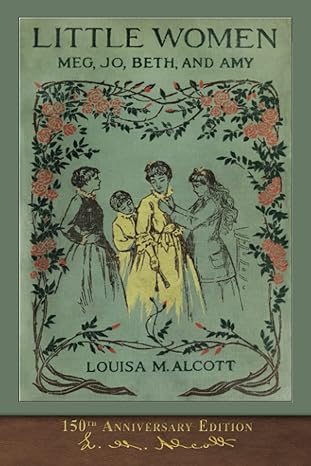
“Christmas won’t be Christmas without any presents,” grumbled Jo, lying on the rug.

That’s the first line from the 1868 classic Little Women by Louisa May Alcott. It makes me think about this time of year. We’re heading from Thanksgiving to the holiday season—Christmas, Hannukah, Kwanzaa, and a host of other holidays. Plus birthdays. Always birthdays. It’s definitely gift-giving season.

To a certain extent, I’m with Jo. Christmas means presents, among other things. But I’m at that age where I don’t need any more stuff. I’m valiantly trying to get rid of stuff.

Please, no more socks. How many pairs of socks can one person use? Over the past year or so I went through the sock drawer—and the scarf drawer and the jewelry. The local thrift store, which benefits the local animal shelter, got plenty of donations.

And clothes. It’s difficult to buy clothes for another person, though I’m a sucker for a T-shirt with a catchy saying. Did I mention the T-shirt drawer? See thrift store, above.

I’m also retired. I confess that I wear the same clothes over and over. After all, it’s just me and these cats, hanging out at home, writing. I do spiff up when I go out, though. I put on shoes. That counts. That reminds me of a sweatshirt I once gave my father for Christmas. It said: “I’m retired. This is as dressed up as I get.”

Getting back to gifts. Books are much appreciated and I have been known to give the title and author of the desired book when asked for suggestions. My mother was of the opinion that I already had way too many books so she never would give them to me as gifts.

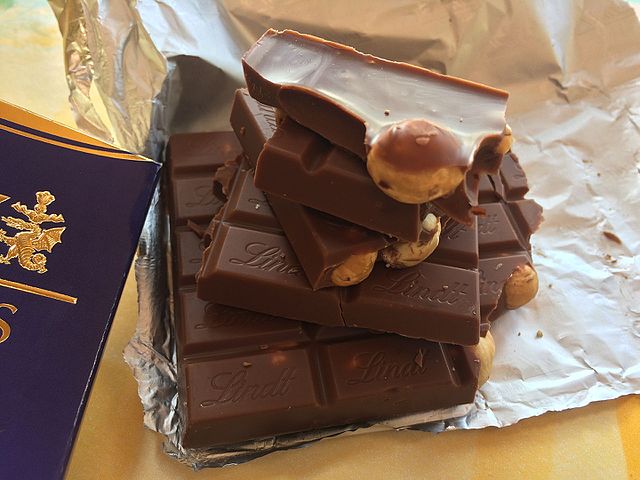
I’ve come to the conclusion that at this stage of life, giving people things they can eat is a really good idea. There are several people on my gift list who like chocolate, so that always works. I have a friend who loves fruitcake, a substance she can take and I will gladly leave. My brother is fond of oysters in any form, so tins of smoked oysters find their way into his Christmas stocking. I make wonderful pumpkin bread and people on my gift list are always pleased to get a loaf.

If you’re as old as I am, perhaps you remember Geritol commercials. Geritol was and is a vitamin supplement (it’s still on the market!). In early TV commercials it was promoted as a cure for “iron poor, tired blood.” The commercial I’m thinking of, from the 1970s, features a woman saying, “We’ve got so much to be thankful for. We’ve got our health and when you’ve got your health, you’ve got just about everything.”

It was hokey back then. These days, I see the truth in the statement. That’s one of the Christmas presents I already have. I am in good health, despite occasional twinges and familiarity with ibuprofen and Tylenol. I have a roof over my head, a warm bed, kitties to cuddle and books to read. I have time to write and lots of ideas to write about. And memories of all sorts, the good outweighing the bad.

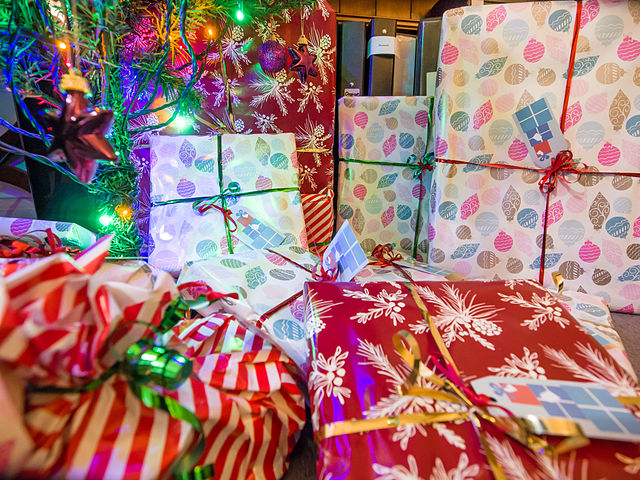
Christmas won’t be Christmas without any presents. They’re already there, under the tree and all around me.

Nothing Ever Happens To Me

Bad luck comes in threes, right? You’ve heard that one. Where does that saying come from?

In a post back in 2017, the website Folklore Thursday looked at the origins of what it called the superstition of threes.

For example: “Three strikes of a match.” That originates from wartime. The bad luck of “three strikes of a match” comes from trench warfare. If a match burns long enough for three men to light cigarettes, that’s enough time to be spotted by the enemy, pinpoint the position, and launch an attack.

But what about the other half of the equation? Consider the phrase, “third time’s a charm.”

Three is a familiar pattern and maybe if we put a limit on those bad things, we can see that the run of bad luck will end. It’s one small way to gain control of our lives in unpredictable times.

And there’s another familiar phrase to consider: What doesn’t kill you makes you stronger. I’ll go with that one.

When I started writing this blog post, I figured I’d had my three bad things for 2023. But the universe had another surprise in store for me.

To recap: In July, it was the computer/hard drive/cloud storage meltdown. I lost the book I was working on, as well as notes for several others. I had to start the book all over. I am still working to pull the story out of my head. At least it’s in my head. Despite all the claims for the benefits of cloud storage, it certainly didn’t wind up in the cloud.

In August, my 99-year-old mother came to the end of her life. I’d been a long-distance caregiver for years. I hoped that we could see her celebrate her 100th birthday, but that was not to be. At the start of what I figured would be a two-week trip, I thought I’d see her through the hospital stay and rehab, then she’d go home and get along as before, with more local caregiving assistance. I didn’t think I’d be planning a memorial service. Those two weeks lengthened into four.

September brought the condo flood. It was just after midnight when I woke up, thinking it was raining. It wasn’t, at least not outside. I got up to investigate and discovered water pouring from the light fixtures in the kitchen and dining room, courtesy of a pipe under the upstairs neighbors’ sink. They were unaware of the situation until I pounded on their door. They managed to stop the flow and helped me mop up water, using nearly every towel I had. Then came the water mitigation crews with their industrial-sized dehumidifiers and high-speed fans. All that noise for nearly two weeks. The cats were freaked out and my stress level went through the roof.

Weeks later, I’m still dealing with the fallout. The carpet went away, leaving me with bare concrete floors. Many of my belongings were packed into boxes. Those boxes, and much of the furniture, were picked up and moved to storage. Water in the ceilings and walls meant the sheetrock had to be cut open, those big dehumidifiers set so they would dry out the wood. Next step is sheetrock repairs and painting. Then I can think about new flooring. Before that happens, though, the remainder of my belongings must be packed up and put in storage.

Life in the construction zone was put on hold in October, for my long-planned and much-anticipated trip to Greece. Which I thoroughly enjoyed. I climbed to the top of the Acropolis, and back down again. I went to Delphi and saw the Temple of Apollo. I saw beautiful scenery and ancient sites in the Peloponnese, Crete and Santorini. And ate lots of wonderful food.

All in all, the trip of a lifetime. Except for the part about testing positive for COVID-19. That was definitely not on the itinerary.

I’d had all the boosters. I like to think I was careful. But . . . The tour company protocols said I could not sightsee or eat meals with the group. However, that didn’t prevent me from sightseeing on my own. I particularly wanted to see the archeological excavations at Akrotiri on Santorini. After all, I’d come that far and spent a good deal of money on the trip. I wasn’t going to miss a significant archeological site that ranks with Pompeii. Not able to travel on the tour bus? I wore a mask and took a taxi.

I’m home now, testing negative, back to the construction zone. Neither the cats nor the gremlins made repairs in my absence.

Three, or four, bad things. Are they bad? Maybe it’s how I look at them. Challenges, and I’ve had more than my share this year. Dealing with these challenges has made it more difficult for me to write. It takes concentration to write fiction, to organize and pull those thoughts and ideas out of my head. That’s hard to do with all the chaos I’ve been experiencing. It has certainly made it more difficult for me to get ideas out of my head and into the computer.

That computer meltdown and losing the first draft of the book—I hope that the book I’m working on now will be even better. As for the flood and the resulting construction zone—well, I was thinking about replacing the carpet anyway. Just not right now. And the trip to Greece, COVID-19 or not, I came away with ideas for two books.

Besides, there’s something wonderful about reading Mary Stewart’s classic My Brother Michael, which is set in Delphi, after having been to Delphi. As I reread the book, I could see the terrain of Mount Parnassus—because I’d just been there.

And that book has one of the best first lines ever written: “Nothing ever happens to me.”

Mom’s Creative Children

Mom once told me she had been blessed with two creative children. At the time, I took it to mean that she thought my brother and I were underemployed.

He’s a musician. I’m a writer. He was also a teacher for many years. I knew from an early age that I wanted to write. So I spent my working life in a variety of jobs, the last being an administrative position at the University of California. It was all in aid of paying the bills in order to support my avocation. I wanted the kind of job I didn’t have to take home with me.

My brother had the same desire to make music. He got his first guitar when he was a teenager. With two friends, he played rock ’n roll. They practiced in the basement after school. Was it my imagination, or did the house shake? Maybe that was the windows vibrating?

They were certainly loud. I once asked Mom if the noise bothered her. She said, “At least I know where your brother is.” True enough.

Me, I was the kid who always had her nose in a book. So, it seemed natural to write one. I wrote what I called a book in the sixth grade. It was more like a short story, a very short story. And I illustrated it, too. It was a mystery, natch.

My brother kept playing music over the years, in local bands in the town where he lived, doing gigs on weekends and teaching full-time. He has multiple guitars and takes several wherever he goes. I understand this is a condition common to guitarists.

I graduated to short stories in junior high and high school, some of them longer. I called them novels, but they weren’t. Novellas, maybe. We will draw a veil over the plot about the circus.

At some point I began writing a mystery. Through various drafts it got better, and I was sending it out to agents. Then I got the idea for the book that became my first published novel, Kindred Crimes, and everything got pushed to one side while I wrote that.

Publishing lightening struck and I won the St. Martin’s Press Private Eye Writers of America contest for best first PI novel. I was to pick up the award at Bouchercon, which was in Philadelphia that year. My parents were so proud and excited they got on a plane and flew to Philly to see me get that award.

From then on, they were my biggest promoters. Dad was a salesman. He’d carry copies of Kindred Crimes in the trunk of his car, telling everyone about his daughter the writer. And if his audience had a glimmer of interest, he’d pop open the trunk and sell them a book. Mom did her part, too, selling books to family and friends alike. She would buy them when a new book came out and give them as gifts, too.

Dad is long gone. Mom died in August, just over a month ago. Mom being Mom, she left detailed instructions about her memorial service, right down to the Bible verses and the songs. She specified that she wanted my brother to sing a song he’d written. Of course, he had a guitar with him. He didn’t think that any of his rock or blues songs would be appropriate, so he wrote a new one for Mom.

The other instruction was that I was to read something from one of my books. As I stood in front of the people at the church, I prefaced that by saying, “Well, Mom, I write crime novels.”

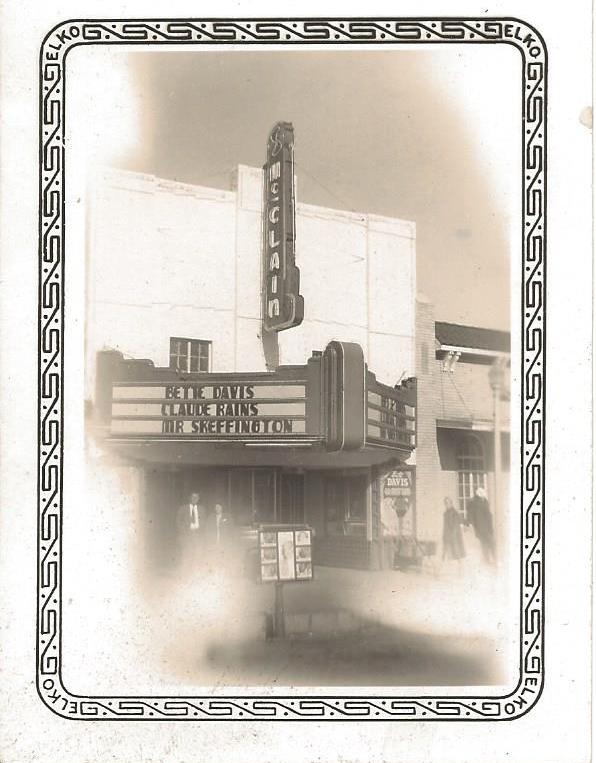
Then I read a few paragraphs from Bit Player. That’s the book where my private eye Jeri Howard gets involved in a decades-old Hollywood murder because she learns that her grandmother, an aspiring actress in the 1940s, was once questioned by the police. It seemed the appropriate choice, since Mom grew up selling tickets and watching every available picture at the movies theaters her family owned. In fact, that’s where she met Dad, at the ticket booth of the family movie palace during World War II.

Here’s to Mom, a love letter from one of your creative children.

Lost in the Cloud

I remember the days when I wrote on a typewriter. My mother had a Remington that felt like an anvil when I picked it up. When I went to college, I had an Olivetti portable. I thought I’d gone to technology heaven when I graduated to a Smith-Corona electric.

I always had a pile of manuscript pages on the desk next to my typewriter, ready for me to take a pencil and edit and then retype them.

I got my first computer about 40 years ago. I thought that was quite a step up, not having to retype pages. I could make corrections on the screen, though I printed out each chapter as I finished it.

My first printer was a dot matrix, the kind that used continuous sheets that had a little feeder strip on each side, with holes. I’d have to tear the pages apart. Those strips—well, one of my cats had a really good time with those when he got into them. Strips of paper strewn up and down the hall.

Then I graduated to an HP Laserjet the size of a TV set. It weighed about as much, too. I had that one for years before it finally died of old age. Enter the inkjet era.

I was still printing out manuscript pages, the old-fashioned way of backing up my data. I also copied files to floppy disks. Remember those? Then the floppies became smaller hard disks. Then it was flash drives. And external hard drives.

Then came the cloud, a place where one could store important data and free up space on the desktop or dispense with those disks and flash drives.

Works great. Until it doesn’t.

I recently had a hard drive meltdown. As in fried, toast, kaput. I thought my files would be safe since I was backing them up to the cloud, in this case Microsoft’s OneDrive.

But through some technological disaster I don’t understand, most of the files on OneDrive that were dated this calendar year disappeared—including the book I’ve been working on for over a year. I keep looking at OneDrive and everything on there seems to be 2022 or earlier. Except one lone spreadsheet I created on Excel in May 2023. Go figure.

After phone calls and emails with Microsoft Tech Support, the case has been escalated to the OneDrive department. Which assures me via periodic emails that they are investigating the situation and will be in touch with updates—whenever. These bland emails are meant to be reassuring.

I don’t feel reassured.

I mean, hey, the files should be there, floating somewhere in the cloud. After all, that’s the claim—store things on the cloud and your files will be safe from meltdowns and mishaps.

But no, it doesn’t look like it. I got complacent and relied too much on technology. Right now I’m longing for the low tech days when I printed out each chapter as I completed it. At least I’d have a hard copy. Or a flash drive. Yeah, that would be great. Then I could find my book.

I’m upset, since it seems increasingly likely that the files are lost in the cloud. And I do mean lost. But time spent kicking myself isn’t productive. I’ve started a synopsis of the book, memorializing what I’ve written so far. And I have started chapter one—again, reconstructing that from memory.

Say it the way Jerome Kern and Dorothy Fields did: “Pick yourself up, dust yourself off, and start all over again.”