Don’t Forget the Turkey!

I’m writing a historical novel set in New Mexico, in the 1870s. In an early chapter, my protagonist, Catriona, goes to a dance. Except in that time and place, it was known as a baile. It’s a common term in the southwest, describing a social gathering where people dance.

For a writer, a social gathering is a great way to set the scene and give it the flavor of the times and the place. It advances the plot and allows me to give my characters more depth and substance. Throw all these people into a social gathering and describe their interactions—it’s a great writer’s tool.

Catriona is the daughter of an army officer from a nearby fort. She’s accompanied to the baile by her father and another officer and his wife. Newly arrived in the area, she’s looking forward to the social event, her first in her new home. I describe her anticipation of a pleasant evening, the clothes that she and others are wearing, the venue where the baile is held, the refreshments, and so on.

Her first dance—a schottische—is with her father. From then on, she has many dance partners, as the locals spin around the floor—the waltz, the polka, square dances, accompanied by guitars and fiddles. In the interest of research, I went looking for examples of dances that were popular in the mid- to late nineteenth century and found Dance Through Time, which is on YouTube. This interesting channel provides descriptions and videos of various dances. In addition to those dances listed above, there were others, such as the galop and the mazurka. This is a terrific source for writers who set their stories in any decade. You can check it out at https://www.youtube.com/watch?v=gr2JrloB7pc.

Writing the chapter was a great deal of fun, especially one scene. Catriona has already danced—twice—with an earnest second lieutenant from the fort who keeps stepping on her feet. She’s trying to avoid a third session when:

A voice at my right said, “You promised me this dance.”

I turned my head and looked at my rescuer. He was a young man, about my age and a few inches taller, with even features and a head of sandy-colored hair. His slender form was dressed in clean brown pants and a blue shirt. A spark of merriment lit his blue eyes and when he smiled at me, I saw two prominent front teeth. He held out his left hand and I took it. Then he led me onto the dance floor, leaving the disappointed lieutenant standing alone.

“You looked like you needed rescuing from that fellow,” he said with a smile. “I saw him dancing with you earlier. It appears he stepped on your feet a time or two.”

“More than a time or two,” I said. “I fear the lieutenant isn’t much of a dancer. But he’s persistent. My name is Catriona MacNeill, by the way.”

 “Glad to know you, Miss MacNeill. They call me Billy. Billy Bonney.” The band began to play a square dance. “Ah, ‘Turkey in the Straw,’ one of my favorites.”

And that, dear readers, is how Catriona meets Billy the Kid.

How do I know “Turkey in the Straw” was one of the Kid’s favorites? Research, of course. That’s what we writers do, diving down various rabbit holes, including this one. There are a number of sources that say Billy loved dancing and was a skilled and popular partner for the young ladies at many bailes. In 1928, one of Billy’s compadres, Frank Coe, was interviewed by historian J. Evetts Haley. According to Frank, who played fiddle at many bailes, Billy was “a mighty nice dancer and what you call a ladies’ man . . . The Kid danced waltzes, polkas and squares.”

Frank added that Billy would often call out to the musicians, telling them, “don’t forget the gallina.” Which is Spanish for turkey.

Prime the Pump and Take a Long Voyage

It’s an old phrase: priming the pump. Back in the 19th century, it meant pouring liquid into a pump to expel the air and make it work. Even now, an internet search will tell us that before any centrifugal pump can be operated, it must be primed. Priming is the process of replacing air in the intake lines and portions of the pump with water.

But our subject is books and writing. Priming the pump also means encouraging the growth or action of something. In this case, my work-in-progress.

It’s a historical novel. I have a large pile of words that will eventually become a coherent first draft. Where the hell I’m going? How am I going to get there? Will it make any sense? It probably will, to me. Will anyone else want to read it?

Thus I prime the pump. I’ve been seeking inspiration in one of my research books, taking lots of notes. I’m paying attention to the timeline of actual events, in order to integrate my fictional characters into the crowded parade of real people who were doing things in my setting in 1878 and 1879. As I do this, I write notes to myself, usually set apart in brackets, outlining things I want my protagonist to do. Or learn.

There’s a lot going on, but it’s impossible—and improbable—for me to place her physically at all the significant events, much as I would like her to be an eyewitness. I must pick and choose the most dramatic scenes and figure out a logical reason for her to be there. The rest, she’ll have to learn from others. Besides, the book already looks like it will be long. Some events need to be mentioned in passing rather than detail.

So, reading a book, in this case, a research book. Or another book. Like this one. Years ago, I was going through a bad patch that soured me on life and left me feeling perpetually grim, grumpy, and depressed. A friend tossed me a lifeline, a book. It’s Simple Abundance: A Daybook of Comfort and Joy, by Sarah Ban Breathnach.

I’m not one for touchy-feely, self-help books. Over the years, I’ve bought a few, gotten little from them, and quickly donated them, passing them on to other readers. But Simple Abundance spoke to me at a time when I needed it. It’s a collection of essays, one for each day of the year, looking at things like joy, gratitude, beauty, and so forth. I read one essay every morning. I’m always surprised and gratified when the essay for a particular day speaks to something that’s going on in my life. Such as the day my father died. That essay was exactly what I needed at the time.

One of the best takeaways is the gratitude journal. Each evening, I jot down three or more things that I’m grateful for—even if it just clean sheets on my bed, a quiet day at home, and especially a productive day of writing. I find that keeping the gratitude journal has changed the way I look at life. That helps immeasurably with my writing.

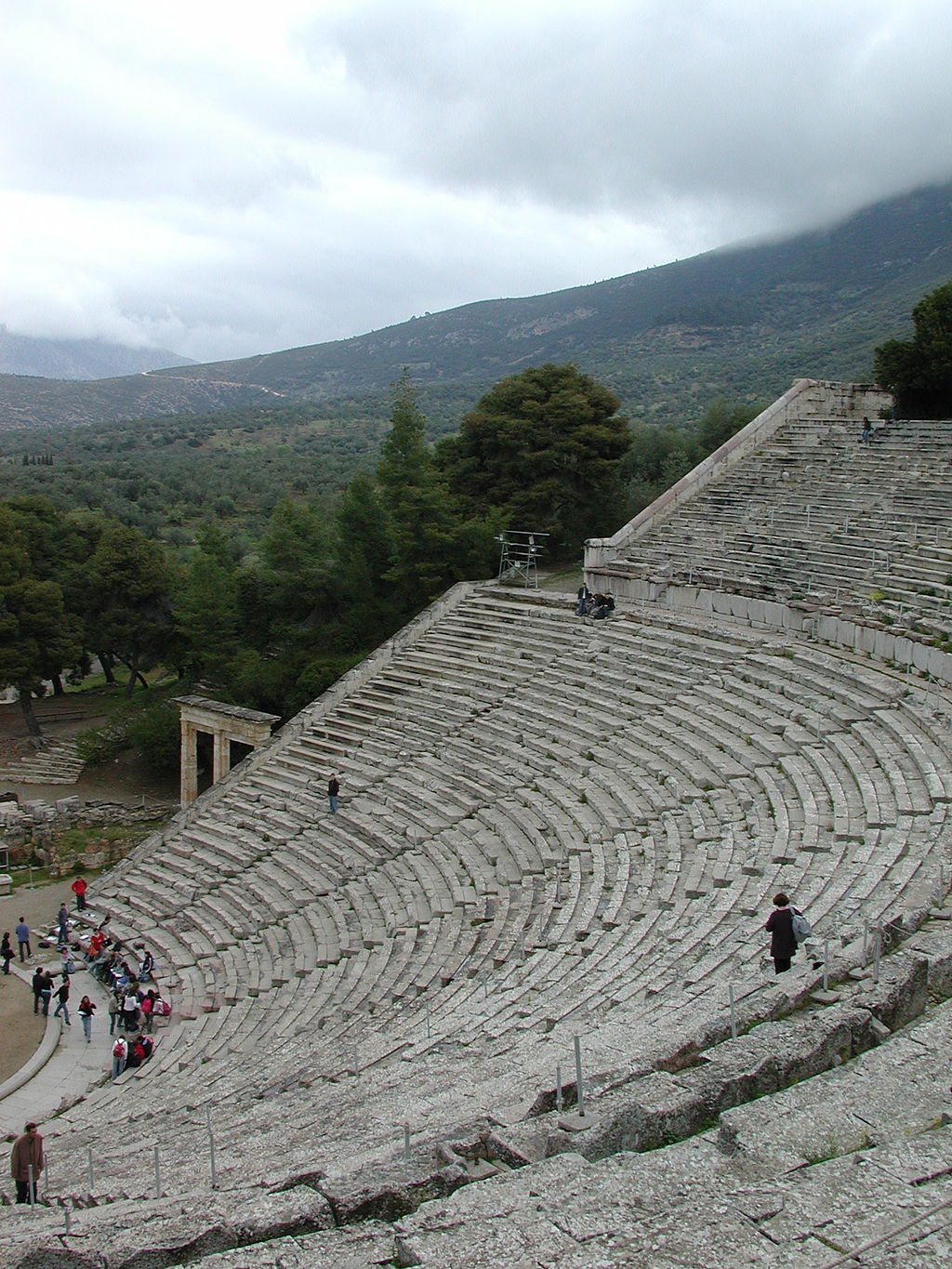
Simple Abundance also introduced me to the Greek poet Constantine Cavafy. On a date at the end of the year, the author quotes Cavafy’s poem Ithaka. During my trip to Greece in October 2023, my group visited the ancient theatre of Epidaurus, constructed in the late fourth century BCE. It’s considered the most perfect ancient Greet theatre with regard to acoustics and aesthetics. It is still used for the performances of ancient plays.

Our tour guide demonstrated the acoustics at Epidaurus by standing in the middle and reading a poem—Cavafy’s Ithaka. As we enter the new year, I leave you a few lines from the poem [translation by Edmund Keeley and Philip Sherrard, C. P. Cavafy/Collected Poems, Princeton University Press, 1992.]

As you set out for Ithaka

hope the voyage is a long one,

full of adventure, full of discovery.

. . . .

Keep Ithaka always in your mind.

Arriving there is what you are destined for.

But do not hurry the journey at all.

Better if it lasts for years . . .

May your voyage this year be long, full of adventure and discovery. And productive!

A Challenging Year and a Half

Thanksgiving is over. I look at the calendar in disbelief. December already!!?? Because Thanksgiving was late this year, there are just a few weeks till Christmas and New Year’s Eve. Time to think about presents and cards and holiday celebrations, yet I don’t feel ready. Where did the year go? And so quickly.

This year has been challenging on so many levels. Might as well add the last half of 2023 to that and call it a challenging year and a half, marked by loss and upheaval on a personal level.

My mother died in 2023. Anyone who has experienced the loss of a parent knows what comes after: clearing out her house to get it ready to sell. Mom lived there for nearly 60 years, so that process took months. It was difficult, making decisions and dividing up what was left: furniture, pictures, keepsakes. We took load after load after load of stuff to local thrift stores. We packed boxes, moving things out. For my brother, it was loading a U-Haul. For me, the process involved shipping furniture and boxes, as well as multiple visit to UPS to ship still more boxes.

Last December I spent the holiday there, the last Christmas together in the house—well, together without Mom. It felt so different. When we took down the decorations for the last time, we divided those up as well. Now the house is empty, waiting for its next owner.

I think of the first line of the song Secret Gardens, written and sung by Judy Collins: “My grandmother’s house is still there, but it isn’t the same.”

Well, Mom’s house is still there, but it really isn’t the same.

My condo is still here, too, but it isn’t the same. It looks better than it did, finally. A flood last fall caused a great deal of damage, meaning the carpet went away and sheetrock had to be removed from walls and ceilings. It took months to repair and at one point involved all my belongings being packed up and moved into storage. I moved into a hotel with my cats while all this packing and moving was taking place, following by installation of new curtains and flooring. Then I moved back in and started unpacking boxes and putting things together.

In some rooms the furniture has been shifted around to accommodate furniture from Mom’s house, including a china cabinet that belonged to my grandmother. The keepsakes went into the china cabinet. The quilt Grandma made hangs on the wall in my bedroom. Some of the family photos are on the walls, while more are stored in a closet. There isn’t room to display everything, but those are family photos and I’m glad I have them.

Through it all I have kept writing, though. In July 2023 I had a computer meltdown that resulted in the loss of a book. That was difficult indeed. After I mourned the loss of my words, I started again. Fortunately, the book was, and is, still in my head. I have recreated the words that were lost and written even more. It’s not quite a cohesive first draft, not yet, but it’s coming along. Slowly at times and then at other times, inspiration burst forth and I add to the word count. Soon, I’ll have that first draft. At least I hope so. A goal to aspire to in the new year that is so rapidly approaching.

Yes, it has been challenging. I’m sure the coming year will have more challenges. But writing and creating help to keep me sane. Along with time spent on the sofa with cats and books. Here’s to the rest of December and the New Year.

The Intersection of History and Fiction

I’ll tell you a story, a once-upon-a-time story, full of passion and loyalty, skullduggery and tragedy. It’s about a prince and princess who travel to a faraway land where they encounter all sorts of dangers. The prince dies and the princess spends the rest of her life shut up in a castle. Sounds like a fairy tale, right? But it’s all true.

The players are Maximilian, younger brother of the Austrian emperor and his wife Charlotte, a Belgian princess. Together they leave Europe and travel all the way to Mexico, where they are proclaimed emperor and empress by conservative monarchists who are trying to dislodge the republican government headed by President Benito Juarez. These European royals and their empire are propped up by French troops sent by Napoleon III, who wants to expand the influence of the French empire.

All this happens in the 1860s when the United States and its Monroe Doctrine are occupied by that contretemps known as the Civil War. To refresh your memory, the Monroe Doctrine asserts US pre-eminence in the hemisphere and excludes foreign intervention. Despite being focused on dealing with the Confederacy, the US government is not having any truck with the imperial interlopers and continues to recognize Juarez as the legitimate president of Mexico.

When the Civil War ends, the US provides money to the Juarez government. American volunteers, done with one war and ready for the next, pour across the border to join Juarez’s forces. Maximilian has never been popular with the Mexican people, and his tenure as emperor hangs by an increasingly fragile thread.

In January 1866, Napoleon III, facing a restive French public that wants no part of this expensive boondoggle, cuts his losses and gets out, withdrawing French troops. Maximilian keeps fighting, eventually losing the battle of Queretero. Captured in May 1867, he is executed by firing squad the following month, his remains eventually returned to Austria.

And what of Princess Charlotte, now the Empress Carlota? Well, that’s the part of the story that really fascinates me. In 1866, Carlota sets sail for Europe, hoping to dissuade Napoleon III from withdrawing his support. Her entreaties go nowhere. Her mental health, suspect even during her time in Mexico, deteriorates. She’s sure that people are out to get her, and maybe they are. She leaves Paris for Rome, seeking the Pope’s help. There she has a breakdown. Carlota spends the rest of her life in Belgium, shut up in a couple of castles. She dies in 1927 at the age of 86, having survived World War I and outlived the players in this bizarre episode.

What a yarn. It’s irresistible. To me, anyway. I’d never heard of Maximilian and Carlota until my first visit to Mexico, over 50 years ago. Looking for something to read, I prowled the paperback rack in a gift shop at a Mazatlan hotel and spied a book on the subject. I bought it, read it, and have since added a number of history books and biographies to my collection, for many writers have been fascinated by Maximilian, Carlota and their Mexican adventure.

The novel I bought in that hotel gift shop is called The Cactus and the Crown, by Catherine Gavin. It uses the emperor and empress as a backdrop for the main plot, which involves a young southern woman, Sally, who leaves the United States with her brother, heading for Mexico with a group of ex-Confederates who plan a new life in a place they call Carlota Colony. And yes, this colony of southern expatriates really did exist, for a short time. Sally and her brother, a doctor, take up residence in Mexico City, where he starts a medical practice and Sally falls in love with a French soldier. And both siblings are drawn into the imperial circle. Just as I was drawn into this improbably but true story.

Stories lie at the intersection of fiction and history. I’m fascinated by what happened to Carlota. Someday, maybe, I’ll write a novel about it. A once-upon-a-time story, about a princess in a castle, shut up with her memories and madness. Because that’s what writers do.


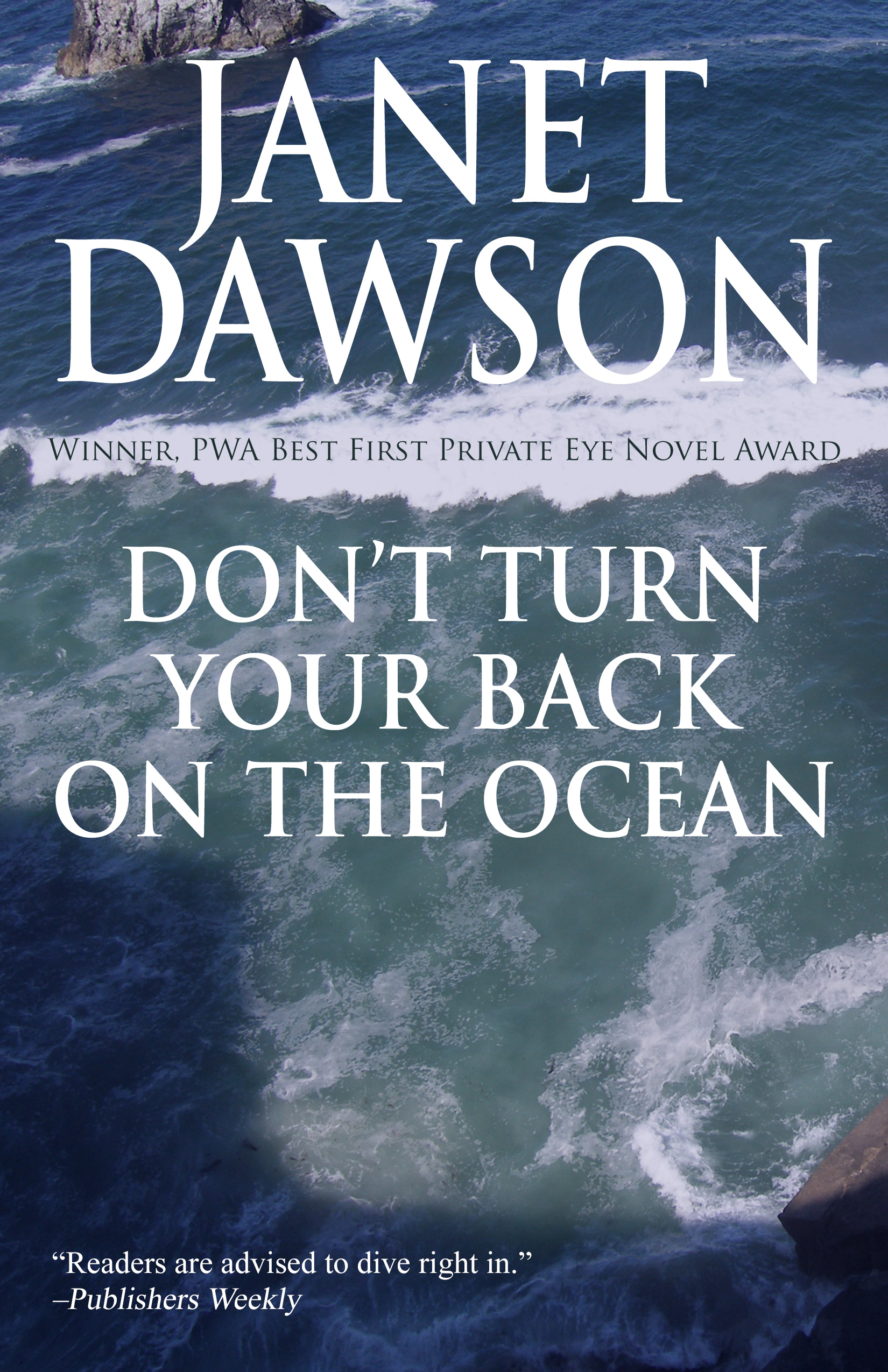
It’s coming soon! The Ladies of Mystery Cavalcade of Books will go live from November 15 through December 31, 2024, featuring books by all of the Ladies. Be sure to check it out! There will be links on the Ladies of Mystery blog site, as well as on my website, at http://www.janetdawson.com.

Stay Caffeinated

A reader once commented that Jeri Howard, the private investigator in my long-running series, drinks a lot of coffee. Indeed she does. More than I do. Her favorite drink, and mine, is a latte. And none of that pumpkin spice stuff for either of us.

From a writer’s standpoint, there are perfectly good reasons for Jeri’s coffee habit. Attribution for one. And adding flavor to the scene for another.

Let’s look at attribution. When one character is having a conversation with another character, you can get lost in a forest of “said.” He said this, she said that. As a reader, I like it when I can tell which character is talking, and I’ve read far too many books where I lose track of who is saying what. Having Jeri talk with a witness over a cup of java helps.

Here’s an example from The Things We Keep. Jeri leads into the conversation:

“What about you? How did you deal with it?”

He took another sip of his cappuccino and set the cup in the saucer. “Funny you should ask…”

As for adding flavor to the narrative, in the early stages of a book, I often write scenes with minimal details and lots of dialog. Then I’ll go back and add details to flesh out the scene and reveal things about the characters.

Another example, this one from Water Signs, where Jeri talks with a security guard who works on a site where there’s been a death.

Dupre got out, wearing his Manville Security uniform. He walked toward me, gesturing toward the door to the Peerless retail outlet. “Can I get a coffee first?”

I saluted him with my own cup. “Far be it from me to get between a man and his caffeine.”

Dupre laughed and went inside, coming out a moment later with the largest available cup. He took a sip and sighed. “Oh, yeah, I needed that.”

Coffee also gives Jeri camouflage in Cold Trail. Here, she’s trailed a potential suspect to a Starbucks, where he meets up with a defense attorney who hasn’t been returning Jeri’s phone calls.

The two men went inside the Starbucks. I followed. They queued up to order drinks, plain coffee for Scott, a cappuccino for Rhine, who paid for the drinks. When they got their coffees, I took my turn and ordered an iced latte. They found a table near the back. I got my latte and sat down at a nearby table, making sure Scott’s back was to me. . . . I got out my cell phone, pretending to take a call. I snapped a couple of photos of the two men, hoping the noise of the coffee shop would mask the sound of the shutter.

When it comes to food, well, lots of opportunities to flesh out characters. My sleuthing Zephyrette Jill McLeod rides the rails on the old California Zephyr, where her favorite dining car breakfast is French toast with crisp bacon, and coffee, of course. In the first book in the series, Death Rides the Zephyr, Jill has already had breakfast when she encounters two passengers heading into the dining car—Mrs. Tidsdale and Emily, the little girl she’s chaperoning on the trip to Denver.

Mrs. Tidsdale looked as though she wasn’t quite awake. . . . “God, I need coffee, and plenty of it,” she said, in response to Jill’s greeting.

We have really good French toast,” Jill told Emily. “You should try it.”

Mrs. Tidsdale blanched. “Can I get a Bloody Mary instead?”

“You’d have to go to the lounge for that.”

“Don’t worry, I will. As soon as we get some breakfast. Come to think of it, I could make the acquaintance of some ham and eggs.” Mrs. Tidsdale looked down at Emily. “Does that sound good, sweetie?”

Emily looked dubious. “I like French toast. With bacon.”

“Then French toast and bacon for you, ham and eggs for me,” Mrs. Tidsdale said.

Of course, there could be a downside to consuming all that coffee. One of my books features someone whose cup of java has been spiked with a deadly poison. No, I won’t tell you which book.

Good food and good coffee, great ways for this writer to flavor my fiction.