Ghosts — present, past and future

As mystery and thriller writers we deal with death – a lot. What follows is my view of how death colors a story, as informed by being farm-bred, knowing where animals go on the big truck, and the host of ghosts who populated our old frame farmhouse.

Ghosts

Ghosts were as much a part of my early life as was the knacker man, to use a British expression. There was the guy who checked the non-existent, though once-existent, oil lamps in the upstairs hallway to ensure the gas was off. He walked down the hall to a window overlooking the hog pens, stood for a moment, then walked back. Every night.

There were brothers, one that occupied a cold spot in the corncrib, and one who looked endlessly into the house through a sashed window. They died on the same day, one after another, one from want, the other from the loss. Their story fueled my imagination.

And David whose sister waited for him to knock on her wall each night before going to sleep. I met David when he warned me of a small fire in the farmyard. When I returned, the fire out, he knocked.

This leads one to believe that life is like the loaf of bread used to describe time travel, we are never far from intersecting the previous or next slices of bread.

When someone dies and refuses to move on

Booth Island deals with the death of a brother who drowned off the family island in Canada. It is he who lures his sister back nine years later.

 “I can’t. The minute I relax, my brother comes to me. I need to exorcise him, or help him cross over, or whatever the mediums would say. If not, I’ll never be happy.”

“I prescribe two servings of Finn Sturdevant with a side of Tiger Tail.” Penny hugged me. “Poor Boo. Is there an Ouija Board stashed on Booth Island?”

I wiggled my eyebrows.

When one death haunts the characters

Dead Legend begins The Cooper Vietnam Era Quartet, centering around the mysterious death of Mac Cooper. His sons navigate his legacy and his loss:  anger in Dead Legend, bargaining in Head First, acceptance in Pay Back, and resolution in Don’t Tell.

Byron Cooper’s burden: The old adage about be careful who you mess on your way up, you may meet them on your way down, went double time when everyone in the Pacific Fleet, WestPac, over the rank of Lieutenant Commander, looked you in the eyes, clapped you on the shoulder, and said knew your old man.

Laury Cooper’s hell: Laury wound the film to the August 8, 1955 edition of the paper. He found the four-paragraph story on Mac Cooper’s death; simple, to the point, almost as though it had been lifted from the police blotter.

At 2:45 a.m. August 8, 1955, the body of Commander MacLaury Cooper was found…

And resolution in Don’t Tell: Laury and Kate held hands in front of a bungalow gleaming white in the soft light of a late Hawaiian afternoon. … He pointed out the carport, the palm where someone had lurked watching the family’s descent into hell, and a hibiscus Mac had planted not long before his death.

When an accident sculpts the future

A single past action drives the narrative in Saving Calypso, consider the action mold from the previous slice of bread, rimming the current slice and slowly eating into the loaf.

“Forgive me. This must be excruciating … I drew up the will for Ray. He insisted. It was finalized the day we reached agreement on your sentencing.” Burridge’s steady brown eyes peered over the top of his glasses into Grieg’s baby-blues until Grieg’s dropped. “It wasn’t a small thing you did, boy.”

Grieg tweaked the pleat of his slacks.

Burridge squinted then poked his glasses up his nose. “Destroying a family. Killing a police officer’s son. Drunk. Chasing a girl.”

To ghosts everywhere

Characters driven by the ghosts of past actions, deaths, and loss give mysteries focus and heart, and protagonists a reason to act, creating a pulse and adding depth to the story. Paradise for a mystery/thriller/suspense writer.

Writing vs Knitting, Different or the Same?

Have you ever found the bag of yarn for an afghan you planned to knit/crochet during the winter months but not the instructions? That’s what it’s like to write a book. Every time you open the bag, it is full of tangled skeins of possibilities, different yarns, weights of yarn, and colors waiting to be knitted into a cohesive whole that matches a picture you’ve concocted in your head.

Add to the various yarns and colors, different sized knitting needles and crochet hooks, the use of which results in different size stitches, different thicknesses of fabric, and different lengths and widths of the finished product that enrich and add depth to the design.

So, you pull out the yarn, decide on the main colors (characters), secondary colors (second bananas), and pattern (plot). You’re knitting this one in twenty squares. You test the gauge of each yarn against the ruler, so you know how many stitches per square, ensuring they will fit together.

Your design set, you wait a day, look at it again and realize square five needs to precede square four, and what the heck were you thinking on square eleven. You move things around a bit, then start. Square one measures the right size, it follows the theme and color scheme, so you move on to square two. About square five, you unravel square two because the pattern doesn’t add to the flow. As you knit, you revise the design, unraveling on occasion, recasting, and reknitting.

When you have all your squares done, you sew them together. And though you took the utmost care with the colors, size, and pattern of each, it turns out you need a new square sixteen to fill a hole in the pattern that foreshadow the red in the last four squares. Now, you have one too many squares. And square six needs more blue, seven more green, and ten through thirteen more white, then you notice that square nine muddles the whole pattern (what the heck is all that purple). You do the fixes, add square sixteen, remove square nine, and voila, you have a gorgeous afghan.

You take it to your knitting club for review. The first reviewer asks why there is so much red, and the next why there is so much green. They shake their heads at your explanation. Steaming, you take your afghan home, hang it on the wall, and stare at it for a few days. In the end, you unravel some red, leave the green, pull out square fifteen, add a new square with a tinge of purple, and try again. Your reviewers love the changes.

You take a photo, write an ad, attach a price, and place it on Amazon. The first Amazon review reads it could have used some red in the square you removed it from at your reviewer’s request, and what about that dropped stitch you missed? You snarl. Then start square four of your newest creation, purling instead of knitting.

You unravel and start over.

Five More Things

It never fails. The draft is finished, time to read it, fill in a few blanks, do a little editing, in hopes you have written an exciting, interesting, charming, slam-bang mystery or thriller. Then —

The same %$%&* word … or the word of the day.

It is amazing how one word that fits a sentence and conveys the perfect image can take up residence in your brain then appear in your text time after time. A breeze can blush, blow, whoosh, loft, so why is it always soughing. The only known cure is a Thesaurus and patiently finding just the right word to replace the word of the day.

.

Saying what the paragraph is about, then describing it. It is a habit of mine in early drafts (a bad one) to begin a paragraph with a sentence that tells me what comes next, especially at the end of a writing day. All too often that reminder sentence is still in the final draft.

As in: Cora stepped off the boardwalk and noticed the change in her hometown, followed by —

Men in homespun shirts, pants, vests, and floppy flat caps descended the boardwalk stairs two at a time, scurrying across the street mid-block. They stood in groups chattering away, leaving little room for women to pass. Admiring those women who were young and prettily dressed. *

.

What size is it? Big, small, large, medium … far, near. The park was large. Well, in truth it is a 1/2 mile by 1/4 mile wide, with a five-acre pond in the middle. It is so easy to drop big, small, short, tall in as you write, when you could create a picture for readers —

Kanady brushed Cora aside, looming over Mrs. Gibson, his intent to dwarf her clear this time, he asked, “An’, ma’am, what name do you claim fo’ yourself? You who would swindle a whol’ town at $10.00 a barrel.”  *

Enough or too much description, especially clothes and the contents of rooms

In the late 1800s, women’s wear defined class, age, marital status, while men, as men do, wore the same darn thing every day. The variants being whether or not they had their coat on, their vest off, or didn’t bother with a shirt, opting to walk around with the top of their union shirt showing, vested or unvested.

Cora fanned herself with a folded sheet from the day’s newspaper, her bare feet resting on a chair in the kitchen. Her plain gray muslin smock and hair were thick with flour from baking the loaves of bread needed for the reception and the week. *

Clothes define character and set a scene, but when do they interfere with the read? If I start skimming a book, I assume I’ve gone overboard and begin trimming. But I worry that my tolerance is high having made a modest living designing dresses for a very short time. I guess that’s what beta readers are for.

Now and just …

When an author uses now as in now, he turned, it jars me out of the past-tense narrative, as though this particular action is happening right now and the next has occurred. But because it bothers me, I avoid doing it. As a word now is easy to overuse and can be a lazy habit in both narrative and dialogue. Not that now doesn’t have its place, as in:

He is now interested in flies, seeking to discover what local flies come and when on bodies left out in the weather.

“Just now, I was on my way to The Courier when I saw Cora run into the fray. What was I to do, let the horsemen and their horses trample her?”

The same for just and I’m as guilty as can be of overusing it. I work hard to get it out of my text. Like now, it has a place, just not all over the place

The collarless dress with no ruffles or lace had a slight bustle in the back, just clean straight Methodist Sunday-go-to-the-meeting-house lines. *

And that’s five

Another five things may crop up, but until they do, this ends my current gripes with my writing.

* All quotes are from, A Convergence of Enemies, the second book in my Wanee series, currently in search of an ending that makes the author happy.

Suggestion: If you are in the mood to dive into a Vietnam Era based family saga, try the Cooper Vietnam Era Quartet: Dead Legend, Head First, Pay Back, and Don’t Tell, available on Amazon. If you are a fan of wartime stories and sweeping family sagas, this wide-ranging epic delivers a heady mix of intrigue and history that will keep you on the edge of your seat.

Stories that got away & the Second Hook

My drafts tend to start out with a smart-alecky tone that slowly gets less and less so as I write. It is a mental exercise that helps me warm up to my characters. I’m used to that. What I’m not used to is a character who wants to stay funny. I’m several chapters into a book featuring a young clothing designer who wakes up in an alfalfa field after a convention ‘meet and greet’ in Kingston, Ontario. What’s written is a hoot. And there it sits. Waiting for inspiration, a different plot, another alfalfa field? Or maybe it was just a bad idea, after all one of the protagonists broke free to take on a key role in Booth Island.

Ever since I gobbled up Max Brand (The Gentle Gunman and . . .) and Alan LeMay (The Unforgiven and . . .) westerns, I have wanted to write a western. A dinner with Louis L’Amour at the Top of the Mark in San Francisco further fueled the fire. In those days, I was very up on the sheep wars and Billy the Kid so L’Amour and I had a great chat, during which he shared that Sam Elliot and Tom Selleck exemplified the characters in his books. If you haven’t read Hondo (also a great John Wayne movie) or Conagher do, they’ll hook you. As for my brilliant career writing a western mystery/thriller, it may still happen via one of the protagonists in my upcoming Wanee series.

Just like I still want to place Laury Cooper (Cooper Quartet) in Nîmes, France in 1970 and see what happens next. It would be weird though, since it would make the Quartet a Quintet and fill in a gap in the early years of the series. But still . . . what’s stopping me, read on.

A few years ago, I planned a mystery/thriller series that followed a farm woman sent from the East to marry a cousin living on an Illinois farm. I had the plot hook for ten books, beginning in 1850 through 1870s, the research started and had a line on the rest. I knew the farm, the crops and stock, and the land because it was based on the farm my father’s family settled. I loaded my research and notes to my OneDrive, put my hands over the keys of a blank screen and nothing. Why?

I’m not sure, but I suspect as Margaret Lucke (House of Desire) pointed out in a recent conversation, I needed a second hook to set the tale in motion. With the hook set, the characters feel free to inform themselves and whisper their stories in my ear until their words flow onto the computer screen.

Cover in waiting

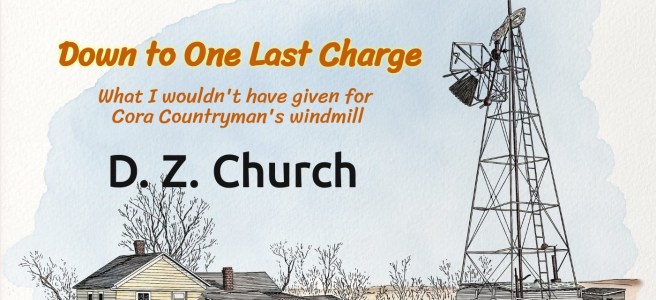
As it turns out, like the protagonist from the alfalfa field, my farm woman migrated herself to Wanee, a fictious small northwestern Illinois town, set the first plot in 1876, and named herself Cora. Her brother Jess lives on the farm she was supposed to inhabit. When the series begins, nineteen-year-old Cora’s thieving mother deserts her, saddling Cora with debt and a boarding house with one boarder. Cora, who dreams of the single life of adventure and mystery, struggles to pay off her mother’s debts in a village troubled by post-Civil War growth while dreaming her dream of escape.

Cora’s story starts in Unbecoming a Lady, the first Wanee mystery, out soonish. The second book A Convergence of Enemies will follow next year. And Cora is currently whispering her third adventure to me nightly with help from a few Wanee friends, that’s what a second hook (in this case a disappearing mother and a restless town – is that two hooks?) can do.

Now Calypso and Grieg from Saving Calypso have something in mind, but they await a hook, I told them that and they both gave me that look. Sometimes stories don’t get away, they just wait for that second hook. And sometimes they do and should.

All books are available on Amazon, except Unbecoming a Lady. Find me at my website dzchurch.com and sign up for my shared newsletter there, too, or on Facebook at https://www.facebook.com/mysteryhistorysuspense.

Plotting while Coloring Fish

Have you ever had one of those moments when you just don’t know what comes next? That moment when you have a plot outline, you know where you are going, but it is not coming together. The moment when you realize a character’s storyline is signaling something is out of whack.

For example, one of my main characters in Pay Back, Laury Cooper, was stuck in the Honolulu Airport for months. Just stuck. Wouldn’t leave, didn’t want to, just sat in a seat waiting for me to send him on his fateful way to Saigon before April 29, 1975. Part of the problem was probably fear of facts; historical fiction can do that, accompanied by images of readers throwing rocks at your books or cursing your name for a truth they don’t accept. Like many topics, Vietnam has that effect on those who lived through the era. The other problem was me; I knew once Laury left that airport, I faced writing his scenes like a fiend in a semi-frenzy, possibly without bathing, until his part of the book was drafted.

It held up the book’s publication. So, recently when one of the main characters in my new historical series started balking about his storyline in book two and refusing to leave another main character’s pantry, it began to impinge on the publication date of the first book in the series. This led to my discovery of plotting while coloring fish. Had I known the technique earlier, poor old Laury Cooper (Pay Back: The Cooper Quartet) would have been on his way from Honolulu to Saigon and the book published on time.

How did I discover the wonder of plotting while coloring fish? I downloaded an online coloring book to my phone for something to do while standing in lines, etc. Quite by accident, I discovered the Zen of it all. With my hands and eyes occupied finding numbered colors, my brain began to noodle over my plot predicament, working it out with each color, my eyes locked on the screen, my senses engaged in the picture filling in before my eyes. Any scientist will tell you that one time is not proof, so the next time I was stumped, I did the same thing, and again, the plot resolved itself, enabling me and the characters to move on.

Which is wonderful, but unless I grab a notebook or run to my computer, my thoughts are lost in the ether even if repeated out loud seven times. I used to be one of the notebook people, spiral-bound notebooks in different colors with the book’s working title written across the front in indelible ink. The troubles with that method are the following: which notebook is the note in, where is the notebook (never where I am), and on which page are the glorious words that take the plot from mediocre to the heights (I tended to write on the backs of pages, up the sides, and in no particular order).

I now have my ReMarkable2 (https://remarkable.com/) at my elbow, not a notepad, not a notecard, or a sticky note. When inspiration strikes, I scribble my brilliance on a page in my ReMarkable, name the file so I can find it, file it under the appropriate book, and keep coloring or keep scribbling depending on where the flow is best, comfortable that my genius has been captured. When I do get to the computer, I prop my ReMarkable on a bookstand, open the appropriate file, and have my thoughts, new direction, and any new text at hand as I write.

I can hardly wait to color each morning. It gets my juices flowing, allowing me to revisit where I left off writing the day before and resolve any outstanding issues before applying the seat of my pants to the seat of my chair and succumbing to the discipline of writing.

And if I get stuck, I can always color fish or birds or flowers or . . .