Wilted Daisies

Maybe it’s the darkness of the day, the brown leaves dripping with rain, or Halloween around the corner. Whatever, it conjures stories of visitors from beyond the veil. So, I offer a short-short-short-really short story for your October enjoyment.

No one had used the back parlor of Countryman House since the official government letter arrived twelve years earlier notifying Edith Countryman of her husband’s death at Chickamauga. The letter remained on the small table before the settee, held in place by a crystal vase of long wilted daisies.

As Cora Countryman entered the room, sunlight glissaded through two six-over-six windows, their red brocade drapes tied back to save the cloth, the open sashes allowing the soft clucks of chickens to invade the still of the room. Shelves of books lined the interior wall, some behind glass. When a girl, Cora sat at the carved mahogany reading table by the windows. Her feet dangling off the chair, her tongue between her lips, she drew pictures of sailboats, strange pyramids, and darkly clothed men from stories. Of course, that was when her father lived, before his loss forced her mother to take in boarders.

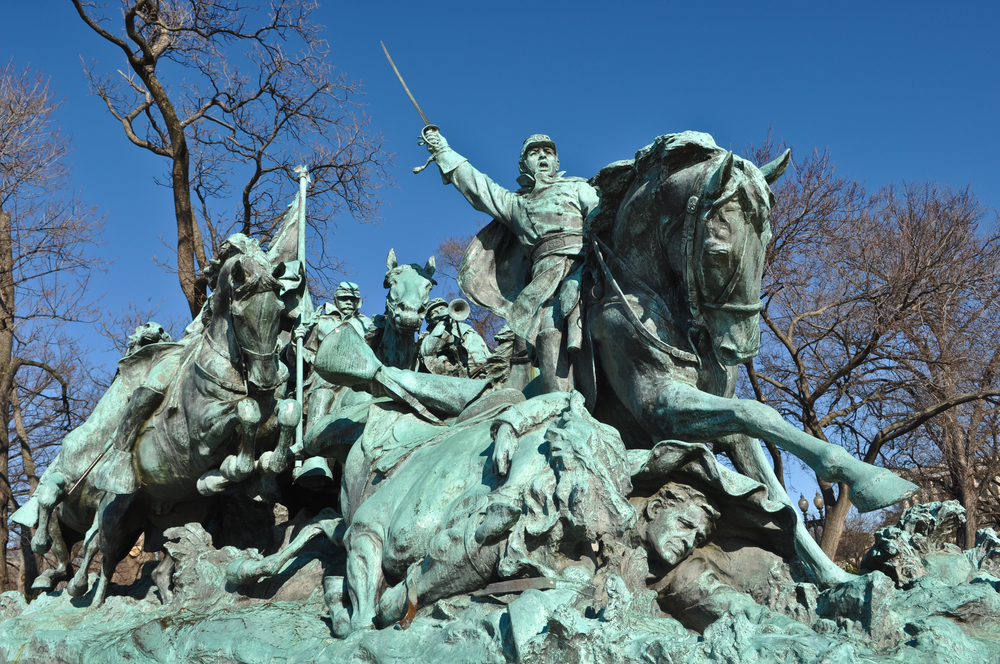
Twelve years seemed ample time to mourn, especially with her mother as gone as her father, though not as dead, well, not dead at all if the rumors that Edith was gambling on the Mississippi riverboats were true. Cora leaned over, touching the letter’s brittle paper. As she did, the room shook under the thunder of hooves so real she pivoted to face them, horses leaped over a stonewall onto pikes, men shouted as others fell, screamed, lay motionless. She removed her hand from the paper, the room ceased shaking, all before her vanishing.

Cora sat on the settee, staring into the marble fireplace with its walnut mantle, her right hand spread across her chest, her breathing rapid. She lowered her hand to her side, afraid to touch the vase of dead daisies, lecturing herself on her ridiculousness.

Once convinced, she wrapped her fingers around the vase, a withered white petal fell from a long dead stem, floating to the ancient letter. Laughter erupted and swirled around the room. A young woman, a daisy chain wreathing her brow, threw her arms out, twirling until she bobbled into the arms of a dark-haired youth of near her age. They lay together in the tall grass; he brushed a single daisy petal across her lips, until the marching of heavy footfalls brought them to their elbows.

Cora admonished herself, she was a modern woman, this was fantasy, or wishfulness. She lifted the yellowed paper between two fingers, it tore along a long-rotted crease.

“He is not dead, he is not,” a man in a blood-spattered coat insisted, his hands at the wrist of the body set before him. “Take him elsewhere, he belongs with the living.”

A soldier, his blue uniform filthy, positioned the dead man’s arms on his chest and with another lifted the stretcher. The two ducked out the tent flaps into cannon smoke, bullets smacking into trees and through tenting. They dropped the stretcher and ran for cover before men in gray on wild-eyed horses breaching the position.

Cora’s father lay before her, blood coursing from his wounds. A smile eked across his handsome face, a sly one. He opened one eye.

The government letter of notification in Edith Countryman’s right hand, she sank to the settee, placing the letter on the table. When a breeze ruffled the paper’s edges, she situated a vase of daisies on it. “He is not dead, I have seen him, I have seen his smile.”

The vase and letter remained there, twelve years, her mother forbidding all to use the handsome room. Determined to end the nonsense, Cora took the cut crystal vase of dead flowers in one hand and the yellowed notification in the other to the paned-glass section of the bookcase. The moment she set the items on a shelf, it began to vibrate and the glass panes to shimmy. She slammed the rattling doors closed, and holding them tight with her left palm, she locked the haunted souls inside. The key tight in her fist, she leaned, her back against the shelves. A wind howled down the fireplace flue and across the floor, swirling ashes over and about the table.

Her eyes on the fluttering ashes, Cora took a deep, freeing breath. There were eggs to collect.

Cora’s adventures begin in Unbecoming a Lady, available at https://www.amazon.com/Unbecoming-Lady-D-Z-Church-ebook/dp/B0BTKBSP1B. A Confluence of Enemies, the second book in the Wanee Mystery series, is available January 15, 2024.

Consequences and Truth

Sometimes, it seems as though every YA novel is about a dystopian world populated by evil, conniving adults who would do anything for power. People are starving, living in fear, fighting for existence, sometimes eating each other. And along comes a girl, a boy, a set of boys and girls with some superpower. Great archers, wizards, vampire slayers, and so on, who through their trueness and bravery vanquish the evil adults.

I ask you to think about that message. All government is bad. All adults in power are bad. A few youths are the heralds of virtue. It reminds me of the old disco song, Holding Out for a Hero, sung by Bonnie Tyler.

Where have all the good men gone
And where are all the gods?
Where’s the streetwise Hercules
To fight the rising odds?

Whatever happened to youths who overcame the obstacles of being a teen? Those books are out there with some censored by the arbiters of taste, unlike books where adults are killed wholesale or turned into mice.

I acknowledge that all youths and adults are not reading YA dystopian novels, but a lot are. What attracts them? I would wager that the teens and pre-teens, like we all did when that age, are grappling with adulthood, want control, and yet feel disenfranchised by adults refusing to see that they are pre-adult and capable of remarkable things. Thus, the appeal of a story that is based on this very angst. But think of the world promoted by these books.

Lack of faith in anyone who is in charge. Couple that with some social media time and – whoa – it all gets ugly fast since truth can be a bit hard to come by in a world of influencers pushing beliefs that may or may not be exactly true. If you believe all adults are evil, and you can’t trust anyone in power then you are ripe to be attracted like a bass to a shiny spinner by those who claim to be that hero you need.

Because these books sell well, the genre is packed. Admittedly, our current future has a tint of that dystopia (fire, floods, famine, war, lies). Now that the Mockingjay kids are all grown up, can they provide us a hero, or will they watch in expectation as evil actors take control of the world, and, yes, untrustworthy adults? Yikes!

I don’t know. Either way it gives me the whim-whams.

Our responsibility

So about now you’re wondering what the heck this blog has to do with ladies of mystery. Just this. As mystery writers we have a responsibility to consider the world we present to our readers. One where not every adult is a liar, villain, killer, rapist, serial killer or stalked by one (especially across books in a series).

Our heroes and their supporting cast may be flawed but they are human with human skills. For those of us who write historical mysteries, we are careful in our presentation of fact as we weave it into the fabric of our story.

Our mysteries provide a respite from the crazy world, a land where no matter what, everything turns out right. Justice lives in our pages. The bad ones get their just desserts. And along the way, we present our readers with some truths, comfortable or uncomfortable.

Whew, now that’s all off my chest.

Holding Out for a Hero lyrics © Sony/atv Melody

Amazon and Gaming the Objective Review

First, let me congratulate Amazon on a recent update. I presume authors reading this have noticed that when you do a search on a title, Amazon has changed how the customer reviews are presented: 4.3 (80% 4 or above). Why is this a good thing … and why does more need to be done …? Read on.

The Good Thing

Amazon’s new reporting of customer ratings is a step toward overcoming the pull of the extremes. A simple example is this: The first two readers gave the book a 4 and a 5. Along comes one curmudgeon who gives it a one (they thought it was a ghost story when it wasn’t). The book now has a customer score of 3.3. Though the book will never achieve a 5-star rating (ever), readers looking for a solid mystery will see that 66% of the raters gave it a 4 or above. In other words, most readers scored the book high, indicating the low scores are random and incidental.

Disturbing Trends

There are two disturbing trends, the first promoted in how-to-books on independent publishing and by marketing/sales gurus. That is to game the customer review system by having one’s followers or sites offering customer reviews flood a book’s page (particularly a new book) with 5-star reviews. Not a bad plan, except it makes a score of 5 meaningless and it hurts all buyers. If the scale means nothing on what does a mystery reader base their purchase? Further, it hurts new or other authors of equal quality with fewer followers.

The other, far more disturbing trend is this (recently noted in a New York Times article). A book consistently scoring in the 4-5 range is hit by a host of 1s. Within days of each other. To be clear, to be a 1 a book should be abysmal. So, a book that is truly a 4 or 5 cannot turn into a 1 overnight. It cannot. How does this happen?

Two ways. One, a reader dislikes something about the book that is a trigger point for them. That reader gives the book a 1 based on their trigger, then convinces friends or their reading group to do the same. It is a protest of sorts having nothing to do with the quality of the book, but a way to dis- and ban books that do not agree with one’s belief whether those beliefs are mainstream or not. And second, it may be used by authors or marketers to increase a book’s sales by effectively taking out competition.

What makes this possible is that a rater doesn’t have to read a book to rate it, which tells us that all customer scores are suspect. Amazon’s own policy reads: You can leave a rating or review for a book that you didn’t purchase on the site*. And when an Amazon review indicates a certified purchaser, it means: You must have spent $50 on Amazon.com, using a credit or debit card, in the past 12 months, to: Create reviews (including star ratings) Answer customer questions. Submit helpful votes. * These policies make it possible to line folks up to either praise or torpedo a book.

What Can Be Done

I don’t know how to stop this, fight it, or change it. Any change is unlikely with the publishing environment so competitive, readership down, and gaming the system (though inherently immoral) considered a legitimate marketing tool.

The only sensible solution is that all scores (but especially 5s and 1s) require a written review to count. The review cannot be one word “garbage” or “wonderful” but an explanation of fifty words or more about why the score given is valid and that gives some assurance the book has been read. This way the poor person trying to discover a new mystery can decide if the score of 5 or even 1 has any virtue.

In the meantime, Amazon has taken a step in the right direction.

Escaping the Summertime Blues

It is no secret; I have the summertime blues. I can’t seem to keep my mind on anything but the heat. And it is hot. Over a hundred here today. And likely where you are as well. There is a little cooling coming. And moisture. Tomorrow will be like a sauna. I tell myself, at least I’m not being evacuated from Rhodes.

Yet, the images from Greece make me consider books I read as a girl that filled me with images of places I couldn’t even imagine. And, yes, I blame books for leading me by the nose and eyeglasses into the world of writing.

Margaret E. Bell’s Watch for a Tall White Sail took me to the Ketchikan Peninsula in Alaska at the end of the 19th Century. I read it as a pre-teen and have never forgotten it or the ending. I can close my eyes and see the peninsula as it was then, the hardship of the heroine’s life, and her ultimate joy. I checked it out of the school library then and now wish I hadn’t. The book is only available in hardback and is priced over $100 dollars. I do drool on its Amazon page from time to time, then remember the joy of the second of three books, The Totem Cast a Shadow, and wonder if it is available. Not on Amazon, but anywhere. Which is the long way round to say, I’ve been on my way to the Ketchikan ever since.

I fell hard for Australia. What I was doing reading Nevil Shute as a teen is an interesting question. My older sister wouldn’t let me near her copy of Exodus as in her judgment I was clearly too young for the contents of the pages. I snuck my mother’s copy and read it anyway which is why I am certain Paul Newman was the wrong guy to play Ari Ben Canaan in the movie. A bit off topic, so back to Nevil Shute. I read The Legacy before it became A Town Like Alice and have been on my way to Australia ever since, just like the sheriff James Garner played In Support Your Local Sheriff (a truly engaging, funny movie).

Which brings me to James Michener. Until They Sail fed my Australia problem and the movie by the same name did nothing to deter it. (Paul Newman was in that, too.) I’m not as old as it may seem, my parents used to take my older sister and me to the drive-in in our old turquoise and white Nash with the Nash seat. They picked double features expecting us to sleep during the second more adult movie. Fat chance. I still start crying at the mention of Sayonara and have yet to recover from William Holden’s bared chest in Picnic (not a Michener story but a great chest nevertheless). Inspired, I read Sayonara. I cried so hard at the ending that the pages in my copy are still crinkled where my tears dried. The Bridges at Toko-Ri, which I read when far too young, did not inspire a visit to North Korea, but Tales of The South Pacific and later Hawaii gave me the desire to see the islands. And I have. Even Lāna’i.

I pounded my way through From Here to Eternity. Don’t ask how I got my hands on a copy of it when fifteen. But I did. I am still in recovery from that book. And, yes, I have been to the beach. And, no, I did not reenact any scenes that once involved Burt Lancaster and Deborah Kerr.

All this rambling is to say, that as we write and world-build, we inspire others to travel, we help them see the world more fully, and sometimes we make them cry. And — books are a wonderful, magical way to escape the heat. You don’t have to be trampled on your way to the Acropolis or ferried from fires in Rhodes, rather you can luxuriate on Corfu or Crete or Delphi with the help of Mary Stewart. Or even on Barbados in my book Perfidia .

Check my books out at D.Z. Church – Author, Standalones & Vietnam Era Military Thrillers (dzchurch.com)

The Pitfalls of Near History

Most of my books involve near history. That means, at any given time, someone might read a book I have written who lived in or visited the place where it is set, at the time it is set, and who remembers what it meant to them. Making near history a bit of a minefield. With historical fiction, the author takes us back to a time that we know from various historical sources. But near history, well, we lived through it.

For instance, CDR Byron Cooper is stationed at Alameda Naval Air Station in Head First. The air station has since closed. But in 1972, it was the boom and the bane of life in Alameda, CA. People remember the bustle, the jets flying over, the massive gray aircraft carriers at anchor. And the view. The Air Station was a vibrant organism then, not the runways with weeds growing through them, housing developments, and shopping centers of today. For those who remember, it is my job to reflect the energy of it as they remember it. For those who don’t remember it, the job is to create an image of it as it was. The difficult part is avoiding dissonance for one set and creating a breathing organism for another.

Pay Back, the third book in the Cooper Quartet, charts the fall of Saigon, day by day. The surrender and the U.S. exodus packed an emotional wallop for the country. People remember where they were, what they were doing and how they felt. You don’t want to get it wrong. Placing characters into the events and sharing the emotion of the moment is an honor and a tightrope. Get it right. The Cooper Quartet charts the emotional journey of a Michigan military family. Consequently, Pay Back is set in Saigon, on an aircraft carrier on Yankee Station, and in Michigan. Getting the timing right across all these locations was a challenge but essential. I was dealing with near history, history people remember, some from newscasts, some from demonstrations, some from the killing field.

My book, Perfidia, takes place in Barbados, shortly after its independence from England. The population of the island consists of the descendants of blacks brought over during the slave trade, and lily-white British landed gentry. Read Jane Austen’s Mansfield Park for a frame of reference. Since then, the gene pool has been generously stirred. Yet, in 1972, when the story takes place, it was still better to be a landed white Barbadian than a black Barbadian with a folding house. In the book, one of the few remaining Barbadian plantations is at stake. Three men vie to inherit, one is a little bit Latin, another lily-white, and the third is mixed race. So, as historical fiction, it is essential that the plot address the subtle prejudices of the time. People remember.

When the story takes place, Sam Lord’s Castle is a fixture of the island. It burned down a few years after. People who visited after never saw the castle, for those who visited before it was a treat. Don’t get the par terre wrong, or the staircases, or the type of plants or the view of the ocean. You’ll hear about it.

Near history. Challenging. Although historical fiction of any sort carries its own dangers. The history we rely on was created by contemporaneous historians, revisited, and reinterpreted repeatedly by more historians, reported by the daily newspapers of the era, and defined by biographies and interpreted by encyclopedias and textbooks. Many of these sources have or had prejudices, ideas they wished to put forward, and axes to grind. Was General Bedford Forrest a tactical genius or a beast?

So, there you go. Historical fiction of any sort – near or long ago. Challenging. I had a reviewer tell me a character knew nothing about how hard women worked in the 1870s as though she had firsthand experience. She must be very old indeed. It is enough to make you write a contemporary detective series.

Nope, not for me.