Being There: Writers and Actors

It’s no secret that actors and writers have one big, big thing in common. Well, at least in my book. When faced with a tough scene, actors draw on their own memories and emotions to emote and draw us all in so that we believe in their every breath. There are so many great examples of this, but one that has stuck with me since I first saw To Kill a Mockingbird is the scene where Atticus (Gregory Peck) and Scout (Mary Badham) discuss her mother’s pearls. The emotion was so genuine, the theater so dark, and the patrons next to me so enraptured that I was present in that moment.

Like actors, writers seek the motivation and moment in our past to make what we write as real as the scene in ‘To Kill a Mockingbird’ was to me. We aren’t always successful, nor are actors, but it is in the trying.

One might ask, what could a successful businessperson know about poverty, worry about the next meal, or a place to sleep, well? While waiting to hear if yet another job interview with another ad agency would end in employment, I opened the linen closet in my roommate’s apartment (actually, I bunked on her couch). I spent several sleepless months there, the folks across the hall were the noisiest lovers in the entire frigging world. To this day, I suspect kink, when they stopped, about three, I slept.

On the day in question, I went to the cardboard box where I kept my money and was reminded that I had $79.00 left to my name. I owed my more-than-gracious roommate rent, gas for her car (the one she let me drive to my interview), and money for the phone bill. If I got the job, I had barely enough money left to ride rapid transit until I received my first paycheck. I sat with a plunk on my roommate’s couch and stared at the wall. The ad agency called the next day. I never looked back, but to this day, every time one of my bank accounts ends in $79, I freak out so badly that I sometimes transfer money from account to account just to change the final digits.

And where do I go when I need to describe action? The same place every writer does, the part of our brain where we stow our wild and risky adventures.

When I was eight, my family took a road trip in our massive aqua and white Nash Rambler. The one with the Nash seat, the front seats dropped all the way down, making the inside of the car into a king-size bed. It was a wonderful beast. To this day, I think of it and grin until it hurts. One night, we arrived at the campground on the Suwanee River very late and, rather than pitching the tent, dropped the seats, and the four of us—Mom, Dad, and sister Lynn slept four abreast.

In the morning, the air was so dense with moisture that it formed a haze. A few minutes in it and your clothes felt moist. My sister, a notoriously robust sleeper, was still sleeping, and Mom was wrestling with the coffee pot, when Dad held up the Frisbee and motioned for me to follow him to an open field.

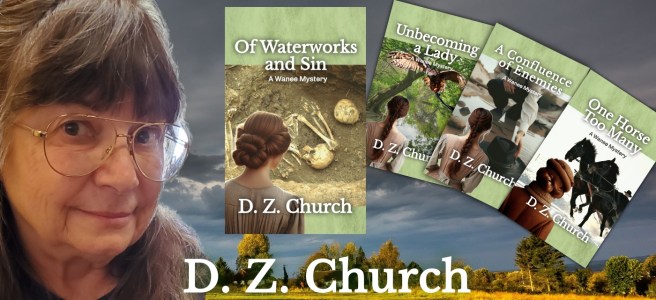
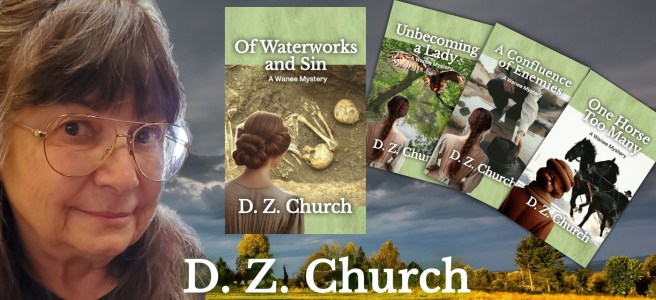
Dad sent soft passes my way, I’d grab them, that is, until a Great Horned Owl swooped out of the early morning mist, grabbed the hair on the top of my head, and tried to fly away with me. Dad threw the Frisbee at the owl and ran toward me, maybe to grab my feet as I was lifted into the air. The owl flapped its wide wings and flew away with a hank of hair in its talons. That memory of how scared, fascinated, and small I felt was available when I needed to describe the owl attacks in “Unbecoming a Lady,” the first book in the Wanee Mystery series.

Writers keep these moments in their back pockets. It is remembering, applying, and interpreting them that results in the descriptive words on the page, just like actors rely on their past to create character. And, like them, we never know what tidbit from the past will meet the need and allow us to leave our readers gasping, or sobbing, or in wonder, as Atticus and Scout do every single time I rewatch ‘To Kill a Mockingbird.’

Find me at https://dzchurch.com, where you can discover all my books and sign up for my newsletter.

The Challenge of Romance

First, I write mysteries and thrillers, not romances. So, although romance plays a part in my thrillers, they are, in fact, not romantic thrillers. One features three suitors, all a bit shady. Another antagonist is a teen, now a man, sent to war for another teen’s death. And finally, the only man who can save the heroine just happens to have killed her parents. Indeed, a motley crew. As for the heroine of each. One discovers she isn’t who she thought she was. One seeks closure for her teen brother’s death. And one holds a patent that can change the world. Come on! Mix the guys with the gals, and you have a veritable hotbed for romance. How does it all turn out? The best answer I can give without issuing huge spoiler alerts is to read Perfidia, Booth Island, and Saving Calypso.

Favorite first meet lines from each:

Saving Calypso. “Last time I saw those shoulders, the owner stumbled drunk out of the car he used to kill my mother?” she snarled. “Turn and face me, Washburn. Just do it!”  

Booth Island. Sturdevant’s eyes roved over my shirt and down my shorts to my sandals. Meanwhile, I studied the jagged scar over his left eye that continued into his hairline. It was new since he was cuffed and taken into custody, as were the glasses he now wore.

What if there is more than one suitor? Here’s a first meet with one of the three scoundrels in Perfidia: Feron grabbed my hand. I was pretty sure I hadn’t accepted, but here I was, walking behind him as though his arm was a leash. The minute we gained the dance floor, he rolled me into his arms, one hand on the small of my back, the other holding my right hand. At the first step, I knew I was in trouble.  

The thing is, we all view romance through our own lenses. Oh, there are tropes we’ve come to know or are trained to expect, and even write. The meet cute. The sudden crisis or romantic misunderstanding. The happily ever after despite the odds ending. It’s what goes on between the tropes that matters, and further, isn’t it nice when the trope is just a wee bit off? I think no one truly likes the ongoing theme of a couple who never quite get together despite a heap of sexual tension. The one where something tears them apart, only to find them redefining their relationship endlessly across book after book after book. Move on, already!

I do love it when an ageless romance is sorted out over the course of the series, and the parties begin a life and partnership together. For instance, I’ve always admired how Elizabeth Peters handled Amelia Peabody and Radcliffe Emerson. Their admiration and love grow across tales seasoned by the spice of each partner’s oddities. It’s great stuff. And hard to accomplish and to maintain, especially in a series where each book provides a new challenge for the protagonist. A romance may not always fit in the telling. Partners can, in fact, get in the way. And readers’ expectations can be dashed. As in, I wanted him to win her heart, what happened, where is he?

Maintaining and growing relationships in historical novels or mysteries can be especially challenging. The norms were different way back when, when rules of comportment reigned. No wild parties but a few telling waltzes. A gesture. Standing close but not too close. The dance of language. It takes a deft touch to get it perfect, flirtatious enough but in keeping with the times. And, of course, retaining the mores as the relationship heats up. Come to think of it, maybe that’s the fun of it.

In the Wanee Mysteries, Cora Countryman has two suitors, Sebastian Kanady and Dr. Philip Shaw, despite her clearly and oft-stated intent to devote herself to a life of mystery, learning and adventure. Most in town refer to her suitors as her Mr. Kanady or her Doctor Shaw. In all instances, she responds, he is not my Mr. Kanady or he is not my Dr. Shaw. But … something is going on:

Unbecoming a Lady:

“Cora, please, if your inquiries are pursuing either your mother’s disappearance or Michael Thomas’s head-bashing, stop now. It is unbecoming a lady.”

“Is that what you think of me?”

“That you are a lady? Are you not?”

Grabbing her button and package, Cora twirled out the door, confused by the look on Mr. Kanady’s expressive face.

A Confluence of Enemies:

“And you? I do like the way you have your hair this evening. Not quite up, though, is it?”

“Do you spend your days fixing on things you can say to annoy me?”

“Generally,” he grinned, his broad masculine mouth higher on the right, highlighting a thin scar on his upper lip. “Sometimes, I just imagine kissing you.” 

One Horse Too Many: Cora touched Kanady’s hat. His blue-blue eyes followed the movement of her hand as she ran her index finger lightly around the band.  

Oh, my!

Of Waterworks and Sin, Cora’s newest adventure:

“Easily. Everyone in this town tells you everything. And you have a fierce nose for trouble. It will be like braiding that hair of yours, which you can do with your eyes shut.”

“You have been gawking up at my bedroom window again?’

He grinned. “Like a moonstruck puppy.”

“You would flatter me and say anything to get me to take on your newspaper while you are out endangering your life. Do not lie.”

And so it goes for Cora and Kanady. The most challenging bit of all is maintaining just the right tone. Cora and Kanady are light with each other. But their affection is always apparent and muted by Cora’s desire for a life without the weight of marriage or children. Despite being obstacles to her greatest wish, Kanady and her other suitor, Dr. Shaw, compete for her. Is there a way forward? I hope you’ll enjoy finding out. Ah — to romance amid thrills, mayhem, and murder.

Find out more about me at https://dzchurch.com and sign up for my newsletter.

See me at the NorCal Sisters in Crime Spring Showcase on May 18 at Book Passage in Corte Madera, CA. Here is a link if you’d like more information: https://www.bookpassage.com/event/norcal-sisters-crime-spring-showcase-event-2025-corte-madera-store

Memories – Basic to What We Write

I was jolted by the comments of one of my beta readers for my newest Wanee Mystery, “Of Waterworks and Sin,” who was adamant that no one remembers anything before they connect images with speech, around 3-4 years old. There is even a name for it: infantile amnesia. Well, one reason I was taken aback was that the book is a historical mystery and I’m pretty sure no one knew of infantile amnesia in 1877. They might have wondered why some toddlers remembered incidences and others didn’t, but there was no advanced research or name for it.

As Doc in Wanee would say, “The memories are fragmented and horrible to conjure, and often, he seemed unsure of them. But the trauma may well have cemented them into his being.”

Babies, especially toddlers, do have implicit memories, they may remember being rocked, a sound repeated each day at nap time, or a certain food. But, as with all things, individual differences, cultural factors, and even the type of experiences a child has can influence how well and what they remember. In short, not all children have infantile amnesia, just the majority.

Here’s the challenge. As writers, we are enjoined to write about what we know. And what we know can be challenged by readers with other experiences that counter ours. One of our greatest instruments in showing and not telling are our memories: the smell of damp milk cows on a dewy spring morning, the sound of chickens clucking softly under the front porch as the milk truck rattles up the lane to pick up the milk cans for processing. Kittens mewling in a haystack. The smell of diesel fuel lying heavy over shimmering tarmac on a hot summer day. The roar of a jet, the rustle of leaves in a cottonwood. The smell of timothy grass after the rain. The sight of hands reaching down to you. The sound of footsteps approaching you from the rear as you walk between street lights. Sights and sounds and feelings all rolled into one big, massive evocative heap.

And so back to childhood memory. I remember being in a crib on a summer day in the apartment we moved from when I was 18 months old. I’m happily slurping on my bottle when my older sister holds her shiny silver cap gun at me, steals my bottle, takes a glug, and hands it back to me. Because my crib is against a wall that has two doors into the same hallway, she circles around and holds me up repeatedly until my bottle is empty. Witnesses assured me that the incident occurred before I was one year old. I remember that same sister running away from the same apartment on her tricycle with her pajamas stuffed in my mother’s vanity case. All of which, being my experience, informs the memory of the toddler in my story.

Yet my beta reader throws “modern science” into the mix, what the child remembers can’t be. But it can, and I know it. If I can remember these mundane incidents as clearly as I do, then why wouldn’t a traumatized 14-month-old have ingrained memories? Sights, sounds, pain, hunger, fear, and a kind voice.

“Ah,” Doc raised his eyebrows, which, from his expression, hurt. “He doesn’t remember so much as feel what he related. His mother put him down to sleep. Strange noises woke him. He couldn’t say what they were, only that he awakened. His stomach aching, he cried. A man spoke to him, and he believes gave him something to sustain him as the pain faded.”

I’m sure others have memories stretching back into infancy that disprove a blanket statement that all children have infantile amnesia. Especially when trauma is a factor. The question is, do you redo your story because of one beta reader especially in view of very positive results from the others? Or do you make a few adjustments assuming that one reader represents others but otherwise stand by what you know to be true?

You can find out.

“Of Waterworks and Sin” will be published on April 15, it is available for pre-order now (https://www.amazon.com/Waterworks-Sin-Wanee-Mystery-Mysteries-ebook/dp/B0F151Z25Q/). Cora Countryman makes a promise to the owner/editor of The Courier that she intends to keep. Ignoring her dress shop and boarding house, she concentrates on publishing the daily paper. But when two skeletons are found in a trench meant for the new water main, she can’t resist investigating.

Discover all my books at: https://dzchurch.com

Mired? Inundated?? Overwhelmed???

If you are like me, the minute you log onto your email, social sites, or even play games on your phone, you’re swamped by all the little helpers who want to teach you to write, publish, do covers, and do advertising. They’d love you to sell your own books, or not. They want to help you discover the perfect genre to write in to make a bazillion dollars on the first day. They’ll fix your grammatical errors, check your writing against the great masters, tell you how to rewrite it to get closer to whoever you’re mimicking and if that isn’t enough they have AI that will do all of this for you.

Sheesh! How can you write with all this noise? It can make you skeptical of your skills, of your ideas, and well … everything until it mires, weighs, just crunches you into stasis. One of my favorite seminar offers was this … yes, I clicked on it, and, yes, I read it. A workshop that would assist you in toning up your genre, so that your readers wouldn’t be disappointed when they picked up your book. Then it went on to say, if you want to stand out you should change up the tropes. Make your hero a bit dopey, like the dwarf. Make your heroine slightly goofy, like the dog. Do something different. Am I the only one who finds this totally wacko?

Why on this green earth would I take time from writing to attend a seminar that purportedly teaches me about my genre and then promotes breaking form? Isn’t breaking form another word for originality, shouldn’t we all have a uniqueness about our books if we are any good at our trade?

Then there are the software folks who will gladly parse, slice, and dice your text. They will compare you to others in the genre you write. Either inflate or deflate you. Then offer to fix your text right up with their AI system. Am I crazy, is that writing?

I thought writing a book was about plotting, researching, sitting your butt on a chair and pounding on the keys. Reviewing what you wrote the day before, before beginning on the next day’s text. And when you finish, you edit, have it edited, edit again. Then tend to the cover and cover text — maybe not mimicking every darn cover in your genre, but break out there a bit, too. Here’s a random thought. Whatever happened to cover reveals? I admit I did a few. But where have they gone?

Yes, we all hope to sell our books, make some money, and gain some recognition … but when we swim upstream through creepy, sometimes badly written, pushy, flim-flam, how are we supposed to find the wheat in the chaff? Like for instance, those who can truly help us. There are people and sites I trust. And people and sites I use. But it seems like each time I use one of them, I am barraged by hucksters offering software, seminars, and surefire ways to increase my mailing list, outsmart Amazon, and find fame.

It’s enough to make one write a dystopian YA book in which the books in the library begin to randomly fling themselves off the walls, screaming as they fly at you, read me, read me, read me until you’re crushed by the weight of them.

Is that the definition of overwhelmed?

Despite this, the newest book in my Wanee Mystery series, “Of Waterworks and Sin,” will make its debut on April 15. Yes, tax day. And will be available for pre-order on March 15, not tax-day. That is if everyone in the Library of Congress isn’t fired first.

Here’s a brief, brief:

As a favor to the newspaper’s owner, Cora Countryman takes over editing the town newspaper. When two skeletons are found by diggers while trenching the new water main, she can’t resist investigating. As she digs deeper, she becomes fixated on the identity of a mysterious child connected to the victims. With the year 1865 and the memory of a shanty fire looming over her inquiry, Cora suspects a returned Civil War veteran, but which one?

Certifiably not written by AI.

Find me and my books at: https://dzchurch.com.

Constructing Writing

As I listen to my contractor pound nails, rip wood, and clamber about outside my cabin, I have come to newly appreciate the relationship between writing and construction.  Oh, we all know and acknowledge the concept of scaffolding, or how to eat an elephant one bite at a time. I’m not writing about that. This blog is about five steps in the construction process that parallel the writing process. The list does include, the need to show up every day on time at the building site with your tools strapped around your waist, i.e., sitting in your writing chair in your designated writing space and applying your skills to the work you do.

Step 1: Don’t go out to bid without knowing what your final product will be. In my case, we are updating the exterior of a cabin in the mountains driven by the ‘bleeping’ insurance companies. This requires, among other things, that to meet the insurance company’s timelines, the deck must be rebuilt using the same footings. Not unlike genre requirements, footings define the building parameters, including the number of support beams and joists. So the question becomes, do I want my deck to adhere perfectly to the existing footings or do I want the stairs to bend in the middle, as in stretch the genre (building) requirements to devise something more interesting without forcing the readers into a paroxysm of horror by reshaping the genre or the building inspector to require costly, time-consuming permits. Once this step is done, you have defined the genre or general scope of the work, be it a book or deck.

Step 2: Have a realistic plan for construction that estimates the materials and superstructure required. In short, outline your scope of work (by whatever method you use). Define your characters (joists). Define their relationships and how they support each other and the events (bridging). Who does what to whom, when, where and how. At least, know where your story starts and why and where it ends. And, if you write historical fiction, measure twice and cut once. Research, then double-check your research so that the time period unfolds seamlessly as you write. Fixing historical errors once they are embedded in the story can be like a trip to ‘the cold place’ and upend your plot.

Step 3: Anticipate change. Something always comes up that requires replacing, rewiring, or rethinking (materials plus 20%). Always. Don’t stress, go back to your plan. If the change doesn’t benefit the building or the plot – ditch it. If it enhances the final work for the reader, weave it in so that the warp and the woof are smooth cohesive and complementary. The story will benefit from the enhancement or twist.

Step 4: Have the construction inspected by an outsider. Building inspectors come to the site; reviewers don’t, but they are a must. I don’t mean the folks who write reviews for your web or social sites. I’m talking about a circle of readers, willing to tell you when something is off, when it isn’t, and what the story might need. Take them seriously, then …

Step 5: Ensure that work not only passes inspection but continues until it fully meets your expectations, including any changes required. Then read it, as in read it again, and again, and again. Try an AI grammar checker. Have someone else read it for grammar errors. If it is historical fiction, find someone who understands that word usage might be a tad different back then. Trust me, at least one embarrassing word or grammatical error will escape you.  You’ll find it lurking in the first chapter or whatever page your proof happens to open to as you relish your baby. Fix it. Get another proof. Then, take the next step.

Time for an open house! Or, rather, time to publish, send out for media review, advertise, market, and pray. And, if you need siding, have the cover done by professionals. Don’t worry you can still write all your own text, have AI write the cover text, or have the cover design group do the same.

What good is a great deck without new siding on the house?

For more information about me or my books, check out https://dzchurch.com, or to buy my books, go to Amazon and search on D. Z. Church; they’ll all pop up.