Saying Goodbye to a Series

First off, Happy Thanksgiving to all! It is a bit bittersweet for me, as I find myself oddly at a loss with the publication of Don’t Tell, the final book in The Cooper Quartet. I suspect all authors suffer the same symptoms when a series ends.

  • I miss the Coopers, Laury, Byron, and their cousin Robin.
  • I keep wondering if I should write the one book I didn’t and fill in a big relationship blank. The book would take place in 1970 between the first and second books. If I did, The Quartet would become a Quintet. Then what?
  • Am I the only one who cares that these fighters are now on their own without me guiding them through further adventures?
  • Did I do what I set out to do: get one military family through the tumult of the Vietnam War while exorcising my own ghosts of the same period?
  • Did I manage to show the dichotomy of military women’s lives at that specific time in history when women’s roles were changing so rapidly?
  • Now what?

I suspect that some series go on and on because the author just can’t say goodbye to the main character, and as long as fans can’t either, that’s a good thing. I admit to an adoration for the MacDonald’s, Ross and John, whose detectives mirrored the society in which they existed and who grew and changed over the books. Travis McGee, in particular, begins like Mike Hammer with all women objects and ends understanding a world where women are not only not objects but are equals. Still, too often, series drag on, the protagonists don’t grow, readers learn nothing new … blah, blah, blah. I stop reading those after about the third book.

I didn’t want to be one of those authors who just yamity, yamity, yams unable to say goodbye to their own creation. So, I planned The Cooper Quartet as a trilogy. It became a quartet when Don’t Tell demanded I write it as the finale to the series. The procedural plot of Don’t Tell happened to me, as I note in my acknowledgment, except no one died. However, it was the reason I left the Navy. So, Robin became my vehicle to tell the world what happens to good people caught in a rigid system, even as the world rotates in their favor.

I’m happy to leave the Coopers, truly. Mostly. Am I in mourning? Yes, a bit. Okay, more than a bit. I have strong feelings for Laury Cooper, Chloe Minotier, her brother Pierre, and Dan Cisco. And, of course, my alter ego, LT Robin Haas. But I set out to write a family saga told via four military thrillers with the climax of the arc the third book and the denouement the fourth.

The first book in The Cooper Quartet, Dead Legend, takes place in 1967-68 during the hardest fought period of the Vietnam War and looks at what grifts war can hide. The second, Head First, occurs during the Christmas carpet bombing of 1972 and touches on the plight of Amerasian children. Pay Back deals with the Fall of Saigon and the corruption of the war, and Don’t Tell covers the fallout of all three prior books and the societal changes that occurred while our protagonists battled through the era. And, yes, I suppose, if there was a clambering to know why Chloe Minotier has such a soft spot for Laury Cooper, I’d write number five.

The books in The Cooper Quartet (Dead Legend, Head First, Pay Back and Don’t Tell) are available on Amazon in all formats.

Postscript:  For those who have asked me about my use of the red and yellow stripes that tie the four covers together. Here is the answer. The flag of South Vietnam has three horizontal red stripes on yellow like the horizontal stripes on the books in The Quartet, and the Vietnam Service ribbon has three vertical red stripes on yellow (green at each end). But do you know what I’ve learned? Other than Vietnam Era veterans, absolutely no one remembers the ribbon or the South Vietnam flag. And though I am aware that the U.S. wanted nothing so much as to leave the distaste of Vietnam behind, it is still stunning how completely it was accomplished. (Thus ends my rant)
The Paths through the Forest

A storm is brewing out my windows, clouds dense with rain hang heavy over the hills. You can feel the damp in your bones, in the air you breathe, and the chill that falls at your feet. Depending on your perspective, the promise of a deep drenching rain either fills you with trepidation or joy. Joy for me…always.

Weather has been part of my being since I was a child, thanks to my father, who flew through it all. And though I spent my time in the Navy in weather, I never once dreamed of taking that path in my life. But my broad brush with it has enriched me and my writing. I look at the sky, read the signs, and assess how what I see will affect my world, real or imaginary. In my stories, rocks, dirt, and slush roil down hillsides, a dry roadway on a frosty night hides a bridge slick with black ice, and the ocean sucks life from the beaches depositing its victims with the tide.

I have an affinity for the muddy side!

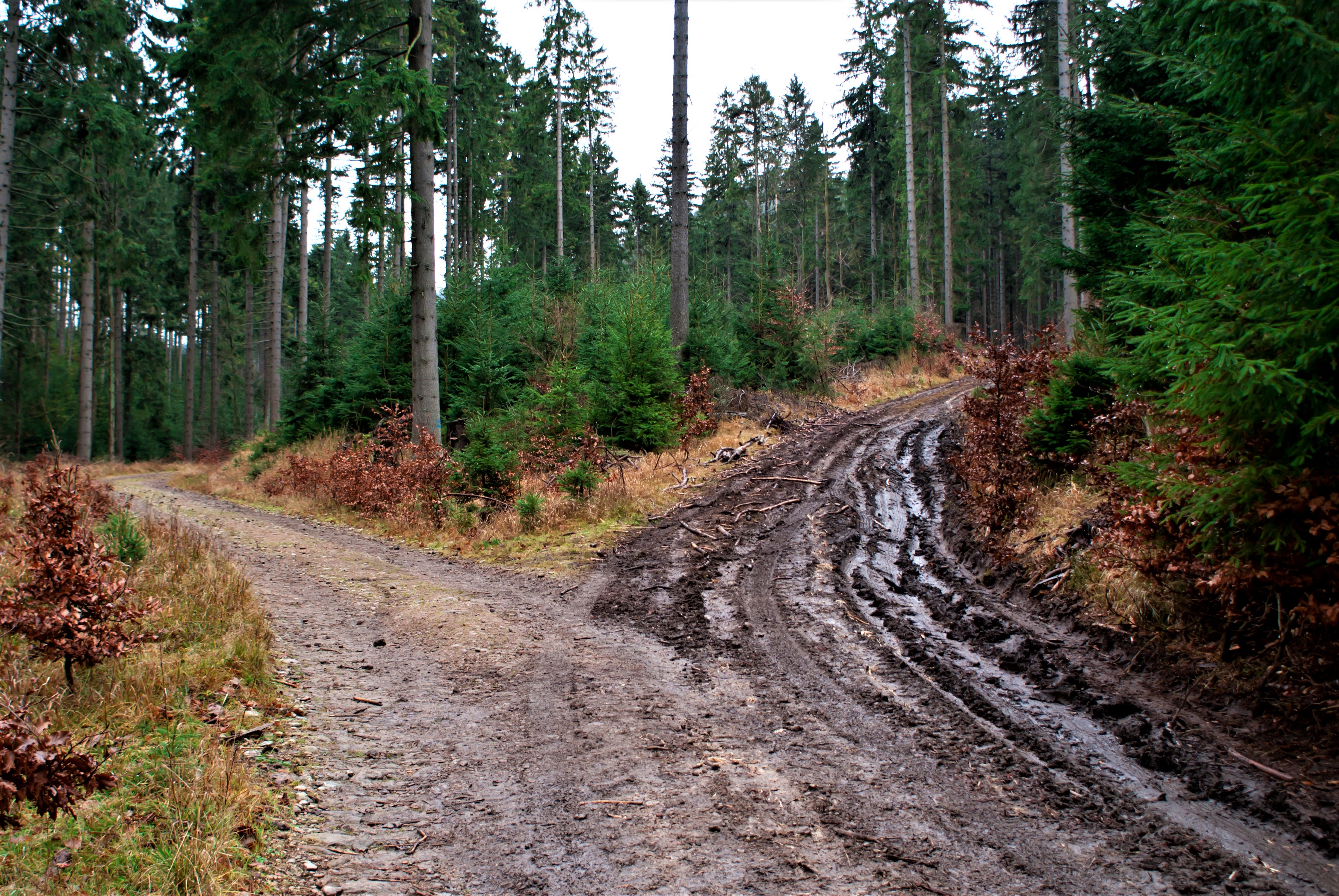
Like all of us, I’ve stared down many forks in the road and chosen a path through the forest of opportunity, fear, and hope lying undefined before me. I reinvented myself time and again to succeed in male-dominated businesses. I bucked trends, bosses, been on bucking horses, driven sixty-thousand miles a year back and forth over two states in a station wagon filled with educational assessments, flown hundreds of thousands of miles in the same quest, set up on demand scoring facilities nationwide, and my husband wants me to add, ridden an elephant.

My point is this . . . one of the great joys of writing is the ability it presents to follow anew the paths not taken. Each plot is an opportunity to ask what if I had become an anthropologist, a minister, a professor of English literature, a Naval aviator, or taken the bigtime NY advertising agency job when it was offered. Maybe I should have apprenticed at Vogue like my great aunt wanted or started at the bottom at National Geographic and worked my way up? What if I had purchased the family farm and lived that dream?

How different would my life have been if I had grown up in the town we were born in, married my high school sweetheart, and lived there still. Who would I be? I know I would be mad as a hatter and ready for the brick sanitarium with barred windows that once overlooked a sharply manicured lawn in the town I consider home. I can imagine being that person, bound to a town, a husband, a job, children, and family. How does that me react to the current me when we meet head-on in a plot?

Each path we don’t take informs and colors us as much as the one we did. The curiosity that drove us toward that choice lingers inside us. What we learned before we turned away still piques our curiosity and benefits our knowledge base. Writing is our opportunity to find out through our characters what might have been. Of course, as ladies of mystery, we spice it all up with a dead body or two, a conspiracy, a disappearance, or perhaps just the evil that stalks the dark of night. Boo!

I chose to leave the Navy when the life of one of my division members was destroyed by an unethical decision, supported by the Uniform Code of Military Justice, and three fearful men. What if I had chosen to stay in? I’ll never know. But the incident and my resulting decision rode my shoulder as I drafted the final book of the Cooper Quartet, my series about a military family in the Vietnam Era. Don’t Tell will be released November 11 and is already a Reedsy Must Read, noting, “This author is an expert at action-packed intrigue and mystery.” And just in, from Booklife, “In this military milieu, Church—a Vietnam-era Navy veteran herself—does a remarkable job of keeping multiple plotlines running with clarity and power. Church spins a lively tale where motives are unclear in a vividly realized hothouse naval environment. The engaging characters and their detailed histories make this a satisfying capstone to a wide-ranging epic.”

Don’t Tell will be available November 11 on Amazon as an ebook, paperback, or in hardcover. In the meantime here is a link to the Booklife Review: https://booklife.com/project/don-t-tell-59592

The 700-Word Crazies

California’s wildfires inspired this story. The 700-word length was more manageable the second-time around, but this tale required more precise word choices than my first attempt six months ago. For me, writing this story was a moment to reflect on the power of words, how one choice over another changes the storyline, the emotion, and the character. Mid-way through, I even considered rewriting it in the first-person, tried it, and realized the tone was just right in third person: distant and indifferent. Had Louisa Belden narrated her story, the coldness would have evaporated, and a completely different tale would have emerged.

So, here it is, still imperfect, but? As you read it, consider words you might have chosen, how you might have told the same tale, and from whose viewpoint. I know I would make changes … does the search for perfect never end? I suspect not, but I do know the discipline of 700-words is a great way to brush up your skills.

Almost Free

It had been an accident; a metal blade hit stone and sparked the dry weeds. The breeze did the rest. Louisa made no attempt to put it out. She drove her tractor into the small shed at the family home and waited. It was time for it to end.

When her cellphone chirped the evacuation notice, she checked out her kitchen window, the ridgeline was haloed in orange. She snapped on the charm bracelet her father had given her, grabbed her box of treasures, her computer, and her emergency suitcase, packed them in her ancient SUV, and hightailed it to a hotel. She didn’t leave the prescribed note on the door indicating the house was empty — she did pour gasoline on the kitchen floor and turn on the gas burners.

That was three days ago. Louisa tracked the raging fire religiously. She knew when updates were posted, she knew the best incidence commanders, she even knew the old burns. A knock on her hotel room door drew her attention from the latest posting. The maps weren’t always accurate, but if yesterday’s was, the fire had ended her long watch.

“Miss Belden?” a voice called, followed by another knock.

Louisa peered through the drapes. Two police, one male, one female. She opened the door, wrapped in a thin bathrobe from her emergency pack. Instinctively, she clutched the lapels of the robe tight over her favorite sleep shirt.

“Do you have a moment?” The two cops stepped in. Louisa’s right hand shot up, the ice cream cone charm on her bracelet slapping her wrist. “Sorry. May we enter?’

Louisa sat at a small table in front of the hotel window. The police joined her, folding their hands on the tabletop.

“Your home has burned to the ground. While putting out embers, the fire detail found bones in the ashes of the kitchen, the fire seems to have concentrated there. We’ve been looking for you since, hoping to find you alive.”

Louisa fidgeted with her charm. “You found me. There was a root cellar under the kitchen; my sister and I played house in it when we were little.”

“Christine?”

Louisa nodded. “She disappeared when she was twelve, between the bus stop and home. Twenty years ago. I have a picture of her in my treasure box.” Louisa fluttered a hand toward her few items piled on an armchair.

“No need. This bracelet was in the ashes near the bones. Not a full skeleton, the smaller bones disintegrated in the heat. A skull and femur survived.”

Louisa fingered the horse charm dangling from the bracelet the male cop held. “Father insisted that Christine was kidnapped because the bracelet was gone.”

“According to the cold case files, you girls rode the bus to school that day, you had band practice, Christine came home alone. One of the neighbor boys claimed he saw your father and sister in the woods arguing or kissing the night before. He was four, so it was disregarded. He still insists.”

“So?”

“Your father molested your sister, didn’t he? The bracelet was meant to buy her silence.” The male cop flicked the ice cream cone dangling from Louisa’s bracelet. “I bet you were happy when he moved on to Christine. Or were you jealous?”

The female cop crossed to Louisa’s treasure box. “Enough to kill her,” she said, holding up a filet knife.

“Christine’s favorite shooter marble is in there, too, if that matters. My sister showed me the knife on the way to school. It was back in the utensil drawer the next day. I searched for her for years. When I found her grave, I told father I was going to the police, he bought me a pinecone charm.”

“You didn’t leave a note when you evacuated, did you hope the incident report would assume the bones were yours?”

Louisa nodded. “Then we would be free.”

“We’ve tried to locate your father. Do you know where he is?

“Gone. Mother remarried after he left.”

“The femur was an adolescent’s; the skull is an adult’s. The fire crew is still searching.”

“May I?” Louisa held her hand out for her sister’s bracelet, adding Christine’s charm to her own.

.###

A quick note: The final book in the Cooper Vietnam Era Quartet, Don’t Tell will be available November 11, 2021. In celebration of the coming event, the ebook of the third book in the series, Pay Back, will be available for $.99 October 7-13. https://www.amazon.com/Pay-Back-Cooper-Vietnam-Quartet-ebook/dp/B08CJDHP92

The Oxen are Slow, but the Earth is Patient*

As I read about the surrender of the Afghani troops, the rush to Kabul, and the evacuation, I can’t help but compare it to the Fall of Saigon in 1975, the subject of Pay Back, the third book in The Cooper Quartet. The parallels between the two events are too keen. The U.S. pulling out of a lost war, one fought for 18 years the other 20, money spent on arming our allies, training their pilots, and building an air force, only to see both crumble in days. In Pay Back, the Cooper family is entangled in the Fall of Saigon, each driven by the need to make recompense for their pasts. Their story begins in 1967 in Dead Legend, as the Vietnam War tears the U.S. apart; the second book, Head First, unfolds in 1972 during the Christmas bombings as the U.S. prepares to pull out our troops. The eBook of Head First will be available for $.99 on Amazon, September 9 – 12.

After the pullout in 1972, the U.S. Embassy remained open and protected by Marines. The U.S. continued to support the South Vietnamese Army and Air Force, with both advisors and weapons. In addition to the Embassy Staff and Marine units, the usual alphabet soup remained in-country (the CIA, et cetera, et cetera), plus U.S. contractors, their families, and reporters. As did the Vietnamese scouts who spent the war embedded in various units of the U.S. military, the Vietnamese who worked for the U.S. forces, and the Amerasian children of U.S. soldiers. All but the children were promised a quick exit should the North Vietnamese take the South.

When the South Vietnamese Army folded at Pleiku in late April 1975, the rush to get out was on, refugees poured into Saigon, clotting the airport at Tan San Nhut and the city. They weren’t alone. The armed troops from the South Vietnamese army rushed in with them. Masses waited outside the U.S. Embassy, at the airbase in Tan San Nhut, or floated the Saigon River on a rumor that merchant ships were waiting in the coastal city of Vung Tau. The Cooper family is caught in this mêlée, whether in the U.S. watching it on television, in Saigon, or with the Seventh Fleet. I hope I did the tumult justice.

On April 29, with 15 North Vietnamese divisions ringing Saigon, the U.S. Ambassador ordered the evacuation. The U.S. Navy’s Seventh Fleet pumped chopper after chopper into Saigon from the South China Sea. By the last flight out April 30, over 6,000 people had been evacuated, overpopulating the waiting aircraft carriers and destroyers. A few flights got off from Tan San Nhut before it was shelled. And though, Vung Tau was attacked, and fuel depots burned, some people made it down river and out by ship or fishing boat. By any standards, the exit was messy, and many were left behind.

In my research for Pay Back, international reporters in Saigon wrote of an abiding insouciance among the population which had survived the French, the Japanese, the French, and the U.S. – an enduring patience that someday the country would be theirs. It’s been nearly fifty years since the Fall. The Domino Theory’s dire predictions proved false. Perhaps because of Vietnam’s long history of colonialism, invasion, reunification, a country emerged, not easily, not without bloodshed, but not our way, or the French’s, or anyone else’s. And perhaps Afghanistan will as well, given the similar history of the two countries. One thing is certain, there will be repercussions and blame enough to go around.

Don’t Tell, the final book of The Cooper Quartet, deals with the aftermath and repercussions of the Fall of Saigon for the Cooper family. It will be published on November 11th; the date seems apropos.  

*I stole the title for this blog from a line in the movie High Road to China.

Why Does This Character Torment Me So?

He refuses every name I give him. Argh!

Everyone else in my newest historical series is comfortable with their names. The nineteen-year-old heroine Cora Countryman’s name is a combination of names from my hometown in Illinois, the model for the booming prairie town in the books. But my hero . . . he refuses to cooperate! His name has changed so many times that my computer screen has erasure holes.

Kewanee, Illinois Historical Society

Names are everything, right? Normally, once the character sketch is complete, they pop into my head and stick. Finn Sturdevant, Grieg Washburn, Brendan Whitelaw, MacLaury and Byron Cooper. But this guy is a puzzlement. He was comfortable being Israel Francis (Rafe) Kaufman from Chicago in the first book, then when I started plotting the second book, wham, he announces he is from Tennessee and demands a new name.

Overlooking the obvious and assuming I have some control over my stories, perhaps I should have given more time upfront to his backstory. I thought I had it all figured out; it’s just . . .

In book one we learn that he was a drummer boy at the Battle of Chickamauga, went to an Eastern college, and is now a newspaperman. Then while plotting book two, he insisted he was a Southern drummer boy, not Northern, and all bets were off.

Bless his heart, the change added depth to the plot, the series, and his character.

So, Israel Kaufman from Chicago permutated to Bedford Kaufman because what name conjures Civil War Era Tennessee more than General Nathan Bedford Forrest. The former Israel Kaufman was semi-okay being Bedford Kaufman, but the Tennessee census indicated that there were literally no Kaufmans in the state in the 1870s.

So, we settled on the surname Kanady. Bedford (Ford) Kanady appealed to him, enough for a complete name change. But he is a tad prickly about his image and worries that the name is a bit card-sharky. There was talk of Harry Kanady, but he claims it is a gunslinger’s name. ‘Just not me‘ has become his mantra. In addition to the census, we have tried to find his using name generators, birth records, online family trees, yoga, and standing on our heads in a corner.

He insists the name must convey savvy and internal toughness. Oh, and a hint of danger, a hazy past, a sharp tongue, and a few visible and invisible scars. He believes he is the kind of guy you see buying stamps at the Post Office who conjures an intriguing fantasy involving magic markers and dark rooms.

Come on . . . you know the type!

Wait a minute! Would Jason Bedford work? Jason . . . Jase, perhaps, to his friends. He isn’t thrilled with Jason. It feels a bit modern, possibly too Western movie for him. There is definite hesitation on his part.

I’ll let him ponder Jason for the night, maybe introduce himself to a few of the other characters. You know, try it on for a while before another search and replace. Wait! Now he speculates that he likes the initial J. and is leaning toward J. Bedford Kanady. Why an initial makes a difference, I don’t know. But he likes the unknown of the J., the rhythm of the full name, and the hint of je ne sais quoi in the diminutive of Ford.  It could work. Maybe? Sounds stuffy to me. But if he likes it . . . whatever!

THIS GUY IS DRIVING ME NUTS!

As promised, here are the solutions to LAST MONTH’S FIRST LINE QUIZ. I am sure you all aced it.

First Line of BookTitle of Book
Last night I dreamed I went to Manderlay again.Rebecca
All the Venables sat at Sunday dinner.Cimarron
The whole affair began very quietly.Madam, Will You Talk?
They were interviewing Clint Maroon.Saratoga Trunk
Nothing ever happens to me.My Brother Michael
It was a cold gray day in late November.Jamaica Inn
They used to hang men at Four Turnings in the old days.My Cousin Rachel