Writing as a Gratitude Practice


Every day is a story. We usually wake up in the world of our status quo from the day before and set goals, and then challenges show up on the way to those goals. We face them, and whether we overcome them, change course, or defer completion, by night we close a chapter. Unlike a chapter in a book, though, that day’s chapter ideally doesn’t have a hook that keeps us awake and wondering what happens next.

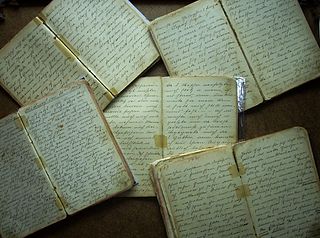
To get closure on those daily endings, I keep a journal, following a structure I learned in yoga teacher training as a method for developing self-awareness and which I’ve taught in many stress management workshops. First thing in the morning, I record my dreams, if I remember them, and reflect on their unique and personal meanings (Recommended reading: Mindful Dreaming by David Gordon). In the evening, I record the emotions I experienced in all their complexity and variety. I consider this detailed awareness of feelings to be a mindfulness practice, but it’s also a valuable skill for writing. The next part of the journal covers the day’s events. Some are mundane, and I can skim them in bad handwriting, while others call for exploration, discerning how they related to the emotional landscape of the day.

The final line in each journal entry is something positive. It may be small and subtle or enormous and worth celebrating. It can also be an intention for the night’s fiction writing hours (I’m nocturnal and do the journal before I settle into my work). I never want to wrap up a day feeling negative or pessimistic. The human mind is naturally drawn to what’s wrong in case it requires attention. If my whole body feels great except for a twinge in my left ankle, my mind will go to my left ankle even if the twinge is trivial. Attention to the big picture and its positive aspects is a conscious choice. On a day in which difficult or painful events dominated, this space for hope and healing is even more important than on the more ordinary days when it’s easy to find some light.

With this journal, I train my mind not only to the story line and emotional depth of each day, but to gratitude. Daily.

*****

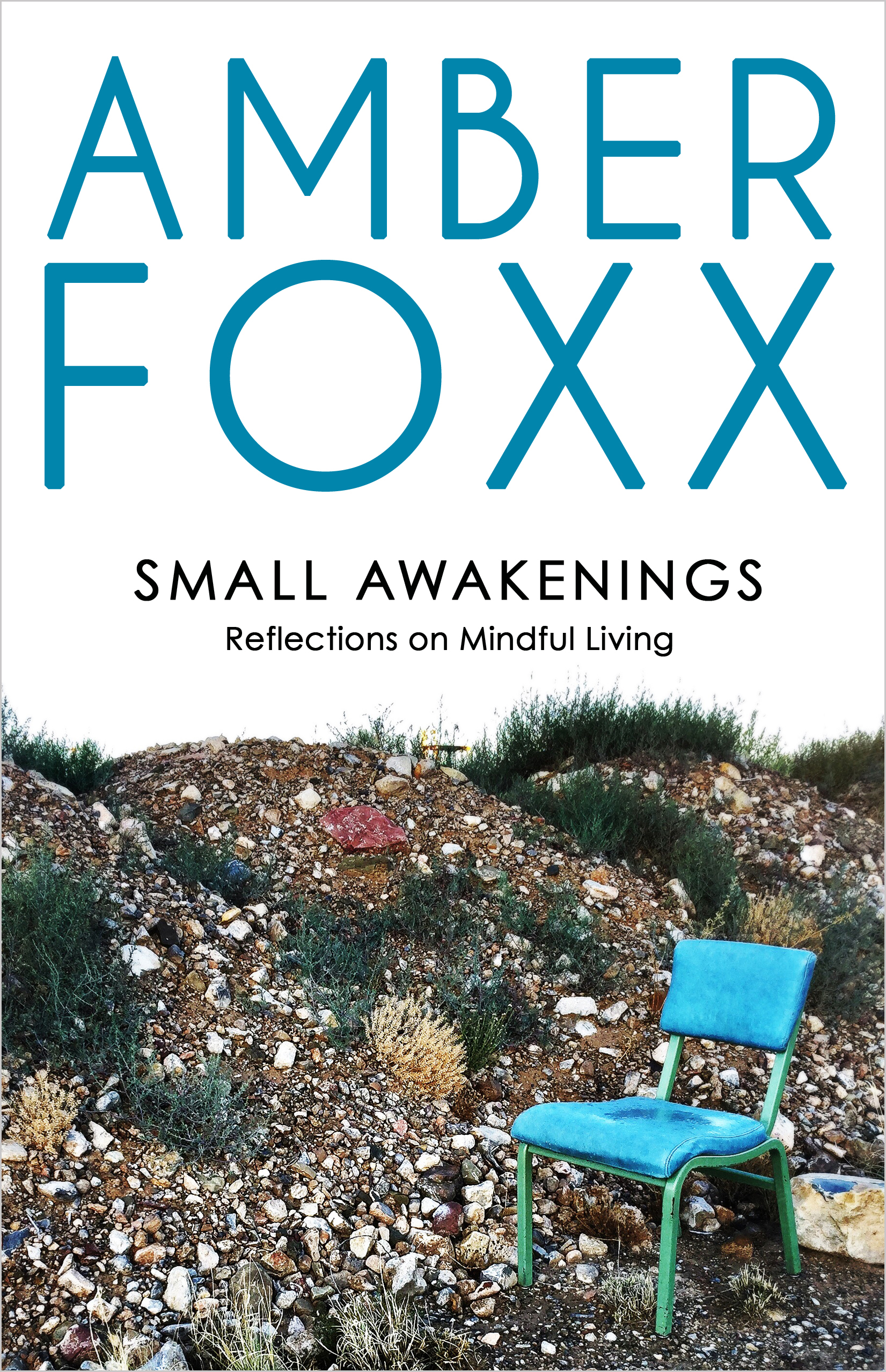
You can read more of my essays on mindfulness in the collection Small Awakenings: Reflections on Mindful Living.
Undermind at Work

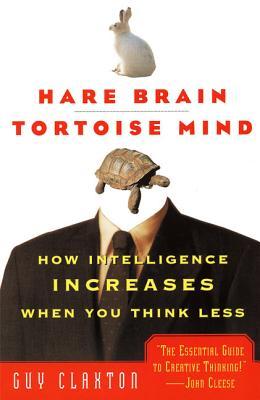
That’s not a typo. I have not been undermined at work. I’m rereading Guy Claxton’s Hare Brain Tortoise Mind, and he refers to the slow processes of creativity and insight as the undermind—the part of the brain that’s working beneath the level of verbal expression and logic, the part that can detect patterns the conscious surface of the mind misses. The part that creates what the surface mind cannot. I read the book eighteen years ago when it first came out, but I wasn’t writing fiction back then, just academic research papers. I perceive its ideas differently now.

On this reading, I see in it an explanation of how pantsing a plot works. Those of us who write that way often marvel at how we laid clues we didn’t know were there and how we brought in characters whose purpose was unclear at the time, but who later revealed why they showed up and asked to be included. The undermind is best at solving complex, ambiguous problems and recognizing hidden patterns. The other mode of thinking, what Claxton calls d-mode, for deliberative mode, is better at problems with clear rules and defined parameters. I see d-mode as the revision mind and the undermind as the first draft mind. I’m at a point of indecision near the end of a first draft. D-mode wants me to evaluate my options. The undermind wants me to keep writing and see what happens.

I can apply the concepts of the undermind and d-mode to how my characters solve problems as well.  Claxton describes experiments in which trying too hard, having time pressure, or having too much at stake can all inhibit subjects’ problem-solving and pattern-detecting abilities. The slow, unhurried tortoise mind is better at breakthroughs, and yet the nature of a mystery plot is anything but slow and unhurried. Still, a character may encounter a puzzle early on, be unable to solve it, attend to other problems while the initial puzzle simmers in the back of her mind, and then have a flash of insight. The flash isn’t a flash, though. All along, her undermind was at work. I’ve seen mystery writers use this pattern well, showing the protagonist’s frustrating sense that the solution is near while not quite grasping it yet, knowing that something in the mind-shadows wants to be understood.

D-mode works well while talking because it’s verbal and structured. When characters are doing the logical kind of problem-solving, dialogue is natural. Claxton cites studies in which subjects were asked to solve puzzles and either talk or be silent while they did it. With clear though challenging puzzles in which all the information was present and needed to be analyzed, talking improved the outcomes. However, with insight problems, bewildering visual puzzles that required creative shifts of perspective, talking got in the way or turned into babble such as, “I don’t know what I’m thinking. Nothing. I’m not actually thinking.” Silence gave better results. In fiction, this second process might take place in an internal scene, a sequel or reflection. The different modes of problem-solving could lead to conflict, as an analytical type needs to talk things out while an intuitive type needs to stop talking—and stop listening to words—in order to think.

My preference for creating my first draft from the undermind may be why I like a plot mandala better than an outline. I draw a circle and begin writing character names and story themes in what feel like the right places, then let my undermind connect the patterns among them.

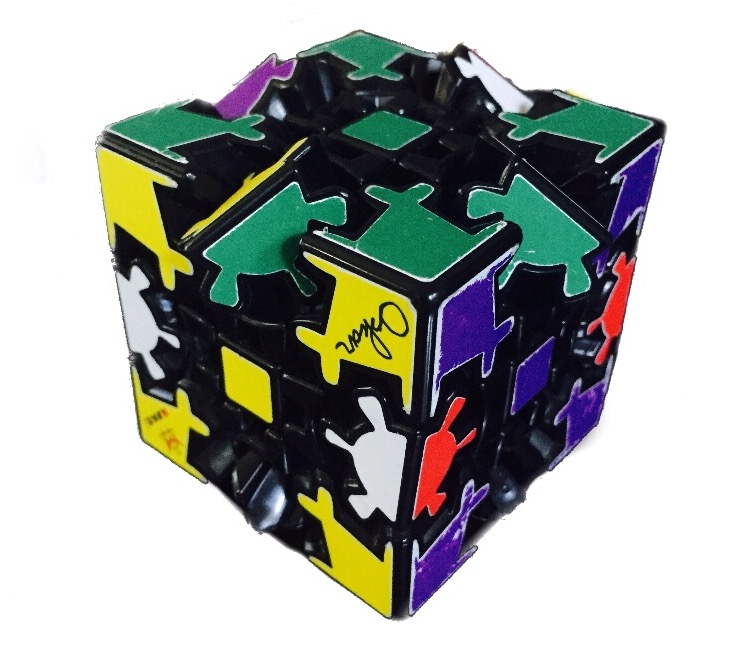
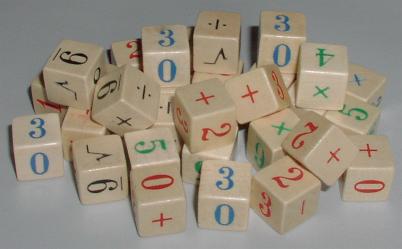
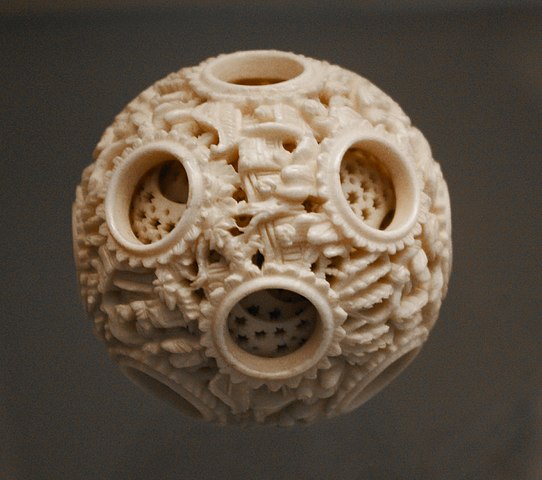
Images: 19th century Chinese puzzle ball with the twelve concentric balls inside; puzzle cube; math equation dice.

Book Club Discussion Questions


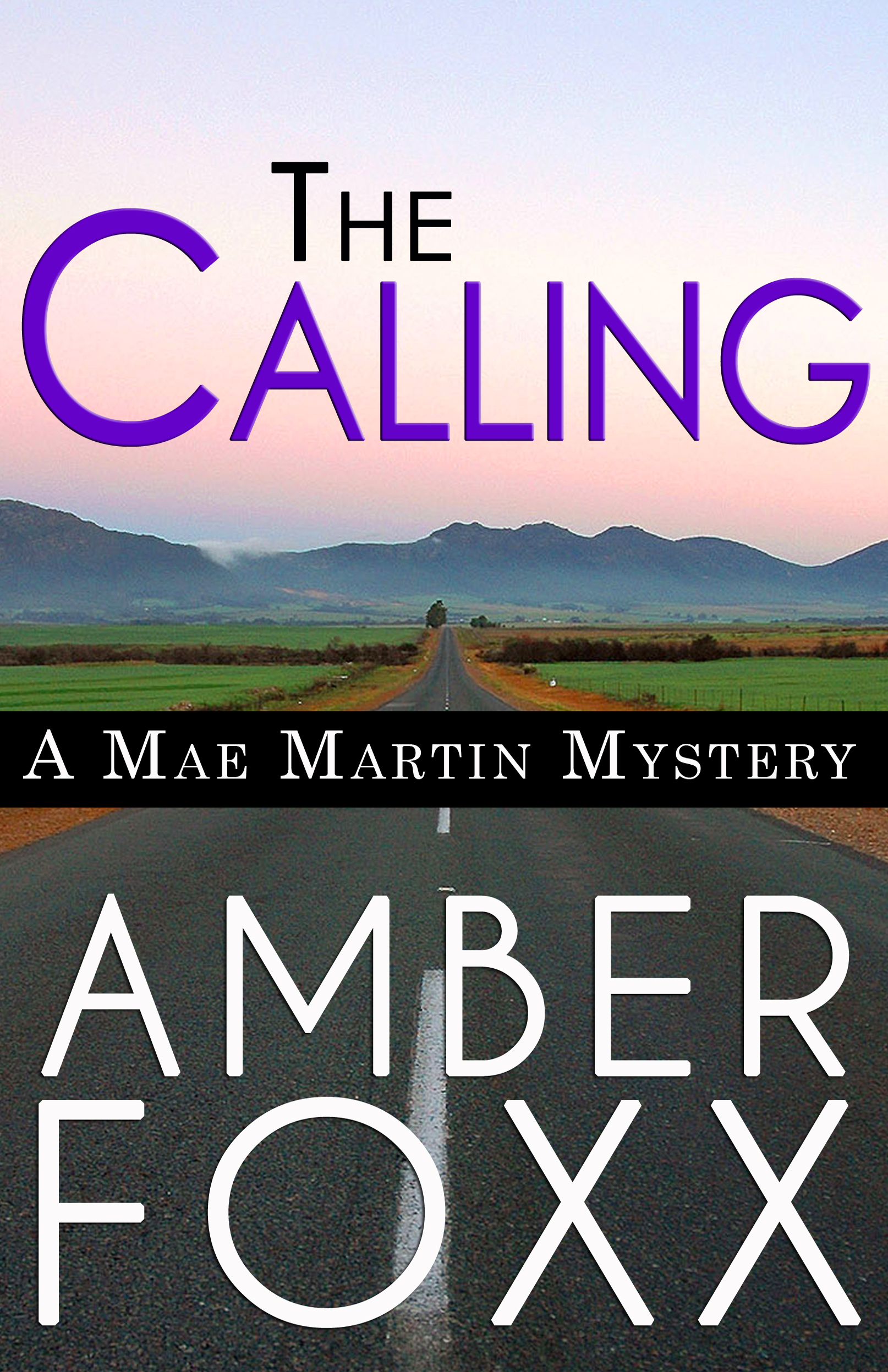
I recently created a set of reading group discussion questions for the first book in my series, The Calling. An unconventional mystery with a coming of age element, set in rural Northeastern North Carolina, I’ve always thought it had “book club” qualities.

As I wrote the questions, I visualized the revision grid I used while I worked on the book, with the themes and plot elements mapped out, and it struck me that imagining a book club discussion could serve as a revision tool or even a plotting tool (for those who actually plot) for a work in progress.

I was in a book club for many years in Virginia. We read fiction of varied genres as well as a good selection of nonfiction, and we had some great discussions about style, structure, themes, and characters, often disagreeing and enjoying our varied points of view. These are the questions I came up with for The Calling and added to its page on my web site.

How did you respond to the book’s mixed genre? It’s been reviewed as mystery, women’s fiction, paranormal, coming of age, and literary fiction. Did you want it to fit a genre more neatly?

 Mystery can mean an enigma, a puzzle, a secret, or something impossible to explain, as well as a novel about solving a crime. Without a crime to solve, what were the mysteries?

 Were there any characters you had especially strong feelings about? What was it about them that affected you?

 Is there a villain in The Calling? If you think there is, who is it and why do you see this person in that role? If you think there isn’t, explain why not.

 Themes in the story include power, professional ethics, personal fulfillment, and privacy. The questions that follow explore those themes.

  • If you had the gift of the Sight, with the same limits and abilities that Mae has, how would you use it? Would you be tempted to use it in ways that might cause you some ethical misgivings?
  • The nature of Mae’s gift provokes concern about privacy in the course of the plot. Are there ever considerations that take priority over privacy?
  • How does each of these characters—Charlie, Randi, Malba, Deborah, and Mae—approach his or her professional ethics?
  • How did you see the issue of power play out in the story, in both personal and professional relationships?
  • The story takes place before the #MeToo movement. What might be different if it was set in 2018?
  • Mae’s desire for personal fulfillment is a driving force in the storyline. Did you identify with any of the obstacles and conflicts she faces?
  • Religion and spirituality—Christianity, Buddhism, indigenous shamanic religions, New Age beliefs, and more—are important to many of the characters and to the development of the plot. Where did you see religion misused, and where did you see it supporting a character spiritually?

 Now I need to write discussion questions for the other five books that follow. Even if book clubs don’t use them—though I hope they will—I can use them to analyze my protagonist’s character arc and the themes I’ve explored throughout the series. This will lay a foundation for a thoughtful revision of the work in progress, focused on the layers of depth and meaning behind the plot as well as the events that structure it.

*****

The Calling is free on all e-book retail sites through September 30th.


Getting Unstuck


Last weekend, I ran into a fellow writer and asked him how his new book was going. He said it was hard. Very hard. I said mine was too, and he replied, “If they’re good, they’re all hard. Can you imagine what you’d have if you could say, ‘It was easy, I just wrote it?’ ”

When it’s hard, here are some things I’ve found that help me move through the muck:

Trying the scene in a different point of view. (Of course, this only works  if you write in the third person.) Figuring out who has the most at stake in the scene and shifting to their POV can give a scene more energy and drive.

Cutting the last few lines or even paragraphs of a scene or chapter. How often have I said this to critique partners, and how often have they said this to me? “The scene really ends here.”

Revisiting the protagonist’s character arc. What will challenge her to go where she needs to go next psychologically?

Revisiting the protagonist’s story goal. Is the main plot sufficiently  driven by what she wants and what’s getting in the way of it, or have I gotten sidetracked? The fertility of my garden of subplots is astounding, and some of the things that sprout in it are weeds.

Examining the protagonist/antagonist relationships.  I usually have multiple oppositional characters in the way of my main character’s goal, presenting conflicts that push her to change and mature. As with subplots, I have to examine these characters and make sure I haven’t cast  too many.

Doing  an intense writing workout. For example, cranking out a 2,000 word short story in a single sitting. I’d already plotted it while running. I knew the instigating event, the protagonist, the antagonist, the secondary characters who complicate things, the settings, the themes, the ending, and the twists. Was it a brilliant story? No. But it shot me clean through a plot and made me review skills for structuring and tightening a story. I knew intuitively what to skip such as the transitions that were easily implied and the descriptions that a reader would have already imagined. And I have the satisfaction of having finished something. Now, back to the book in progress.

*****

I haven’t been totally stuck, by the way. I have two new releases this month: Small Awakenings, a book of reflective essays, and a boxed set of the first three Mae Martin  psychic mysteries. The boxed set is on sale for $2.99 through the weekend.

The Fig Tree, Yoga, and the Middle of the Book

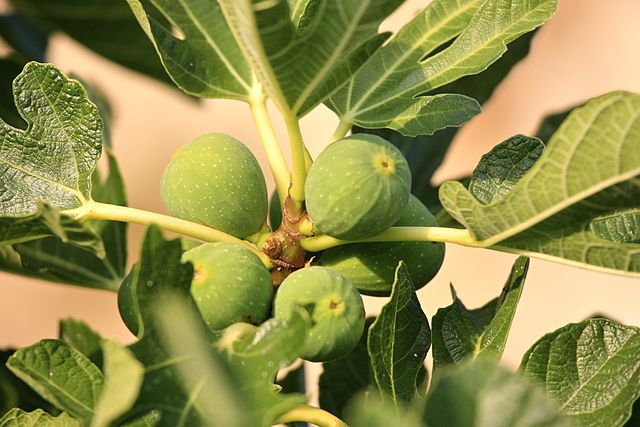
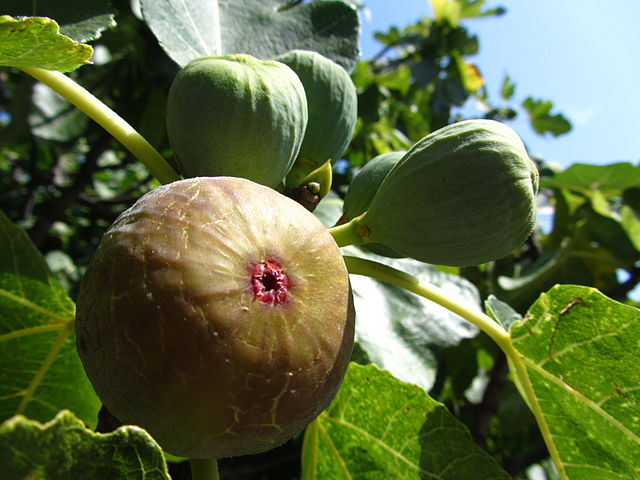
At first glance, the fig tree in the courtyard outside my apartment looks like a round mound of large green leaves and tiny green fruits. Today, I studied it longer, though, and began to see golden-brown fruit hidden in the green. The longer my mind was attuned to shape and color of a ripe fig, the more of them I discovered. Circling the tree slowly, I reached in and harvested the fruit, choosing only the figs that were perfectly ready. My four neighbors in our building had come out into the courtyard, and I enjoyed the sight of my cupped hands offering the bounty and my neighbors’ hands one by one taking their share. Chatting sociably, we ate sun-warmed, rain-watered figs.

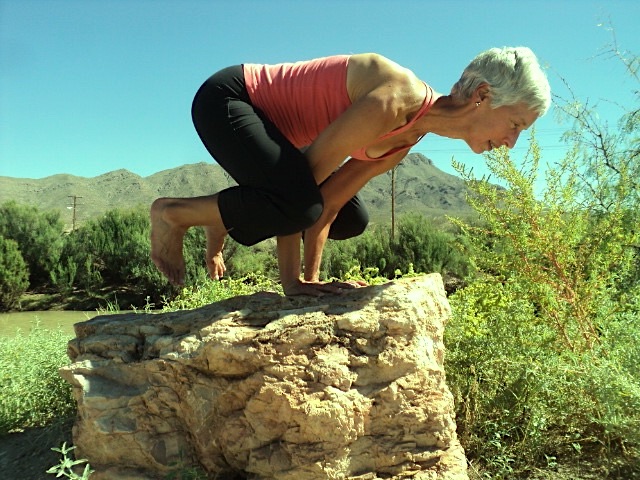
Later, as I began my yoga practice, I chose the theme of doing it differently. Normally, I practice without music, so I selected a CD from the bottom of the stack, strange contemplative music with drones and drums that I hadn’t listened to since I moved over a year ago. I started with a pranayama technique I seldom practice, changed the sequencing of familiar poses, and replaced others with asanas I’d neglected for a while. The idea was to change the flow of my energy and open myself to new possibilities.

I did it as preparation for writing, getting ready to tackle the middle . According to my word count, I’ve completed fifty percent of book seven in my series. The chapter in progress will be a major pivot point, with revelations about the crime and about a ghost. It should set up future challenges for Mae Martin, adding to the necessity of a trip to a place she’d rather not go—her old home town. The problem is, it feels like the beginning of Act Two, and it should be the middle of it.

I’m not cutting until I finish the first draft, though. As a pantser, I don’t yet know which of the subplots in the first half will turn out to be integral to the story and which can be removed. Several of them surprised me, but then, my ongoing characters have lives of their own. I’ve never suffered for lack of material. This is where my notes on possible directions and loose ends come in. I get floods of ideas and record them in case I forget, but as the book progresses, some of those ideas may not fit. Some of the loose ends will turn out to be dead ends I can cut. At this point, I look at that list and see a lot of major events yet to come, a lot of little green figs, but that may not mean the book is going to be too long. The pace should be picking up. I might really be half-way through. When this draft is done and I can step back and study it after a break, I’ll be able to see the subplots that contribute to the whole, like ripe figs hidden in the leaves.

I may have to rearrange events, the way I did my yoga practice. Perhaps that pivot point in the middle would make a good beginning or a good chapter three. Maybe it’ll be the beginning of Act Three. Revisions like that would be hard but satisfying. In fact, if it’s difficult, it may be more fun than if it was easy.

And I have an end goal. Not just a story, but readers. I won’t see them the way I saw my neighbor’s hands taking figs from mine, but creating a new book leads to the same joy: sharing.