Dosha, Character and Setting

Amber in tree finalIt feels strange to say that I create characters. They show up, complete with names and complex personal histories, and it’s my job to get to know them and understand how they tick. One of the tools I use for this is the concept of the three doshas—patterns of body type, personality and preferences—from Ayurveda, the traditional medicine of India. I had some introductory education in Ayurveda in both of my yoga teacher trainings, with the Temple of Kriya Yoga and with Integrative Yoga Therapy.

The three doshasvata, pitta and kapha—are associated with combinations of the five elements. Vata is space and air. Pitta is fire and water. Kapha is earth and water. In each person, these manifest in both healthy and unhealthy ways. An individual might be a pure type or a blend of types. Sometimes intuitively and sometimes intentionally, I use the doshas in analyzing my characters and how they interact with each other and the world around them.

An idea that intrigued me in one of my classes on Ayurveda was that not only people but places and seasons have doshas. There is nothing more vata than spring in New Mexico, with the desert wind blowing, and it reaches its hottest and driest in June. I used that season in Soul Loss, which takes place from March through June, primarily in Santa Fe, a vata setting. Even its river is inclined to be dry and is irregular in its flow. Vata is changeable, creative, humorous, erratic, and sometimes spacey. No wonder Santa Fe is home to so many creative people, and also spiritual healers and psychics. That’s who the primary characters in Soul Loss are, and even the crime takes place at the spirit-world level.

I think people feel most at home in a place that complements their dosha. Athletic, competitive, and focused, my protagonist Mae Martin is a pitta type, mind and body. Even her red hair is a classic pitta trait. She loves Truth or Consequences and its hot springs, and thrives on the energy of New Mexico’s July-August “monsoon” season. In the first book in the series, The Calling, she’s living in Tylerton North Carolina, which has a wet and heavy climate, and it doesn’t suit her. It’s too kapha in every way, culture and land and weather. When she first gets to Santa Fe in Shaman’s Blues, the altitude makes her feel spacey, and this bothers her, while vata-kapha Jamie Ellerbee is truly at home there.

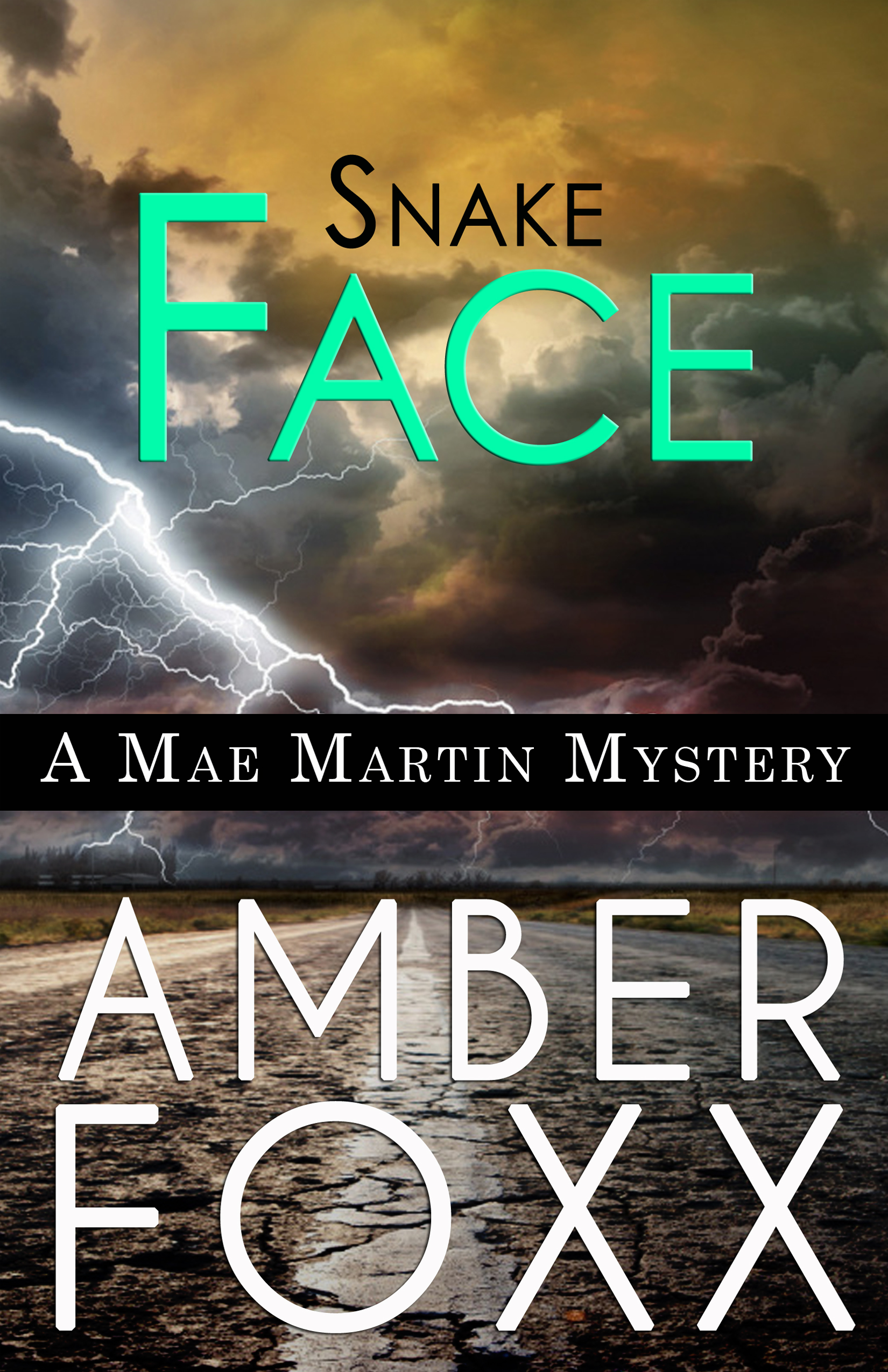
Hurricane_Isabel_14_sept_2003_1445ZThe oppressive East Coast weather in Snake Face is vata-kapha, windy yet wet and heavy, and it takes place in winter, a kapha season disrupted by an abnormal vata event, a December hurricane. The windstorm is something out of balance. Jamie gets caught up in both the hurricane and a storm in his inner life. His creativity and humor are healthy vata, and his music—voice and woodwinds—is based on air, vata at its most beautiful. His mood swings, short attention span and anxiety are the other side of vata. His unshakeable loyalty in love and friendship is kapha, but his tendency to depression and weight problems are the kapha shadow. I used the hurricane as background music that builds up along with the troubles that are chasing him.snakeebooknew
Even when I haven’t consciously chosen to use the doshas of character and place and season, when I look back on their interactions, I can see that I did it intuitively. When two characters are in a lot of conflict, it’s often in the way they manifest their dosha. Mae and her mother are both strong pitta types, destined to butt heads, and one of the antagonist characters in the upcoming Ghost Sickness is also a pure pitta type who turns everything into a competition. Mae is attracted to men who manifest healthy kapha , a solidity and stability that she finds appealing, but their earth-water qualities can also make her feel that they are stuck in the mud.

Here’s my simplified short list of the dosha traits and seasons.

Vata: space and air. Thin, asymmetrical, distractible, creative, changeable. Default stress reaction: anxiety. Spring and fall.

Pitta: fire and water. Medium build, strong, competitive and driven, capable of prolonged intellectual focus. Default stress reaction: irritability or anger. Summer.

Kapha: earth and water. Can be big and muscular, womanly and curvy, or overweight. Steady, enduring. Can have calm, peaceful energy or a tendency to lethargy. Default stress reaction: procrastination or depression. Winter.

Do you see the doshas at work in your stories?

Keeping a Series Strong

Amber in tree finalI hope this hasn’t happened to you, but … have you ever picked up the sixth or seventh book in a series you follow and been let down? Maybe the author crushed you with backstory aimed at new readers. Or worse, the author took your loyalty for granted and got self-indulgent with a book full of “darlings” that should have been killed. Series fans, myself included, sometimes forgive all of that and keep reading because they love the characters. New readers who happen to start with a later book in the series won’t be so forgiving.

Authors who handle backstory well (in my opinion) give very little and slip it in only as needed. In one of Nevada Barr’s Anna Pigeon novels, she briefly mentions that Anna acquired her dog, Taco, after accidentally causing the death of her friend who owned him. That’s it. No other details. The story moves on. To me, this was brilliant. The reader knows just enough with this bit of painful background to understand Anna’s feelings about Taco. I hadn’t yet read the earlier book, Blind Descent, in which the accident occurs. When I did read it, nothing had been spoiled.

I’ve started other series late in their progress and quit without finishing due to backstory overload. It wasn’t just dull; it ruined the earlier books for me. Of course, a series character’s personal life changes and grows in each book, and it’s inevitable that book three will give away transitions in the lead character’s love life or family life, but it shouldn’t spoil the mystery plots of books one and two. I suspect that most people like to begin a series at the beginning, but others grab the newest book first. Sometimes the new release in a series is the only thing my library has available in audiobook, so off I drive with no prior familiarity with that author. It’s usually a good experience, but once in a while I get a book that threatens to put me to sleep at the wheel with tedious summaries of the characters’ previous adventures, sometimes in the worst way possible: expository dialogue. “Remember when we solved the mystery of the missing heiress? You saved my life and hers.” “But it was your quick thinking that got us there.” “And then the press made a hero out of her husband, of all people.” On it goes. Both characters were there and know what happened and yet they tell each other so the author can tell the reader. Yawn. Hit eject button. Pull over for coffee. Try a different audiobook.

This experience has motivated me to get a new critique partner for each book in my series. I have long-term reliable partners who know my work and my characters, and who do great plot critiques, but I also need fresh eyes on each book. Because of my aversion to backstory, I include as little as I possibly can. The new person who hasn’t read the prior books lets me know what was unclear, and then I can insert the necessary minimum at the right place. The new reader also will not be as tolerant of scenes that are fun for me and for people who have a long relationship with my characters, but which are slow in moving the plotsymptoms of that other error which can creep into a long series: self-indulgence. My new critique partner will catch it and help me cut the fluff.

I want the person who picks up book five first to have a complete, compelling experience within that story, and to be curious what happened in the rest of series. Also, I hope for the later books in the series to be as alive and exciting for long-term readers as the first book was.

Location, Location: Using Real Places in Fiction

Amber in tree finalSign_-_New_Mexico_-_Truth_Or_Consequences_-_Exit_(4892943477)

When I read books set in cities I know well, I enjoy recognizing familiar locations. It makes me feel like I’ve set foot inside the story. There are good reasons, however, to invent addresses, businesses, even entire towns. The usual rule seems to be that if you say something bad about a place or set a disturbing event in it, make it fictitious. In Sacred Clowns, Tony Hillerman gave New Mexico an entire new pueblo, the fictitious Tano Pueblo, because he had a murder take place during a ceremony. He used real reservations for his other books. Every city, town and reservation has its problems, so it’s not maligning the entire place to write about a crime there, but he felt that the particular one in Sacred Clowns would be objectionable. He included spiritual ceremonies in a couple of other books, but not as crime settings, and only shared what was open for non-tribal members to know. Based on Hillerman’s wisdom, I’m setting a number of scenes in my work in progress at a Mescalero Apache ceremony, but the misdeeds take place in private homes or in other towns.

In my first book, The Calling, I “invented” two entire towns, even though they are intimately based on real places, because my protagonist doesn’t like living there. (I had fun coming up with the name Cauwetska. I looked up words in the Meherrin language that would make good place names, since many Southern towns’ names come from local Indian words.) I actually loved the little town that I turned into Tylerton, but the way its fictitious residents treat Mae wouldn’t reflect well on it. I invented Coastal Virginia University, too, because I wouldn’t want to attribute a professor like Charlie Tann to any real college.

I’ve sometimes invented houses or businesses because I needed specific architecture to suit the plot rather than because I was avoiding insulting anyone, but in certain cases real locations are the best.

How could I imagine anything as remarkable as Sparky’s Barbecue and Espresso in Hatch, New Mexico? It has crazy local color and live music, and I needed a setting where my protagonist encounters two musicians in a key event that ties three plot lines together in Soul Loss. The eccentricity of Sparky’s décor struck me as a perfect background to frame one of the characters. The establishment’s owner, who knows me as a regular Sunday afternoon blues fan, was happy to let me set a scene there.

In my work in progress (Ghost Sickness, book five in the Mae Martin Series) I set several scenes in Truth or Consequences’ popular coffee shop, Passion Pie Café, with the owner’s enthusiastic permission to employ a character as a barista there as well as to have a little drama take place during the busy breakfast hours. She even gave me a great idea for that scene. I needed Passion Pie because of their wonderful local artist table tops. The mystery revolves around an artist with a secret, and my plot required that his work grace one of those tables. Rio Bravo Fine Art’s owner also let me set scenes there and allowed me to have a fictitious artist exhibit in his gallery. One of T or C’s best-known artists, Delmas Howe, gave me permission to use one of his paintings in the story. It’s great having my New Mexico town come to life in this book.

I had to give Santa Fe a new exotic bird store, though. The owner of Feathered Friends of Santa Fe helped me with my research, and we agreed that I should invent some fictitious competition for her shop, a new and less well-run parrot store, because, well, something happens there. I can’t say what it is. But it involves parrots, two pueblo potters, an Apache cowboy and a struggling photographer, and something illegal. Stay tuned. Ghost Sickness will be released this summer.

Meanwhile, if you’re curious to get started on a mystery series without murders, you can go to Northeastern North Carolina and Norfolk, Virginia in The Calling, Santa Fe and Truth or Consequences in Shaman’s Blues, on a road trip across the country in Snake Face, and back to Santa Fe and T or C (and Hatch) in Soul Loss. Just for fun: Mae and Hubert’s house in Tylerton, Bernadette’s tiny Norfolk apartment, and Mae’s pea-soup-green converted trailer in T or C are all places I’ve lived in.

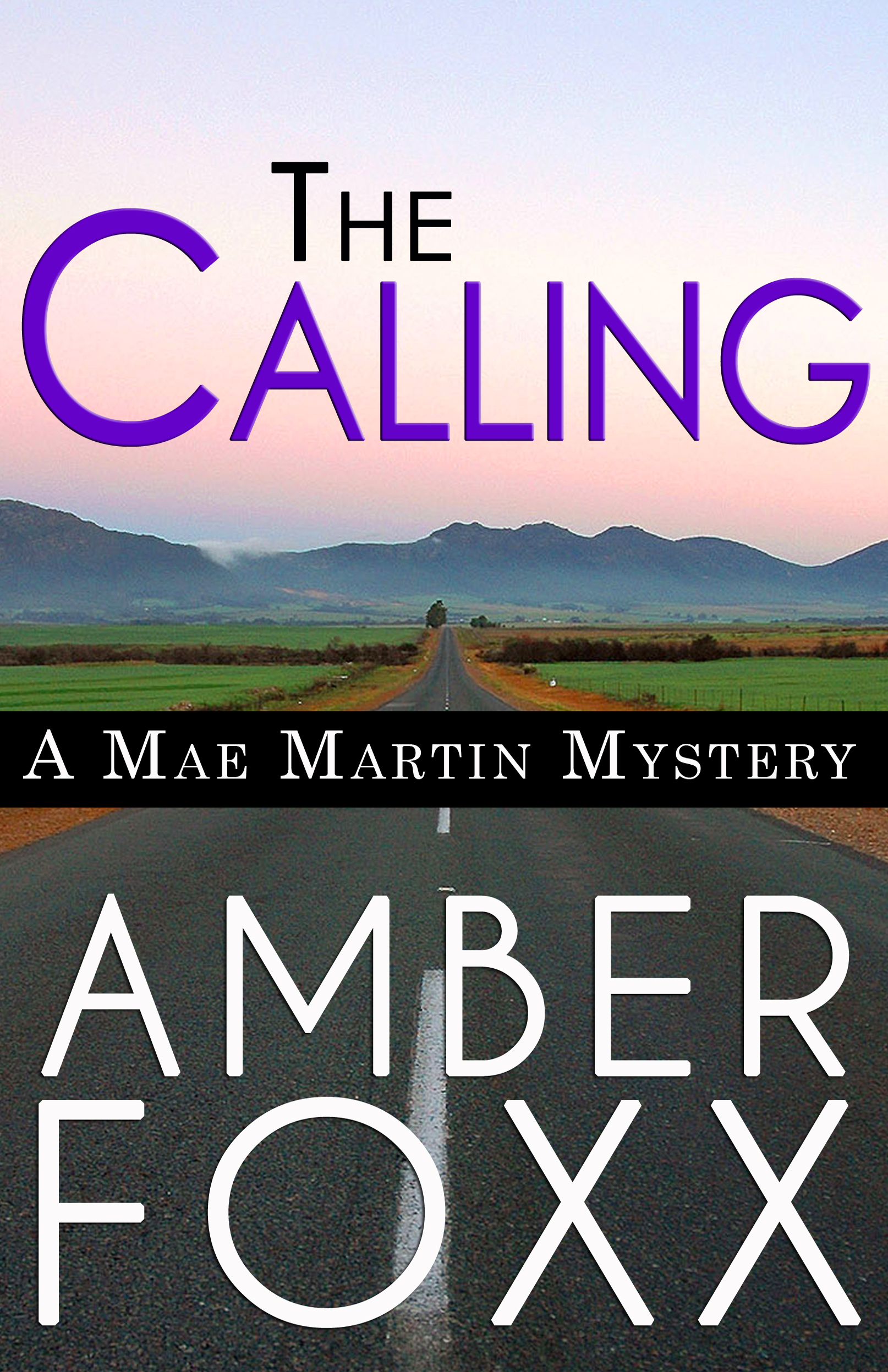
The Calling is on sale for 99 cents through this weekend on all e-book retail sites.callingebooknew

Barnes and Noble     Kobo         Amazon     iTunes Bookstore      Page Foundry

Ripping out “Seems”

Amber in tree finalA few years ago I read a novel in which the characters “blew out a breath” so often, I started counting the times the phrase showed up. Needless to say, I was distracted from following the plot. That experience made me a little paranoid about over-used words and phrases. While revising each of my books, I’ve discovered a unique verbal habit for that manuscript. In my work in progress, I suddenly noticed that “seemed” cropped up too frequently. (I almost wrote, “I seemed to use seem too often.”) I did a search and found that forms of this word occurred an appalling ninety-seven times. My books are longer than the standard mystery, but even with over a hundred thousand words, this struck me as too many seems. Why was this word infesting my manuscript?

Characters seemed to have certain emotions. Avoiding head-hopping, staying in the point of view of one character, I slipped into this weak way of describing her perceptions. In revisions, I worked for more vivid and specific descriptions.

At other times, I used seemed when a more direct word would do. If my protagonist thinks a certain problem is recurring too often, she doesn’t have to think that it seems to happen too much. She’s Southern and raised to be polite, so she might careful in her spoken words, but I didn’t need evasive, roundabout wording in her thoughts. It made her sound indecisive or lacking confidence, and she’s not.

Sometimes, I needed to convey that an appearance or impression was uncertain. “He seemed honest, but was he?” I left some of those seems in place and replaced others with alternative words and phrases.

There are now only thirty-one seems and the story still holds together. (Pun intended.)

Fellow writers, what are some of those pesky words that you have to prune? Readers, do you ever get snagged on things like this is in a book?

*****

Amber Foxx is the author of the award-winning Mae Martin Psychic Mystery Series. The fifth book is in progress and seems to be is going well.

Coloring my Book

I’m about to give my work in progress, the fifth Mae Martin Psychic Mystery, its most ruthless examination. My first critique partner has read it, I’ve revised it with her input, including discarding an end that she wisely recognized as weak, and I rewrote the last five chapters in their entirety. Now, having reviewed key ideas in Jack Bickham’s Scene and Structure, I am about to go through a printed-out copy of my manuscript with my analytical mind, not my creative one, examining every scene and sequel as well as the overall arc.

Bickham suggests using color-codes, not words, for this process. I’ve done it for all my books so far and I can see why. It keeps me from going into perfectionistic small-picture mode, editing each line, and makes me look at the big picture. I’ll use yellow for the point-of view character’s scene goal, hot pink for conflict, and purple for the disaster at the end of the scene—the setback that actually moves the plot forward. Due to a lack of choices when shopping for highlighters, the same color code will have to work for the sequels, too, indicating the characters’ emotions, thoughts and decisions. For some reason I’ve always used orange to highlight what needs revision, and I mark it with an up arrow for increased pace and tension, a down arrow for slowing down to give more depth, a C for possible cuts, and question mark material that may need clarification. I’ll also mark the pages with abbreviations for the themes that come from the main characters’ story goals, other abbreviations for the superstructure signposts, and for acts I, II and II. I’ll take notes on any loose ends and on details I need to research more thoroughly.

Some of my reminders to myself include looking for the main characters’ vulnerability, can’t-turn-away commitment to the story goal, and agency in the events.

When I put the printout in a binder, my book gave me a paper cut. Omen of painful things to come? No doubt. I’ll be killing a few darlings as well as fine-tuning every scene. But like all the hard work in crafting a novel, it’s satisfying.