Writing without Pen in Hand

Numerous myths have grown around writers, and all are almost unshakable. One of these is that real writers write every day.

I was thinking about this last week because I finished a manuscript, wrote a blurb and a short synopsis, and sent everything off to my agent. And then I tackled a short story that had been germinating in the back of my mind for weeks. When that was done, I looked around and wondered, “So, what’s next?”

Last year at Crime Bake, Walter Mosley said, “When I finish a book one day, I begin another the following day.” He just keeps writing, day after day, and never gives a thought to taking a break. Many writers I know take their laptops or notepads with them on vacation, and make sure to get in a few hours or less on their current project. I’ve done the same. These thoughts rambled through my brain as I spent more time on FB, reading articles on crime fiction, and wondering if now was the time to wash the windows. It was.

Before I headed off to remove the grime of years in the living room panes, I made two pages of notes on a talk I plan to give later in the year. But because it wasn’t a story or a novel, I didn’t consider it real writing. Standing on a stepladder outside trying to reach the top storm window (we have windows built and installed in the 1880s), I got a different look into the house. The dog stood in the doorway looking back at me, confused and hurt that I was outside and he was still inside. I could see into the hallway, where my husband had left his shoes. I took note of more details, the new perspective, thinking, I could use this in a story. It was a sunny day, perfect for a stroll and dog walking. I enjoy watching people pass by from the porch. But outside, hidden behind shrubbery, I heard more and longer snatches of conversation, and, again I thought, I could use this in a story.

By late afternoon I finished washing the fourth window just as it started to rain. I collected my ladder and Windex and towels, and headed inside. This was a good day of rest away from writing, or was it?

Whenever I think I’m going to take time to regenerate after finishing a story or novel, I come back to the same observation: I can’t stop seeing the world in terms of writing and story, as a moving frame of scenes to be captured and considered, with certain ones pulled out to use in other narratives. While on vacation in India a few years ago, I came across an article about rising debt in the villages, which reminded me of the debts our maidservant had contracted when she worked for us years ago. In a moment, waiting for my tea in a cafe as I watched waders in the shallow waves, an entire novel came to me. I hadn’t been looking for a new story idea, but there it was, When Krishna Calls, the fourth Anita Ray mystery.

Writers write every day with or without pen or laptop because we never stop seeing the world in terms of narrative, story-telling, a drama playing out in front of us, inviting us to reinvent, shape, and share what we see and imagine with the rest of the world.
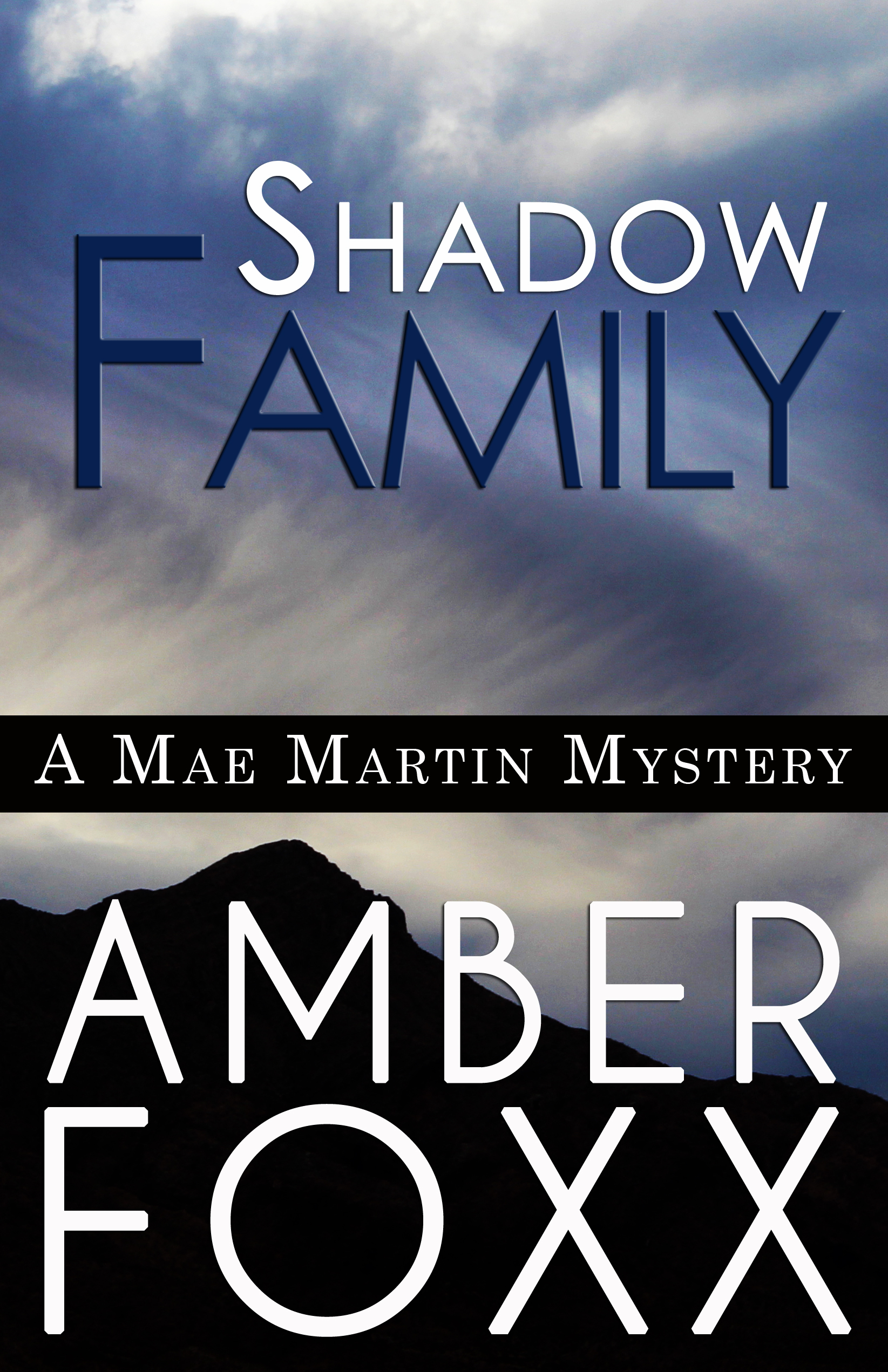

Changing Pace by Amber Foxx

I sent Shadow Family, the seventh Mae Martin Psychic Mystery, to my editor at 3:30 a.m. Monday September 16th. I lived with this book for seventeen months from first draft to hitting send. I was immersed in it for weeks nonstop as my deadline approached, hardly getting out except for running or teaching yoga, while I worked through feedback from multiple beta readers and critique partners. After that round of cuts and revisions, I read the whole book aloud, acting it out as if recording an audiobook in order to make the final adjustments. For a few days after I hit send, I had to remind myself not to read a finished scene aloud as I worked on the next book. It’s useful later in the process, but it slows me down when I should be letting my imagination fly. And I’m still reminding myself not to perfect every line. After all, I may end up cutting it.

I’m experiencing something like the disoriented state of mind that used to hit at the end of a college semester when I’d turned in final grades and had no more faculty meetings to attend, no deadlines, and practically no schedule. Open space in my life and in my head. Having time to catch up on my neglected social life feels wonderful. I’m also free to explore and experiment with the new work in progress, discovering its themes and its depths, surprising myself as I go. After the perfectionism of the previous weeks, it’s liberating. I’m free to mess up!

Boo! Just in Time for Halloween

Bones in the Attic

Though I’ve written several scary novels, some more horror than anything, Bones in the Attic, my latest Rocky Bluff P.D. mystery is the first that focuses on Halloween.

When I first started writing it, I wasn’t thinking about it being a Halloween book, but it definitely is, but not in the way you might think.

For those of you who have read any of the RBPD mysteries know that a lot of every book is about family issues, and this one is no different. It begins with Detective Milligan’s daughter Beth and her high school art club decorating an abandoned house for Halloween. They intend to make money for their club by selling tickets to their Haunted House.

When one of the members decides to explore the old house and finds a skeleton in a trunk in the attic, their plans are doomed. Or are they?

Of course the majority of the book focuses on the RBPD trying to find out who the bones belong to, and why were they in a trunk?

As always, there is more about what is happening with the various families of the police department:  There is an issue with Sergeant Abel Navarro’s widowed father, more about Sergeant Strickland’s daughter with Down syndrome, the romance between Police Chief Tucker and Mayor Devon Duvall, and a crisis with the mayor’s daughter.

And, to make it even more intriguing, there is a bit threat to all of the beach community of Rocky Bluff.

I hope some of you will try it out! Though it is a series, each book is complete when it comes to the mystery.

Buy link: https://tinyurl.com/yxpd8mxy

Marilyn who writes this series as F. M. Meredith


What Everyone Likes

I’m trying to find a way to write this so that it doesn’t sound whiny or excessively paranoid. However, that is the way I’m feeling at the moment. I just sent two stories off for consideration for a national anthology, and while one was nicely polished and hit all the marks for voice and accuracy, the other was less so.

I am not looking for sympathy comments, by the way. It’s just that people keep saying they want to know what goes on in a writer’s head. I can’t imagine why. It’s a messy, scary place, at times.

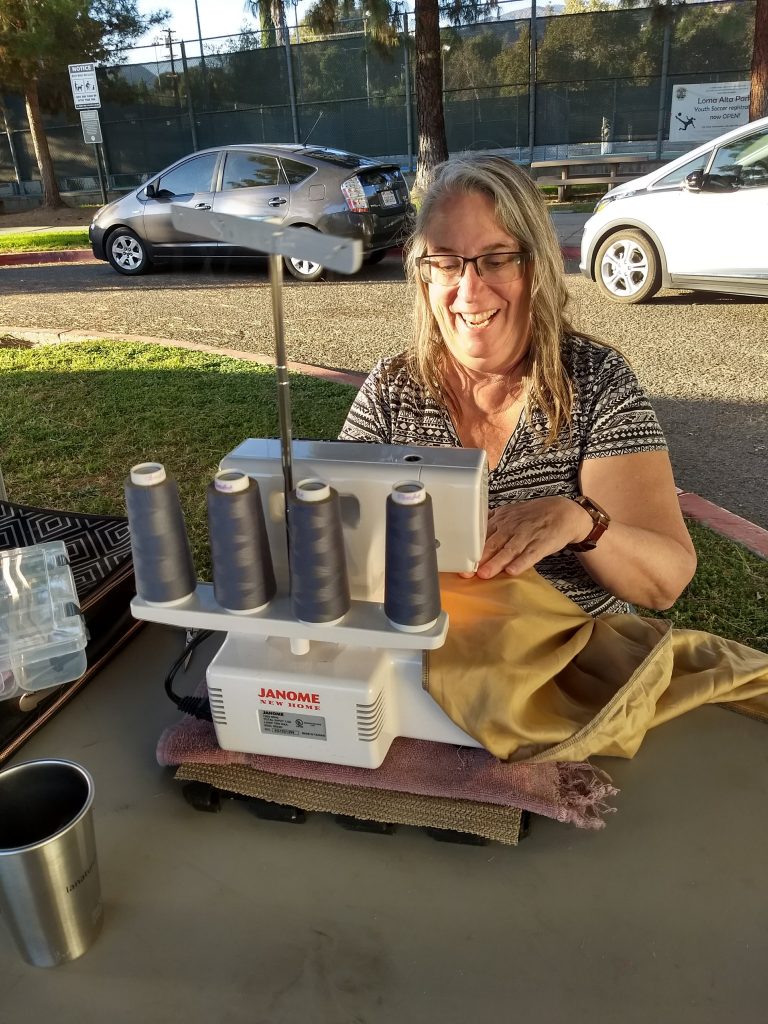
This is me, normally, when I’m sewing.

It started yesterday, when I was laying out a couple pairs of shorts. I’ve been sewing my entire adult life, so it’s not entirely crazy that I would be teaching myself to make jeans. Since I’m trying to figure out how best to fit my body, I was laying out the adjusted versions of two different patterns to see which fits the best. As I was laying out the second pattern (which had fit in the front really well, but the back didn’t come up near far enough on mine), I noticed that I really hated the back pockets.

Now, this was a pattern that had gotten rave reviews on a certain sewing forum I’m on. I mean, huge. Everybody loved this freaking pattern, in particular, the back pockets, which were slightly curved and supposedly more flattering. to one’s bum. Now, I have ogled many a bum in my day, and even with the pictures that were posted, couldn’t see what the benefit of the curve was. I do know what a PITA it was to sew that curved pocket. So, I used the pocket from the other jeans.

I was once again reminded that if people are raving about something, the odds are not good that I’m going to like it. I’m not trying to be obtuse, mind you, and I do like some things that are incredibly popular. It’s just that I’ve been to restaurants that have lines of people waiting to get in and usually find that the food doesn’t justify the wait. Movies? Super hits? Even serious films that everyone thought were wonderful. I’ve sat through so many of them, bored to tears that if someone even utters the word “hit,” I won’t go.

Sadly, the reverse is true. If I like it, chances nobody is going to. I love those small town cozies that everyone else loves looking down on. I love the 1812 Overture, never mind how immature that taste is. Someone actually said that to me, which is why I’m not naming names here. I don’t want anybody feeling bad if I write that their favorite composer drives me nuts with his over-wrought earworms.

This is no big deal under normal circumstances. Indeed, I often revel in being the only person to hate a given show because it’s the same three overwrought songs sung over and over. However, I just sent off two stories to be judged by other people. I liked those stories. I really liked them.

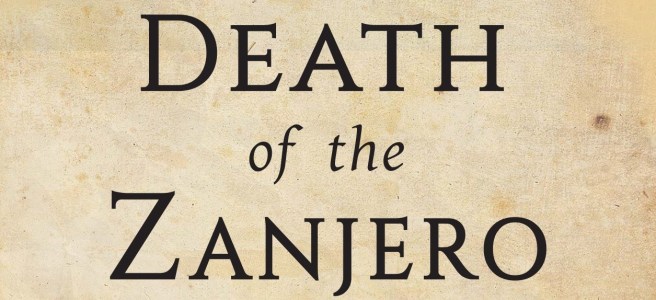
It’s not that there isn’t a market for my writing. Lots of people have read my books and liked them. I was even at a book festival recently where a total stranger told me he’d bought my book, Death of the Zanjero, the year before and liked it so much that he’d come back to buy the sequel, Death of the City Marshal. Someone else met me in a hallway and told me how much she liked my book. And thank God for the Internet. People like me may be few and far between, but the Internet can connect us.

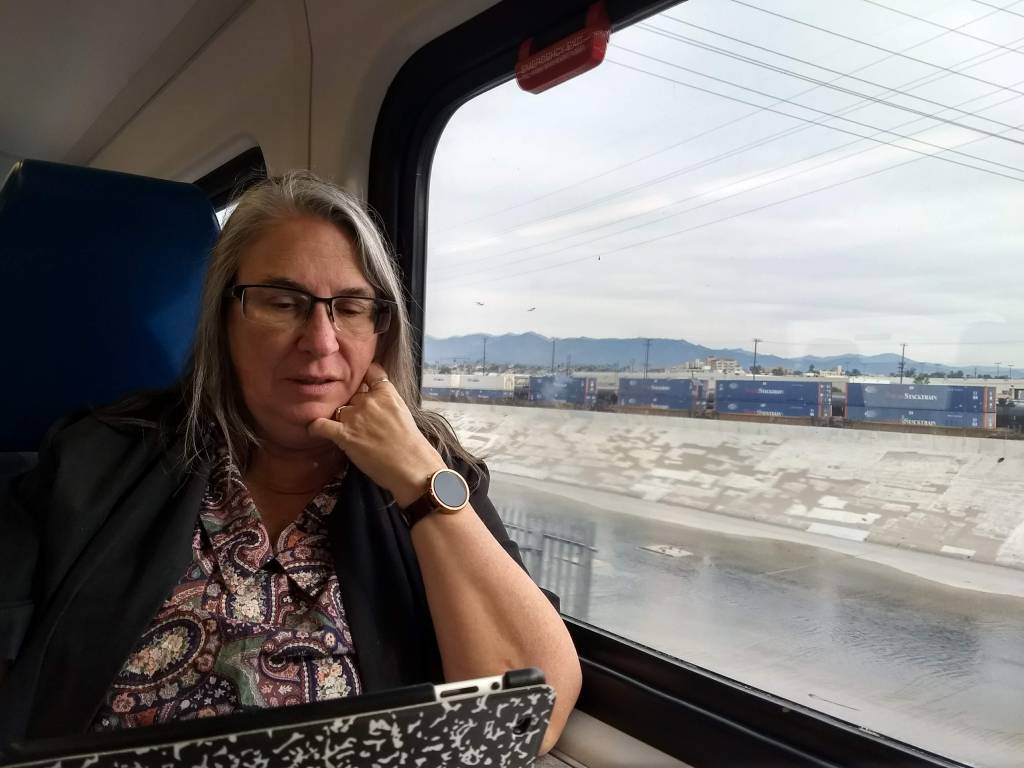
This me worrying about my writing.

It’s the paranoia and terror of rejection that envelops me every time I submit something. I’ve been rejected a lot, mostly because they can’t figure out how to sell my work. At least, that’s the comment I get more than any other. Worse yet, I know that second story could have been better because I wrote it at the last second. I’d had a brilliant idea and couldn’t resist. Only it doesn’t feel so brilliant now.

I did shop my first story around for critiquing and the comments were excellent, but the suggestions were to make my story into something I hate reading. Argh. I mean, what’s a woman to do? Try to do what everybody else likes and I hate (which probably won’t work because I hate it)? Or shoot myself in the foot by sticking to my guns?

The good news is that I will be past all this moaning and groaning soon. I am nothing if not resilient, and will soon be back to snarking on overwrought ear worms and reveling in my own unique tastes. If I am rejected, I will bounce back.

In the meantime, I will be whiny and paranoid, because that’s where I’m at right now. It’s scary and messy to be inside a writer’s head, whether any of us likes it or not.

Why it’s Okay Sometimes Not to Write by Karen Shughart

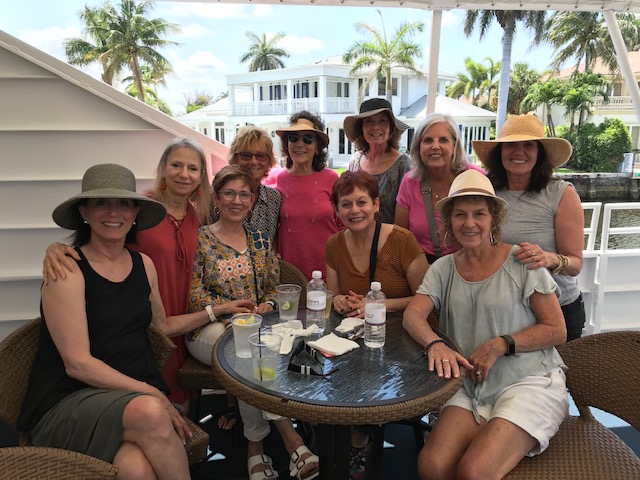
We traveled a lot this past spring and summer: family gatherings, a wedding, visits with our children who live on the east and west coasts, a reunion with friends in Florida and a very long trip last month to the Atlantic and Maritime provinces.  I don’t use a laptop but instead write with a desktop PC, and during those times we were away I didn’t write, not a blog, not a newsletter or social media posting, nor a chapter of the book I’m working on now. At one point we were on a ship, so not only didn’t I have use of a computer, I also didn’t have internet. Talk about being removed from the world!

IMG_0183

At first, I felt pressured. And guilty. Many of us authors try and write something every day. It makes good sense, keeps us in the flow of our current work, and keeps us on our feet. Not writing for several days was anathema to me, and I was uneasy that I wasn’t producing at least something on the written page.  But then it hit me.

After a couple big sighs, I gave myself permission to take a break. In fact, in my estimation taking some time off can result in better writing. For one, I was able to enjoy and experience our trips and register those experiences both in my mind and with photographs that I might, someday, be able to weave into my story lines for other novels or blogs. I was able to be in the present and savor those moments and experiences with family and friends.

It wasn’t that I didn’t think about writing. On occasion, I mulled over chapters I’d been working on or thought about topics for this blog. But I didn’t spend all that much time doing it. The “ah ha”! moment came when I realized that not writing for a while cleared my head. And that was a good thing.

Once we were back home from our trips, the laundry done and bills paid, we settled back into our routine. I turned the computer on and started writing again. What I realized was that I was able to approach my work with a fresh perspective, and I could be more objective about the chapters I was writing and more critical of what was working and what was not.

I discovered that taking a break made me more creative. I’ve added chapters that should have been written in the first place and removed others that didn’t add much to the plot. I’ve diversified language, and dialogue has become brighter and more interesting. By reading my own work with a fresh eye and committing to making changes, the book is better.  Taking a break from the writing for a few weeks wasn’t the disaster I had portended; in fact, it helped. My perspective has changed, my energy level  has increased, and I’m much more at ease with tackling the tough parts with relaxed determination.